
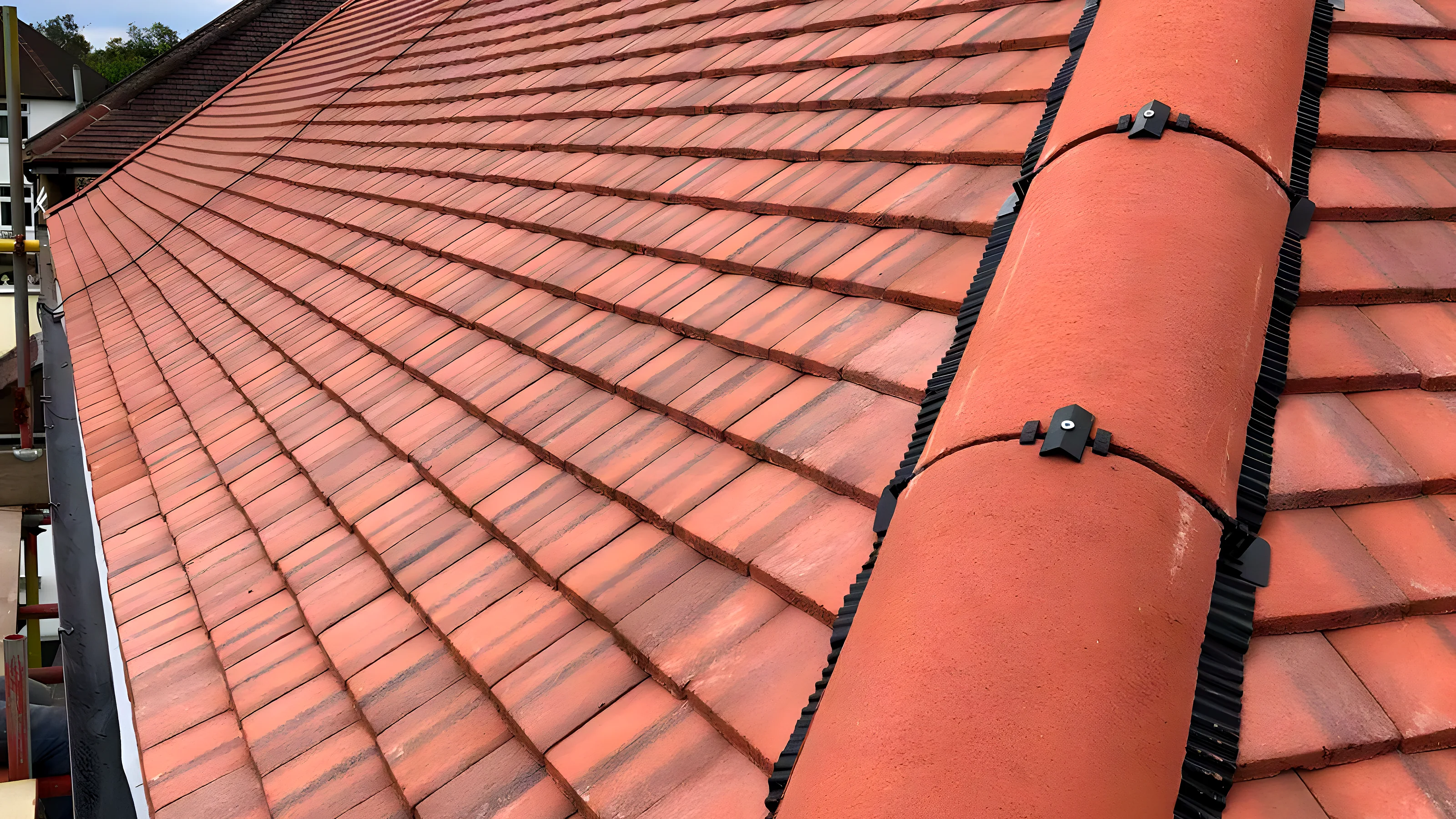
Tiled roofing in Leatherhead, Surrey and South West LondonTiled Roofs, Plainand Interlocking.
The most common roof in Surrey, and the one most often patched badly. Clay or concrete, plain or interlocking, we lay tiles the way the maker intends and match what is already there.
Over 25 years on local roofs
Free survey and written quote
24 hour emergency call out
CORC member 8125
What we do
Tiled Roofing,Start to Finish.
Clay or concrete, plain or interlocking, we match what is already there or set the roof up for something better.
Clay Plain Tiles
The small double lapped tile on most pre war houses across Surrey and South West London, and on a lot of the inter war semis in Epsom, Cobham and New Malden. Handsome, long lived, and laid at a steep pitch. We repair with matching reclaimed stock and re roof with new clay where the originals are done.
A plain tile is small, flat and laid double lapped, so every point on the roof has at least two thicknesses of tile over it. That is why the pitch is steep and why a plain tile roof has so much character, and it is also why repairs need a matched tile: a modern machine made tile next to a hand made one shows from the street.
The tiles themselves outlast almost everything else on the roof. What fails is the nibs, the fixings, the underlay and the mortar at the ridges and verges. We repair with reclaimed tiles of the same type and colour, and when the roof is done we re tile in new clay laid and fixed to the current standard.
Plain tiles are laid at a minimum pitch of 35 degrees with a headlap of at least 65 millimetres, which is why they suit the steep roofs of the inter war semis in Epsom, Cobham, Esher and New Malden and not a shallow extension. Handmade and machine made clay are both available new, and reclaimed stock is matched by colour and camber.
Concrete Interlocking Tiles
The post war workhorse. Cheaper, quicker to lay, lighter on the fixings. Most re roofs since the 1960s are concrete interlocking and most of them are still fine. When they are not, they are the easiest roof to match and replace.
Interlocking tiles are large, so a roof needs far fewer of them and they lay quickly, which is why most re roofs since the sixties are concrete. They are heavy, which matters on a roof structure built for slate, and the surface weathers over time, so an old concrete roof looks greyer and rougher than it did.
They are the easiest tile to match and the easiest roof to repair. When a concrete roof does need replacing it is usually the underlay that has perished rather than the tiles, and a re roof puts new underlay and battens under new tiles fixed to the current standard.
Interlocking tiles work down to shallower pitches than plain tiles, often 22.5 degrees and some lower, which is why they were used on so many post war houses and bungalows. On a re roof we check the pitch against the tile’s minimum before we quote, because a tile laid below its minimum pitch lets wind driven rain under it.
Repairs
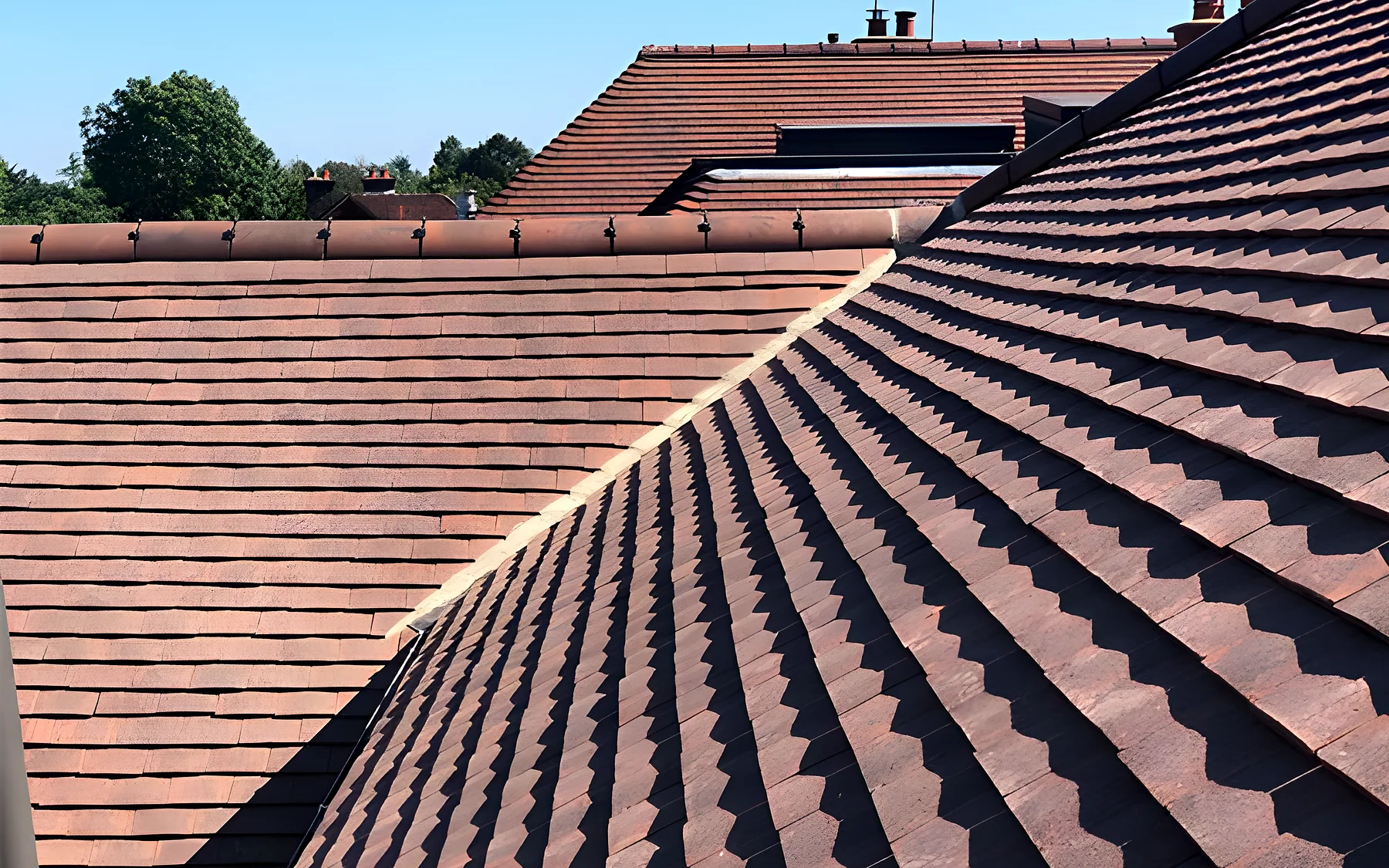
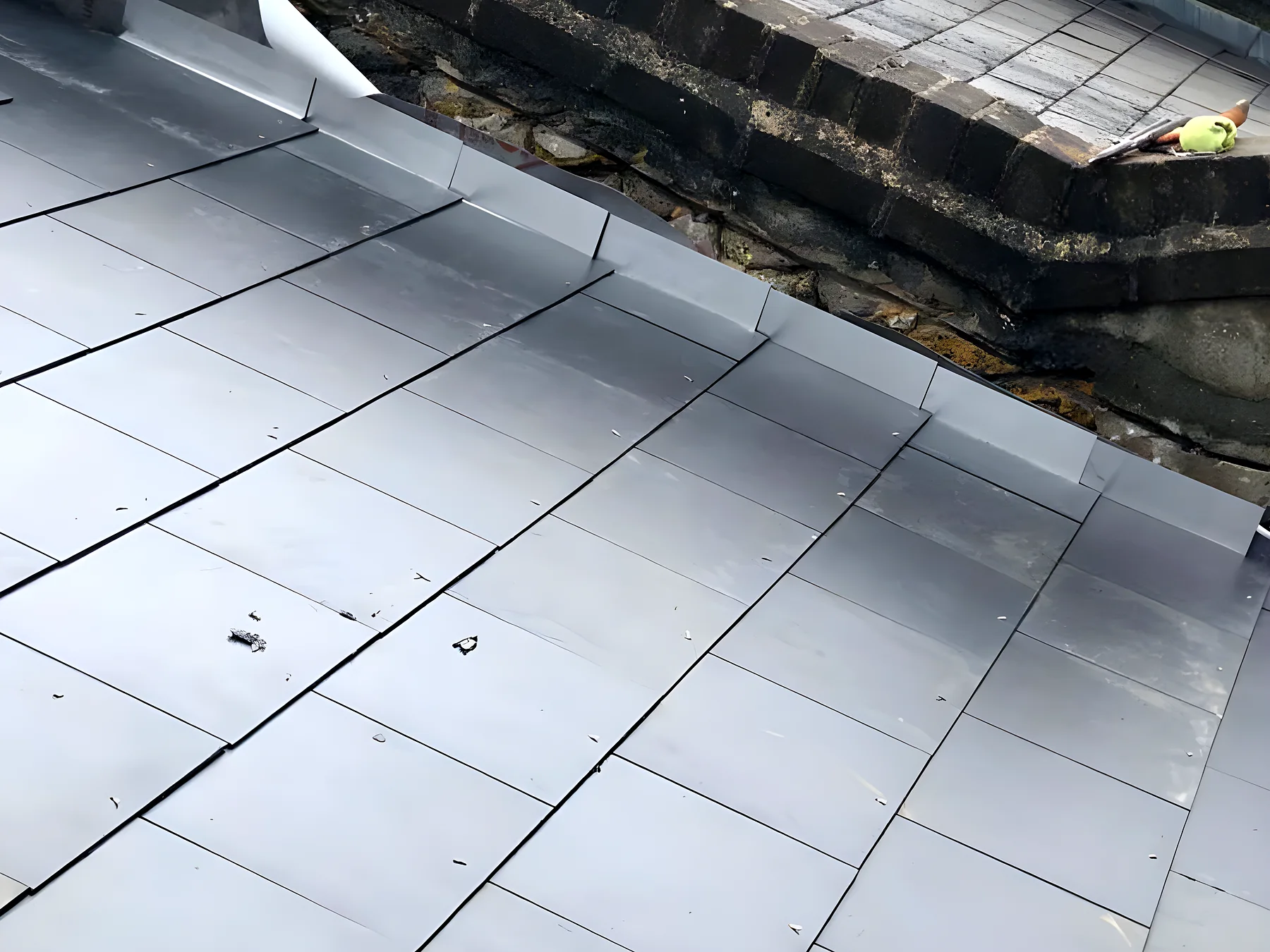
Cracked, slipped and missing tiles replaced. Ridge and hip tiles re bedded or, better, dry fixed so they cannot come loose again. Verges re pointed or dry fixed. Valleys checked and lead replaced where it has split.
Most tiled roof repairs are small: a handful of tiles after a storm, a ridge that has lost its mortar, a verge that has cracked. We do the repair and check the rest of the slope while we are up there, because the fixings around a failed tile are the same age as the one that went.
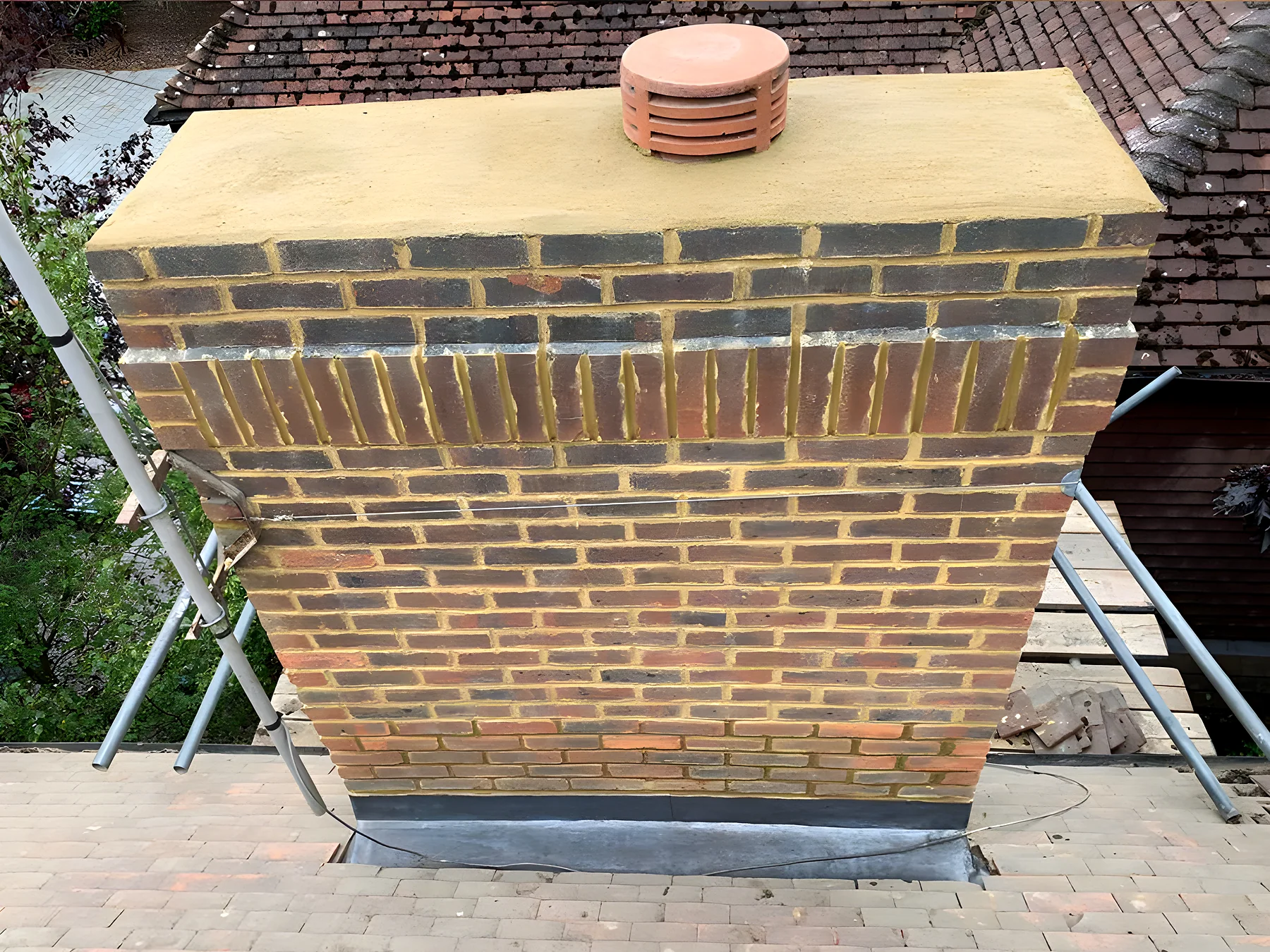
A ridge or verge repair on a tiled roof is quoted two ways where it helps: re bedded in mortar to match the original, or dry fixed with a mechanical system that does not rely on mortar at all. Since 2015 the British Standard has required ridge and hip tiles to be mechanically fixed on a new roof, and we do the same on a repair unless the house calls for the traditional look.
Re Tiling
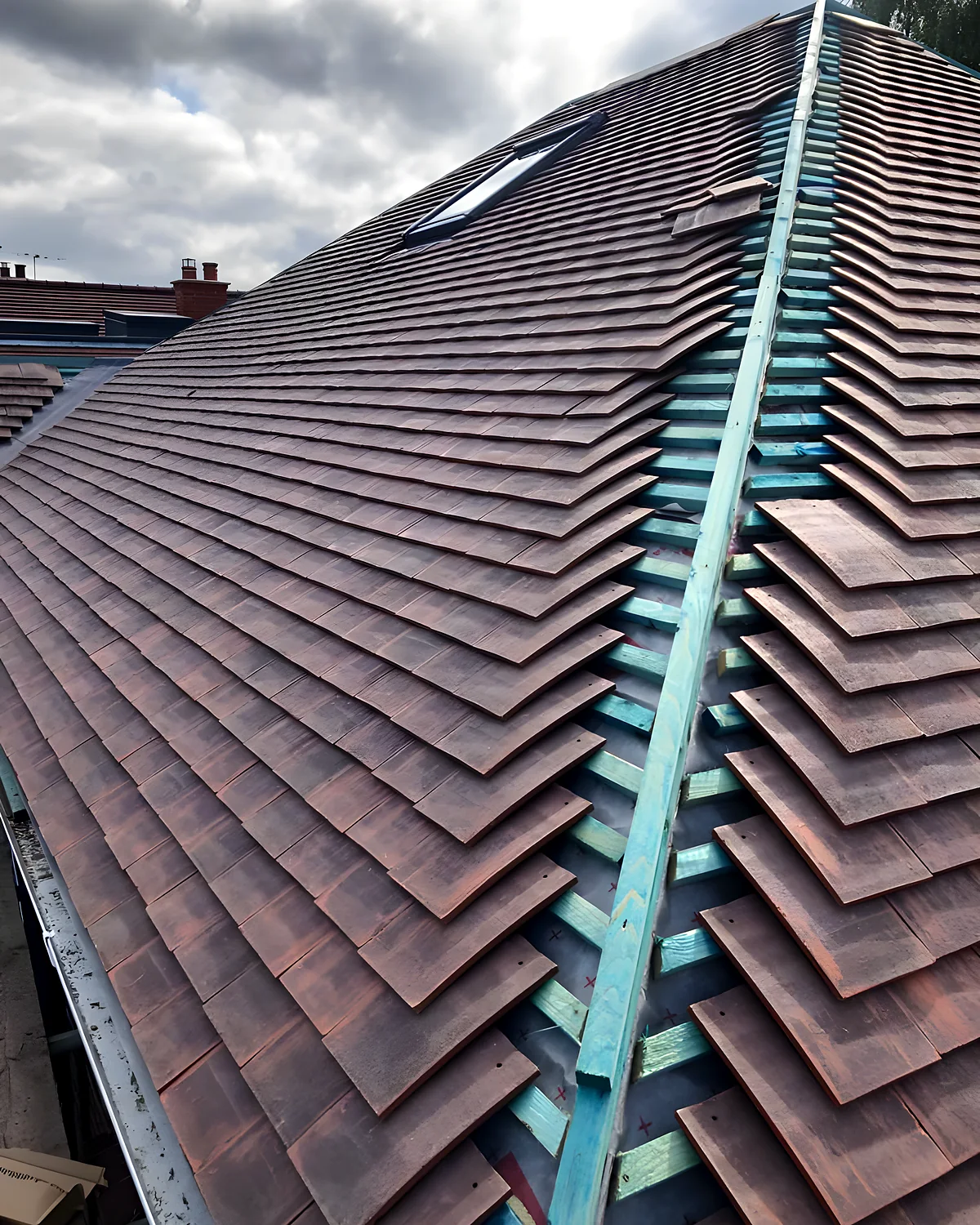
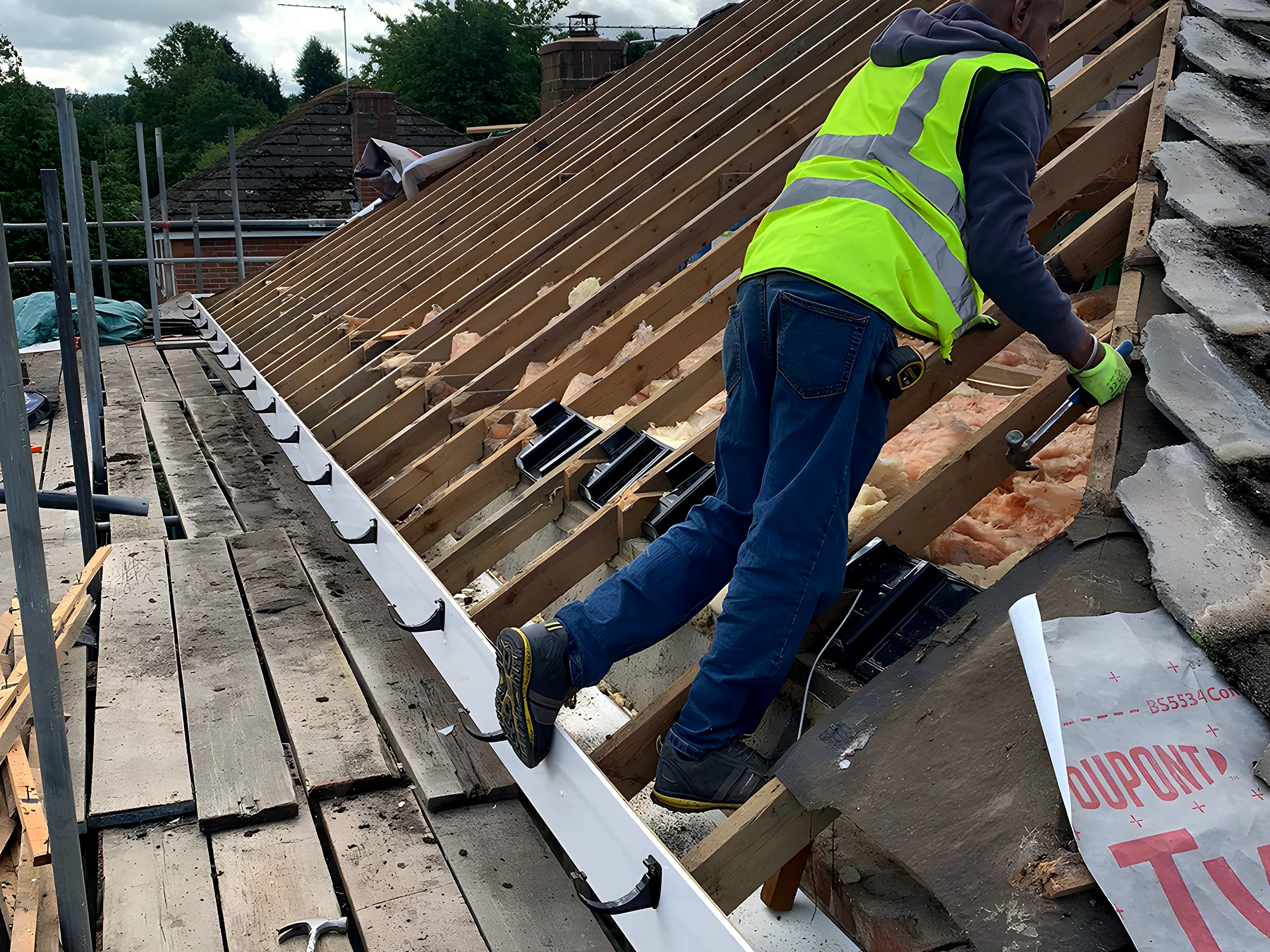
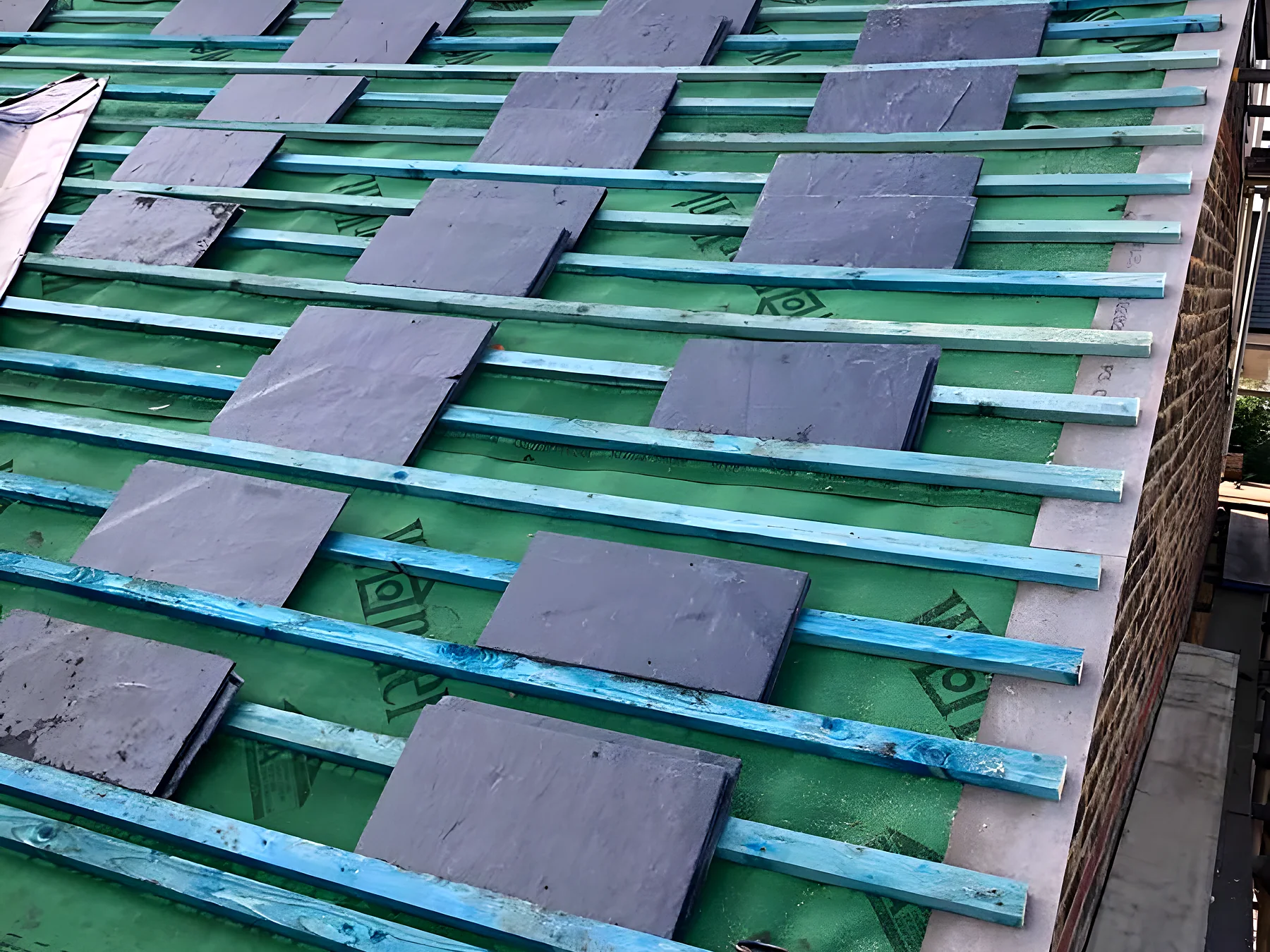
Strip to the rafters, new breathable underlay, new battens at the right gauge, and tiles laid and fixed to the current standard. Every tile on a new roof is now mechanically fixed, which is a good deal more than the old roof had.
A re tile is the job to do once and properly. The old tiles and battens come off, the rafters are checked and repaired, new breathable underlay and treated battens go on at the right gauge, and the new tiles are laid and fixed to the current standard, with dry ridge and dry verge systems that do not depend on mortar.
Where the original clay tiles are sound we can re lay them on the new battens and make up the shortfall with matched reclaimed stock, which keeps the look of the house and a good part of the cost.
A re tile on a three bedroom house takes around a week to ten days with the scaffold. The underlay, battens and fixings are all specified to BS 5534 for the site’s wind exposure, and the insulation and ventilation are brought up to the current Building Regulations while the roof is open.
Ventilation and Insulation
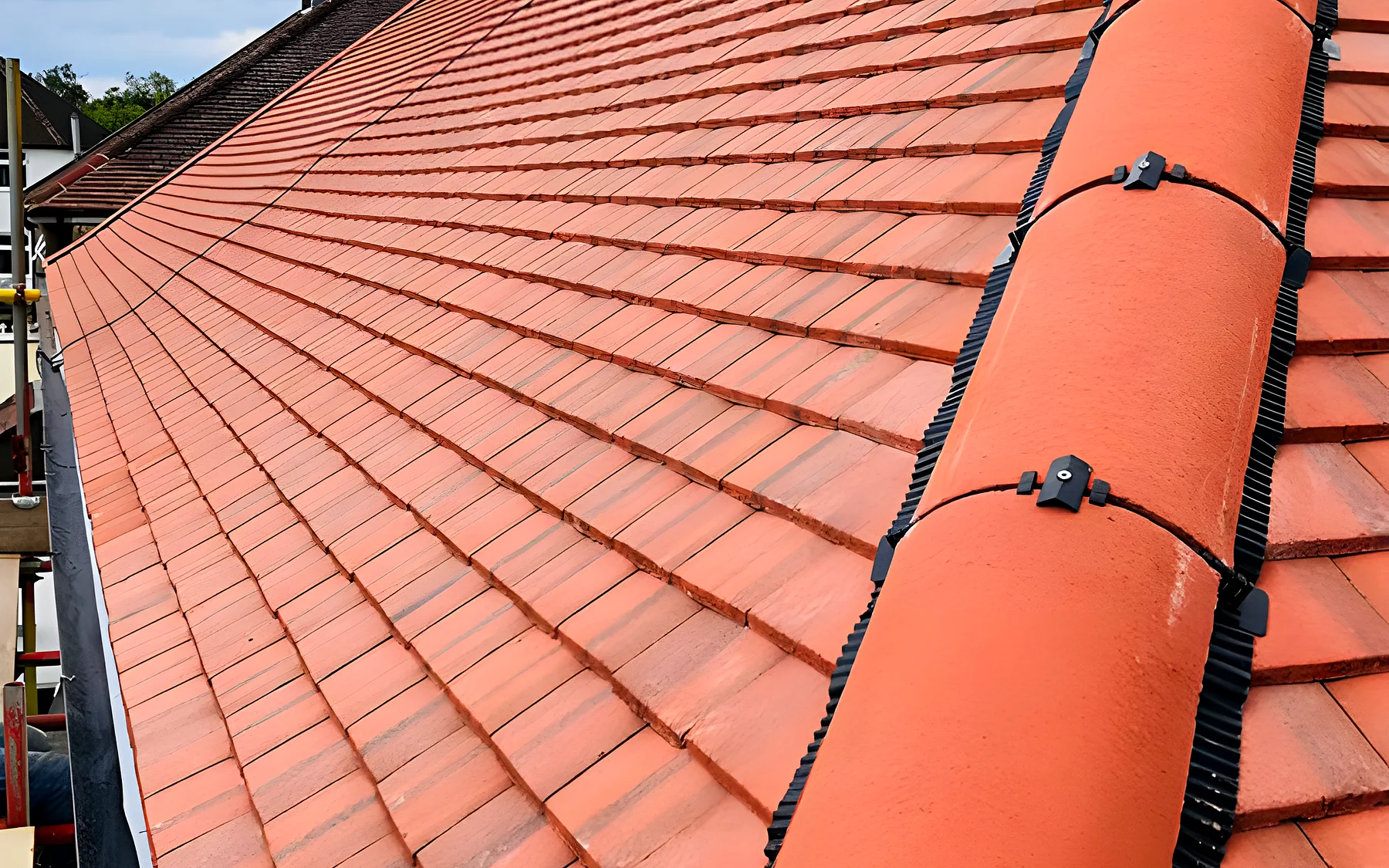
A re roof is the moment to sort the loft ventilation and get the insulation right, because the roof is off and the felt is new. We build it in rather than leave it for later.
A cold, damp loft rots battens from below. A re roof is the moment to put in eaves and ridge ventilation, to check the insulation depth and to make sure the two work together, so the new roof stays dry from the inside as well as the outside.
The Building Regulations expect a re roof to bring the roof insulation up to the current standard where it is practical, and a loft with 270 millimetres of mineral wool needs ventilation at the eaves and the ridge to stay dry. We fit both as part of the job and note them in the paperwork.
Sounds like your roof?
The Signs We AreUsually Called For.
- Cracked or missing tiles you can see from the garden
- Ridge tiles loose, cracked or with the mortar gone
- Moss building up and lifting the tiles
- Tiles slipping on one slope more than the others
- Felt visible and perished at the eaves
How it works
Tiled Roofing:How It Works.
What happens between getting in touch and the finished job.
- 01
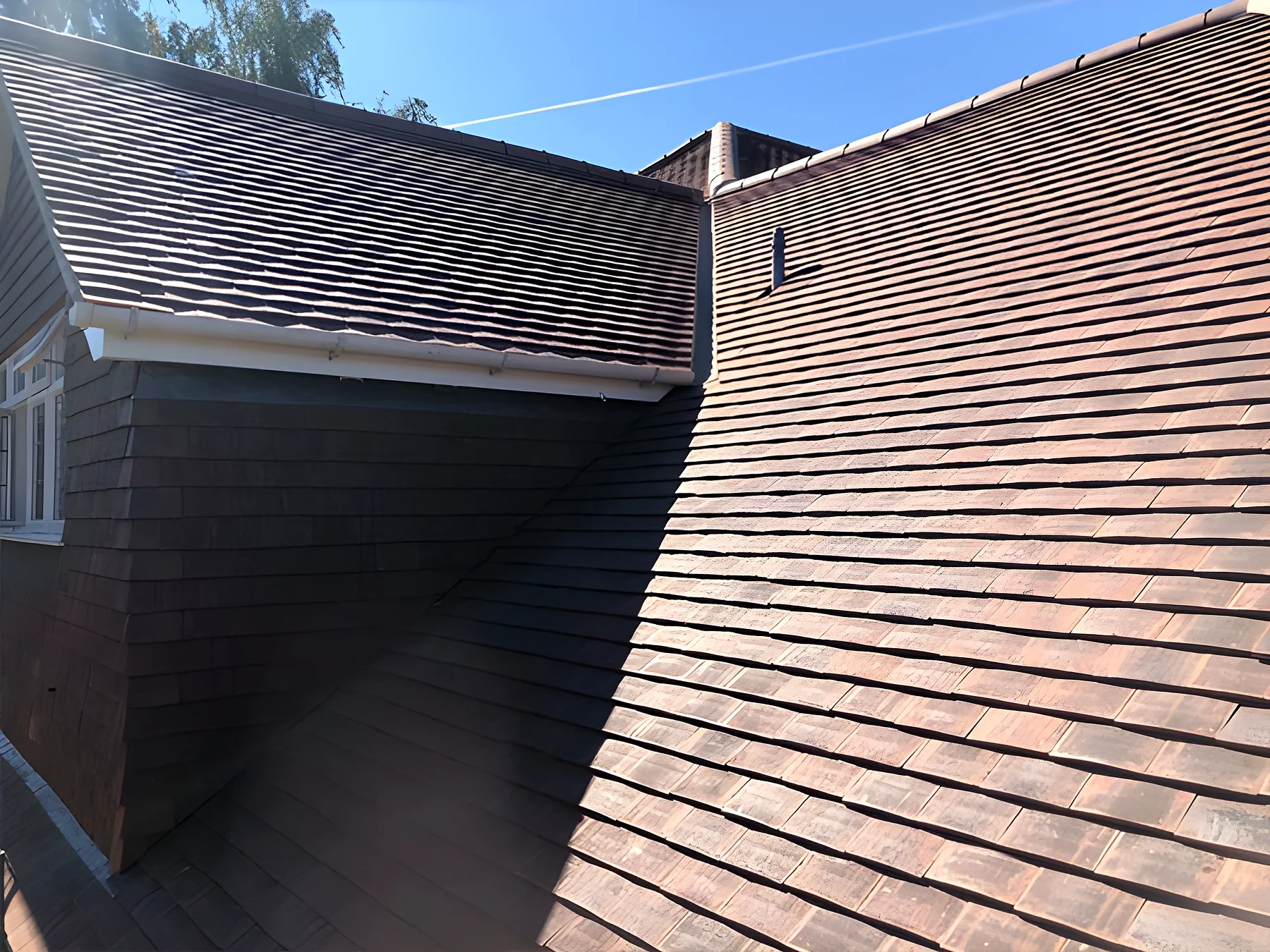
Get in Touch
Call or send a photograph of the roof. From the tile and the age of the house we can usually tell you what it is likely to need.
- 02
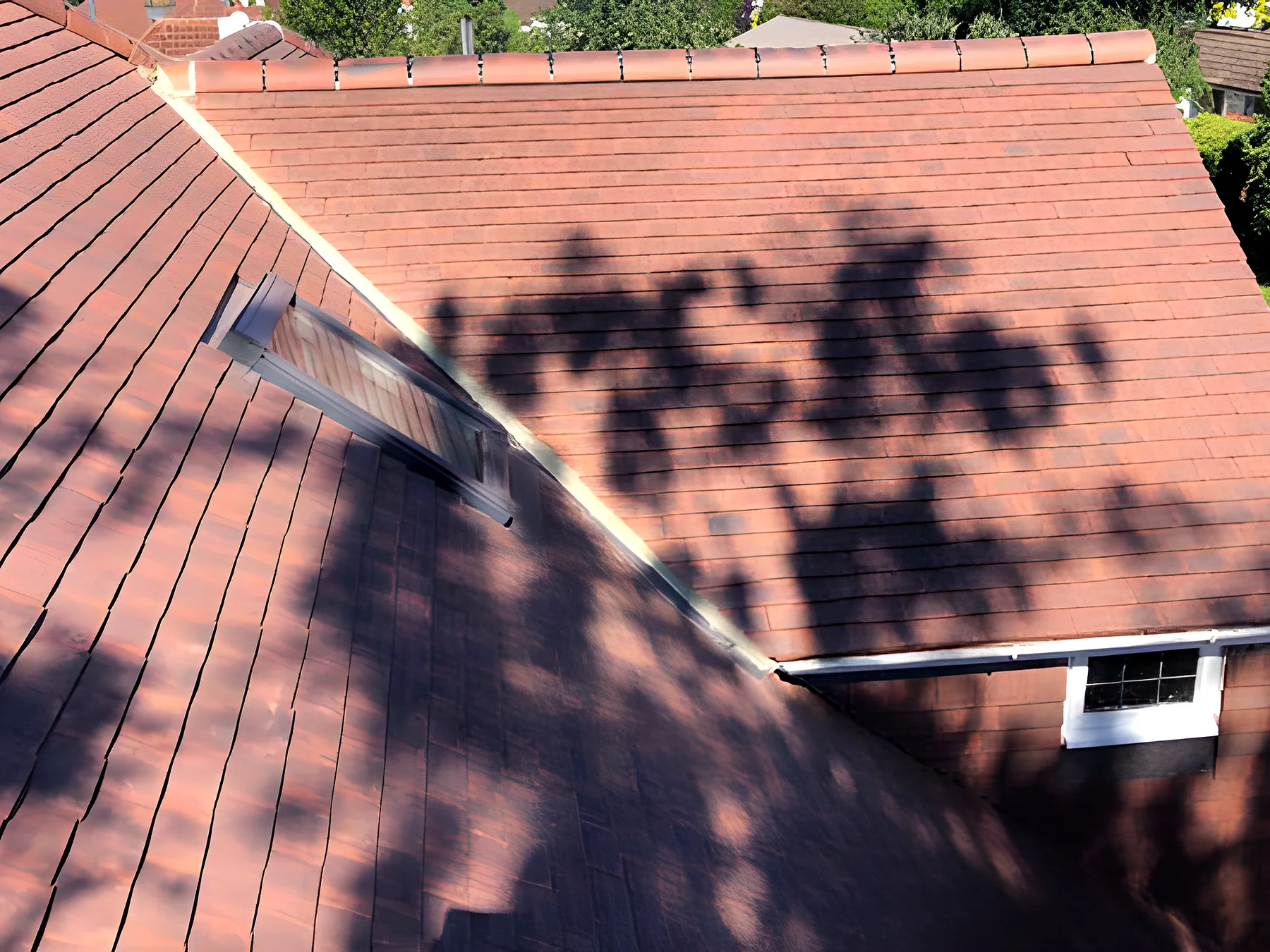
Survey and Match the Tile
We inspect the slopes, the ridges and the valleys, and match the tile, clay or concrete, from reclaimed or new stock so a repair does not show.
- 03
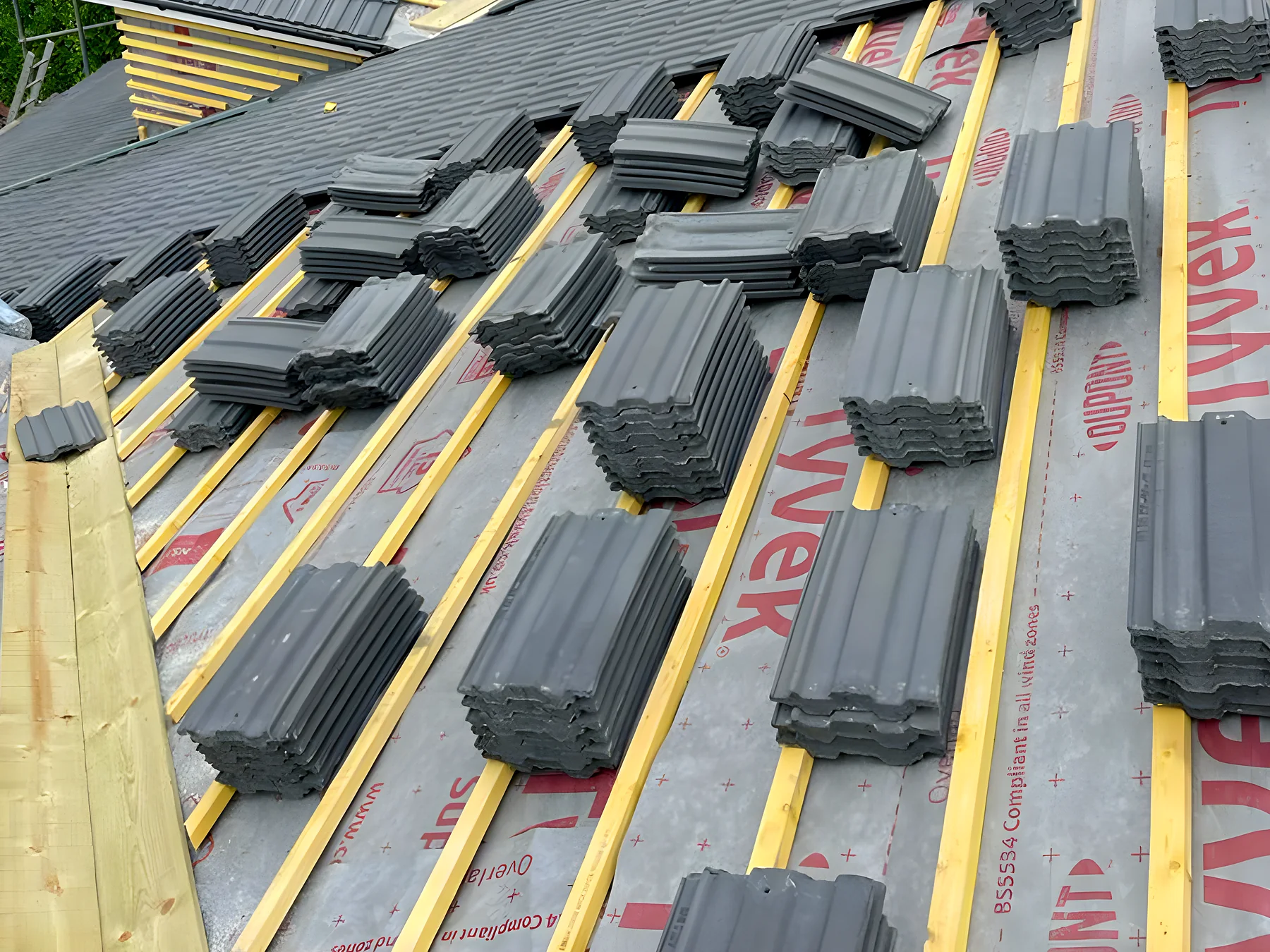
A Written Quote
An itemised price for the repair or the re tiling, with the underlay, battens, ventilation and fixings set out.
- 04
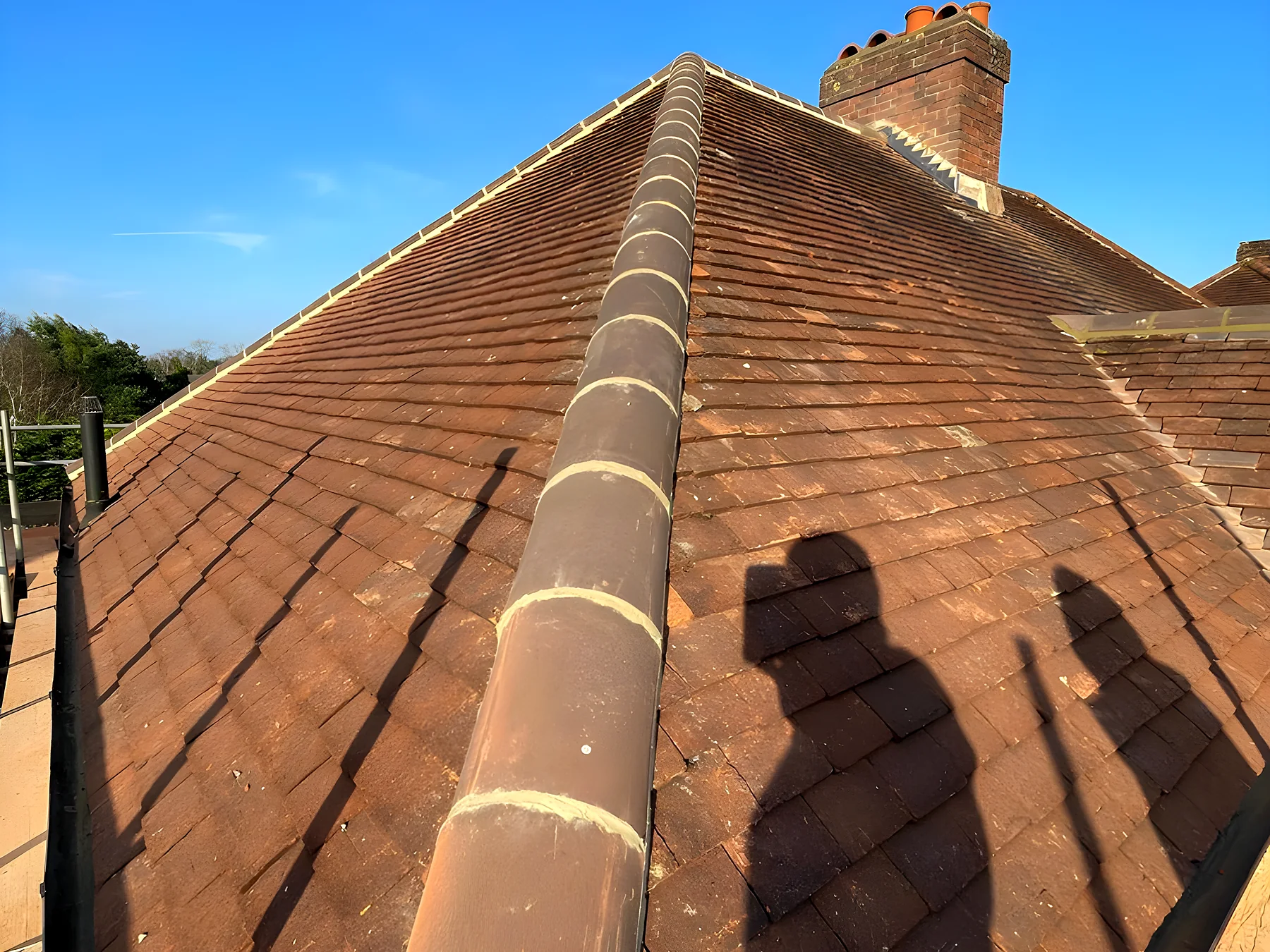
The Work, Photographed
Tiles laid and fixed to the current standard, the site cleared, and photographs of the finished roof.
Get in touch
01 / 04
Tiled roofing questions
The QuestionsPeople Ask First.
Anything not covered here, call 01372 540 258 and ask. You will get a roofer, not a call centre.
Clay or concrete?
Clay lasts longer and looks better, and it is what most older houses were built with. Concrete is cheaper and perfectly good on most post war houses. We match what you have unless there is a reason not to.
Why are my ridge tiles cracking?
Mortar bedding shrinks and cracks over time and then lets water in. The current standard is dry fixed ridges, which clip on mechanically and do not rely on mortar at all.
Can you replace just one slope?
Yes, and it is common when one slope has taken the weather and the others are fine. We match the tiles so the two halves do not look different from the road.
Free survey and quote
Call Us, or Senda Photograph.
A picture from the ground is usually enough for us to tell you what we are looking at. The survey and the written quote are free, and there is no obligation on either.
- London
- 0203 507 1501
- Leatherhead
- 01372 540 258
- Reigate
- 01737 749202
- Mobile, 24 hours
- 07513 397 799