
Flat roofing in Leatherhead, Surrey and South West LondonFlat Roofs ThatStay Dry.
A flat roof fails at its edges and its outlets, never in the middle. Getting the falls, the upstands and the trims right is the whole job, and it is the part that gets skipped when a roof is done cheaply.
Over 25 years on local roofs
Free survey and written quote
24 hour emergency call out
CORC member 8125
What we do
Flat Roofing,Start to Finish.
A flat roof fails at the details, not in the middle. We get the falls, upstands and trims right.
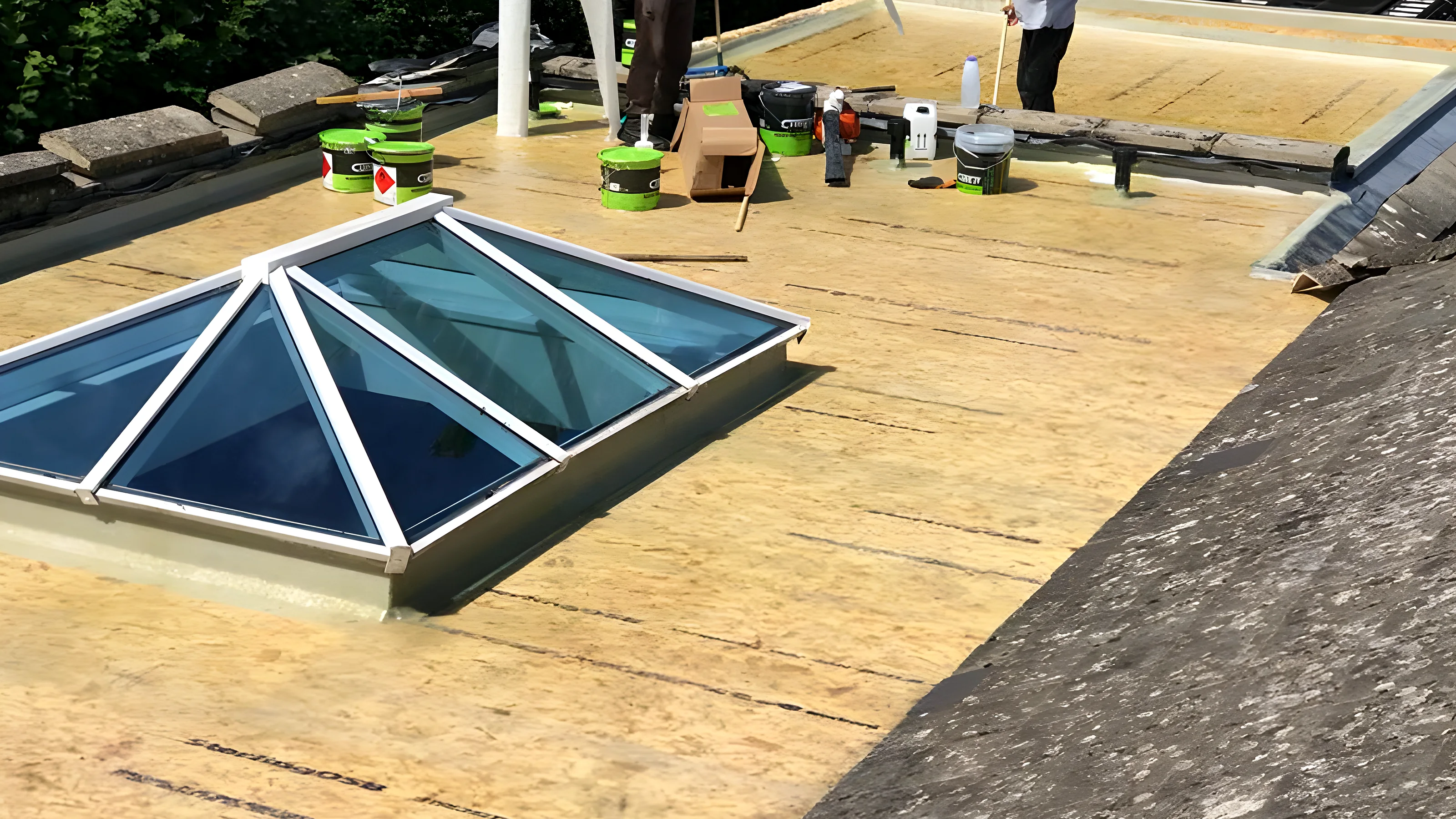
GRP Fibreglass
A single seamless skin laid wet over a deck, cured hard. No joins, no seams to fail, and a 25 year plus life when it is laid on a dry deck by someone who knows the resin. Our first choice for extensions, dormers and anywhere the roof might be walked on.
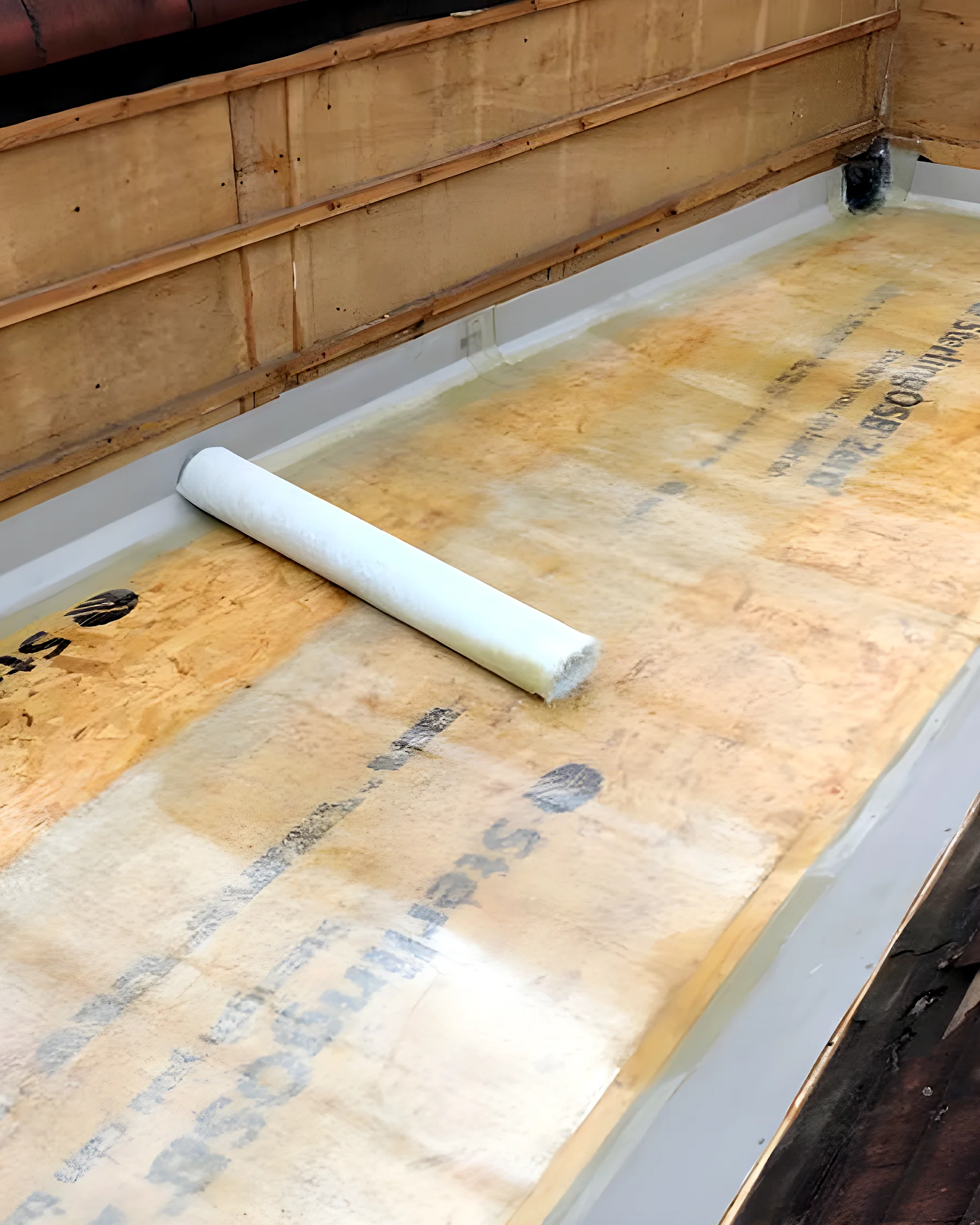
The roof is built as one piece. A new OSB deck is laid to a fall, the edges and upstands are bandaged, then resin and glass matting are rolled across the whole roof and cured into a single laminate before the pigmented topcoat goes on. There are no joins to open up and the details around pipes, rooflights and corners are simply laminated in.
GRP wants a dry day and a rigid deck. Given both, it is the flat roof we fit most, and the one we would put on our own extension.
A GRP roof on an extension takes two or three days: one to strip and deck, one to laminate, and the topcoat once the laminate has cured. The resin needs a dry deck and a day above about five degrees, so in winter we plan around the forecast rather than laminate in the damp.
EPDM Rubber
A single sheet of synthetic rubber, glued down. Fast, flexible, good in the cold, and very good on large simple roofs like garages and outbuildings where a single sheet covers the whole roof.
EPDM is supplied as a single sheet cut to the roof, so a garage or outbuilding roof can be covered with no seams at all. It stays flexible in cold weather and copes with a building that moves. It is less suited to roofs with a lot of detail, where GRP is the better answer.
EPDM is supplied in sheets wide enough to cover most garage and outbuilding roofs in one piece, bonded to the deck with a contact adhesive and finished with metal or GRP trims at the edges. It is the quickest of the three systems to lay and the easiest to walk on for gutter clearing.
Torch on Felt
Modern high performance felt in two or three layers. Still the right answer on some roofs and the right repair on many existing felt roofs where the deck is sound.
A modern felt roof is three layers, each polyester reinforced and torched to the one below, finished with a mineral cap sheet. It is quick to lay, straightforward to repair and suits garages, sheds and outbuildings, and it is the right repair where an existing felt roof has life left.
Modern reinforced bitumen membranes are laid to BS 8217, in three layers, with a mineral finished cap sheet. Felt is the sensible choice where the roof is small, the deck is sound and the budget matters, and it is the right repair for an existing felt roof with life left.
Repairs
Blisters, splits, ponding, failed edge trims and blocked outlets. Some flat roofs can be repaired and some are past it. We tell you which, because patching a roof that has water under the covering is throwing money at it.
A repair is worth doing when the deck is sound and the covering has one local fault. It is not worth doing when the roof has been patched before, holds water, or is soft underfoot, because the water is already in the deck. We look, photograph, and tell you which it is.
The report after a flat roof survey says which it is: a local repair with a note of how long the rest of the roof has, or a replacement with the system we recommend and why. Either way you get photographs of the deck and the details, because that is where the decision is made.
Falls and Outlets
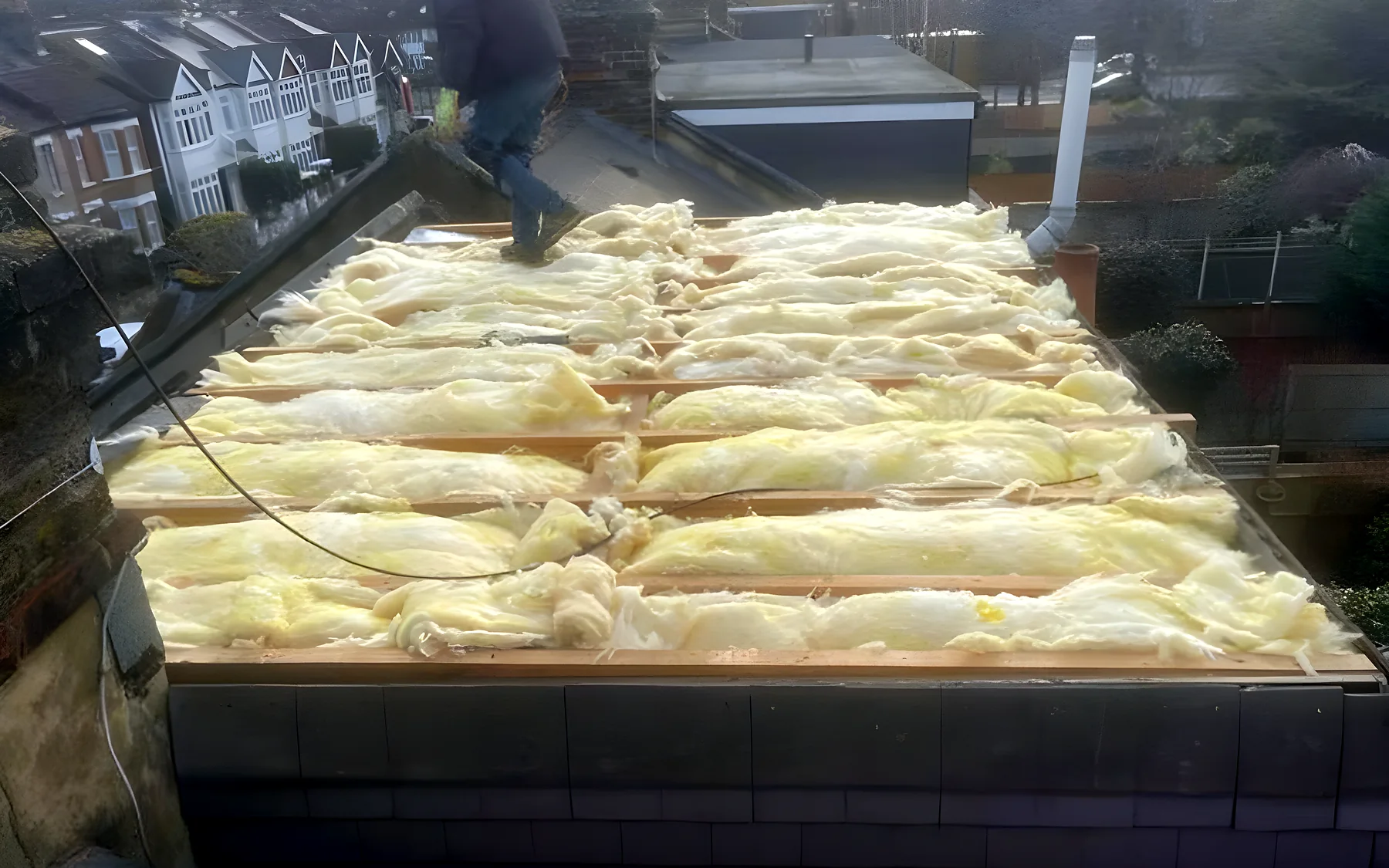
Standing water is the enemy of every flat roof. We build in the falls with firrings or tapered insulation and put outlets where the water actually wants to go. Ponding on a new flat roof means someone skipped this.
A flat roof should shed its water within a day of rain. We build the fall into the deck with firrings or tapered insulation, position the outlets where the water goes, and size them for the roof area. It is the least visible part of the job and the part that decides how long the roof lasts.
The code of practice for flat roofs, BS 6229, asks for a design fall of 1 in 40 so the finished roof still sheds water after the deck has settled. We build that in with firrings or tapered insulation and check it with a level before the covering goes on.
Sounds like your roof?
The Signs We AreUsually Called For.
- Water standing on the roof a day after rain
- Blisters or bubbles in the covering
- Splits, especially at corners and around outlets
- A soft or springy feel underfoot, which means the deck is wet
- Damp on the ceiling below, often near the edges
How it works
Flat Roofing:How It Works.
What happens between getting in touch and the finished job.
- 01
Get in Touch
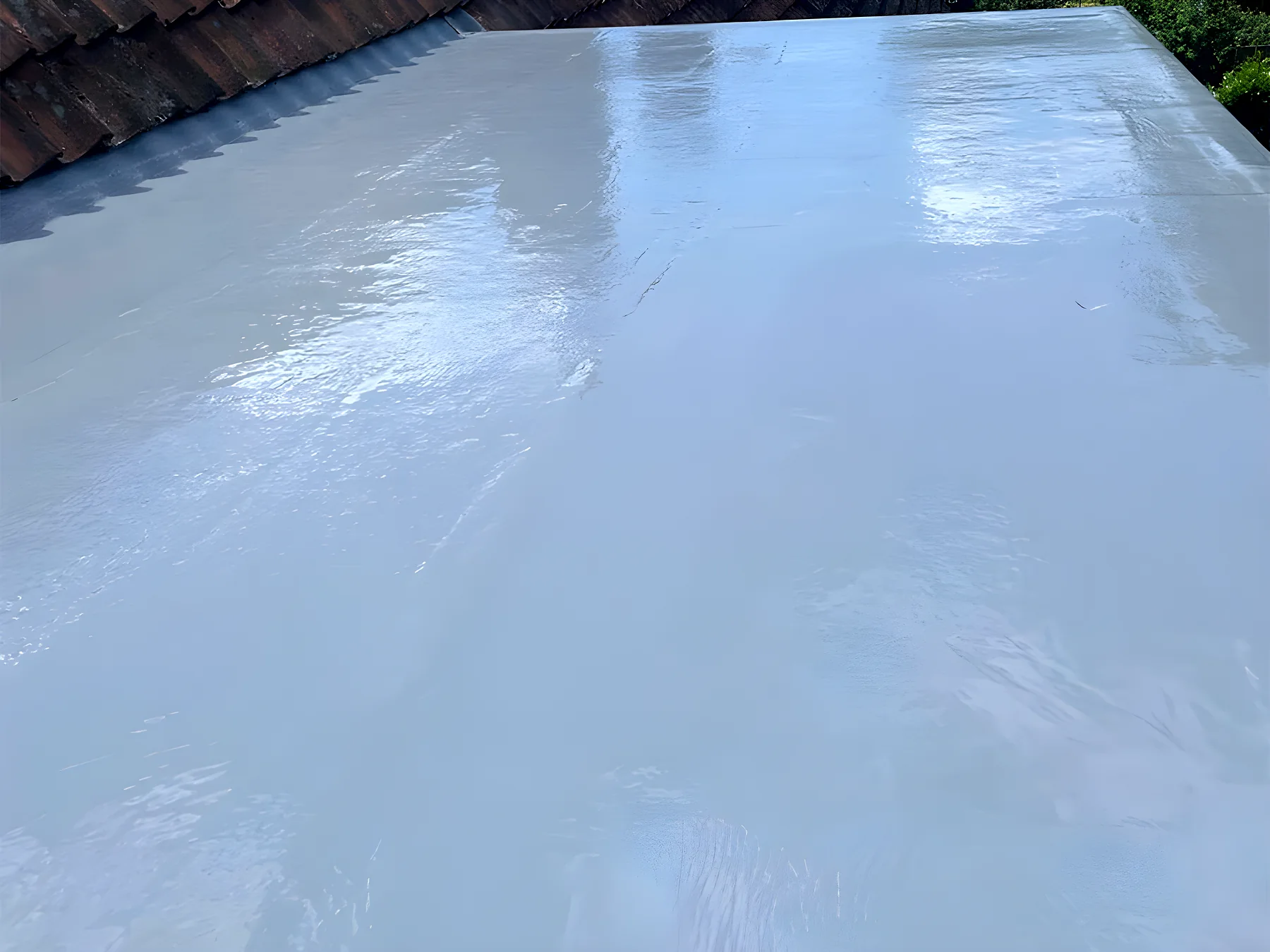
Call or send a photograph of the roof and of any damp inside. Tell us what it is covered in if you know; we can tell from a picture if not.
- 02
Survey and the Right System
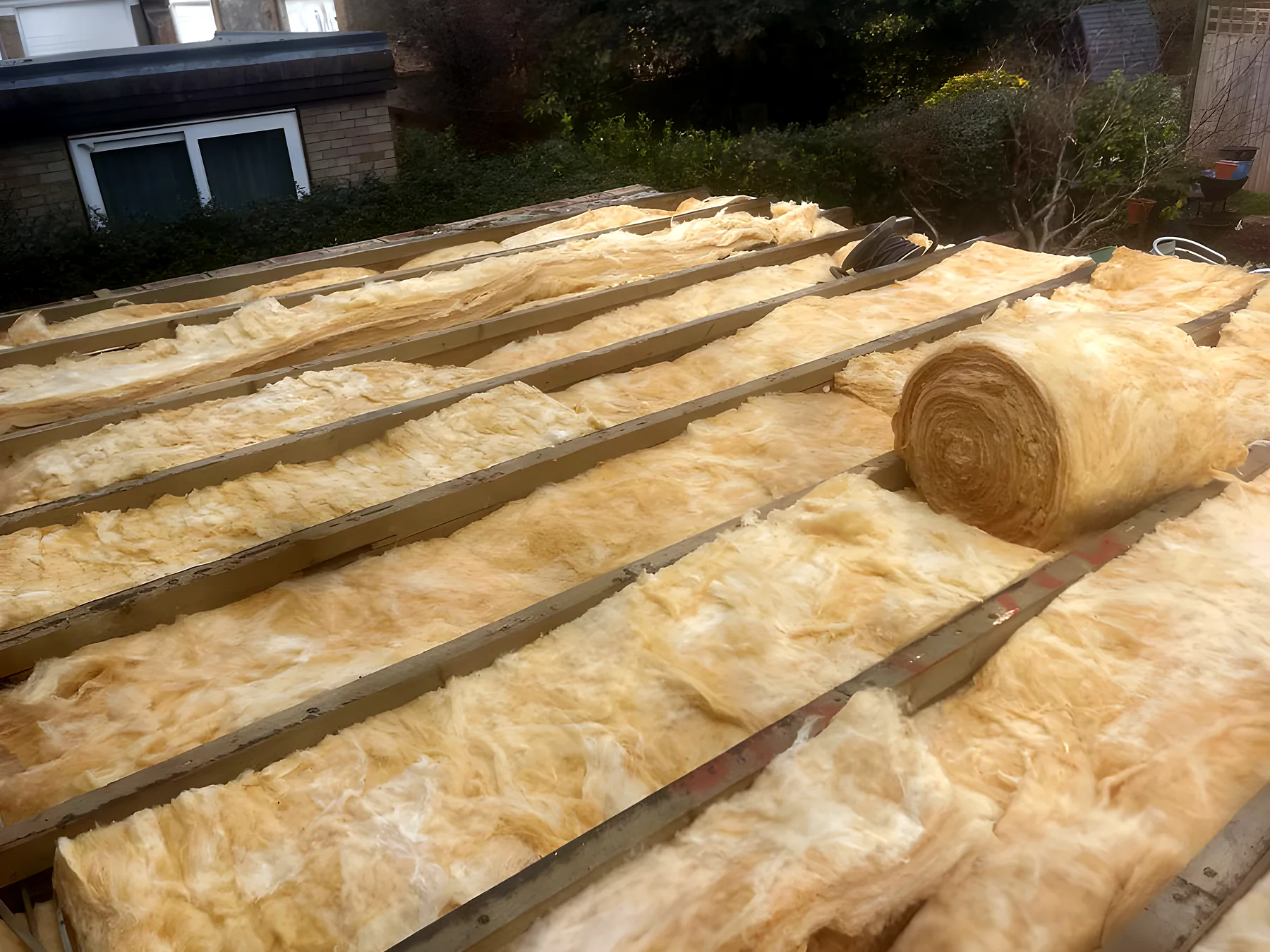
We check the deck, the falls, the outlets and the edges, and recommend a repair, or GRP, EPDM or felt for a new roof, by the building rather than by habit.
- 03
A Written Quote
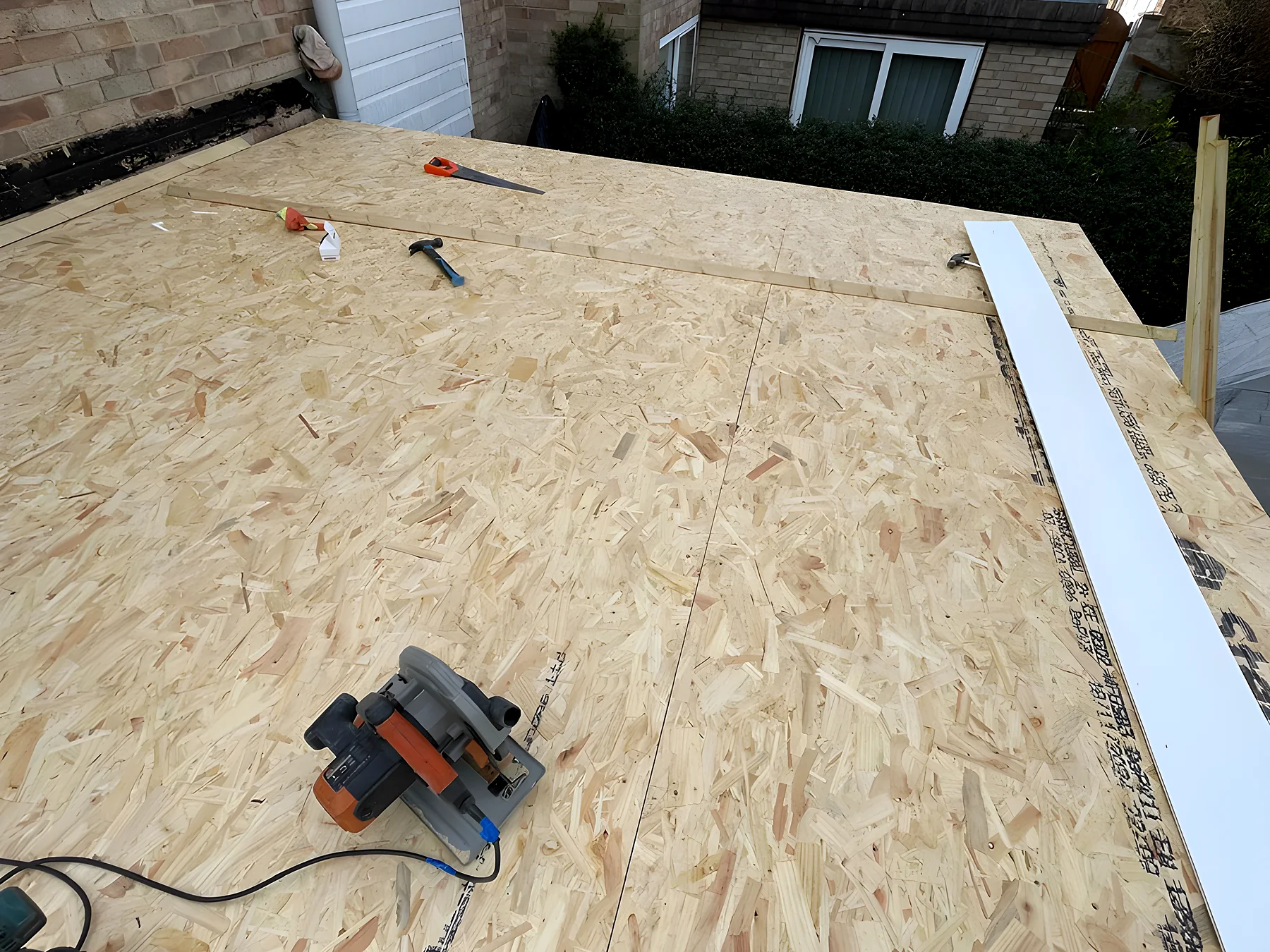
One itemised price with the deck, insulation, falls, outlets and trims listed, and no obligation.
- 04
Laid to Fall, Photographed
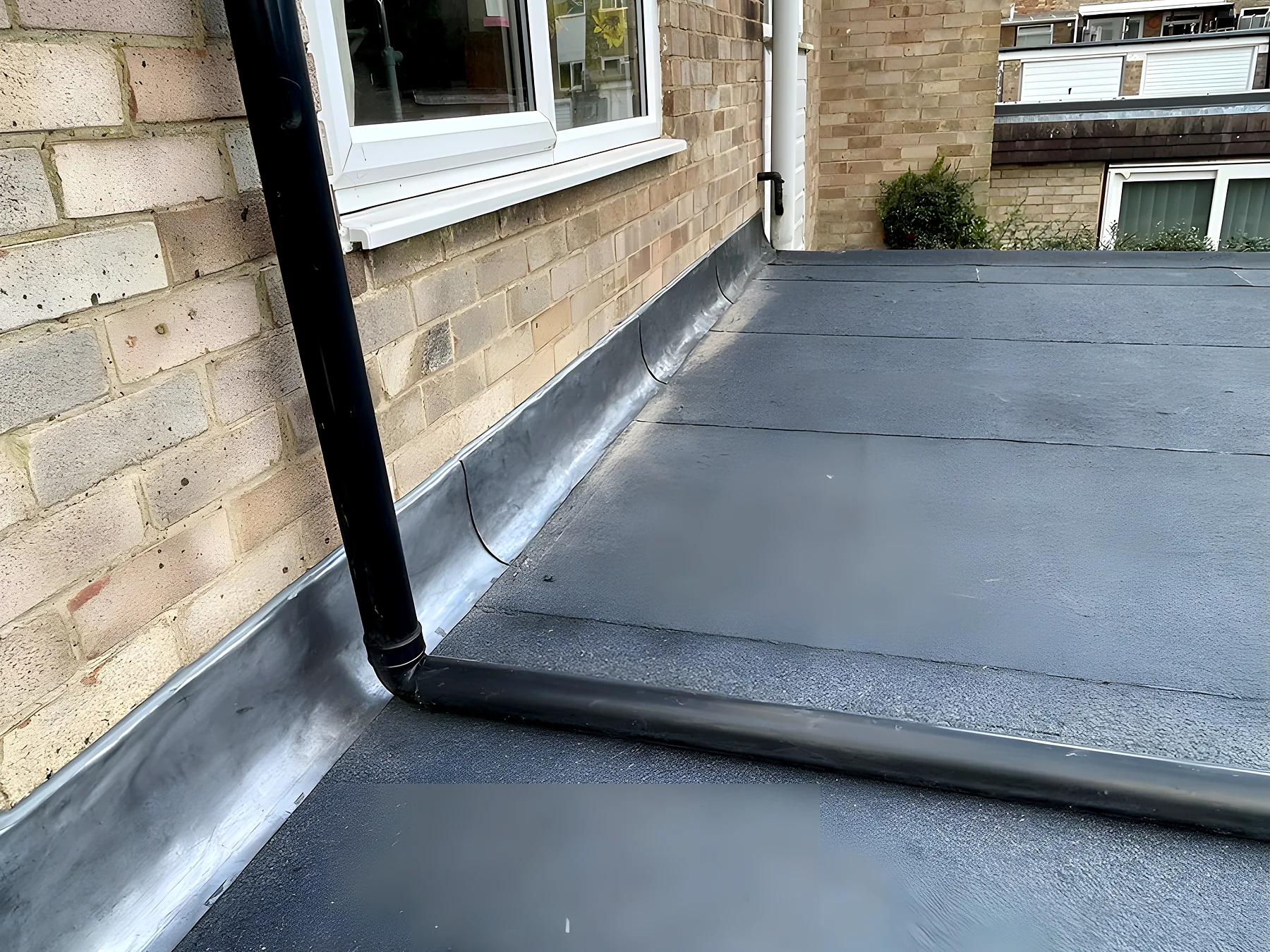
The new roof laid to fall, detailed at the edges, and photographed before and after.
Get in touch
01 / 04
Flat roofing questions
The QuestionsPeople Ask First.
Anything not covered here, call 01372 540 258 and ask. You will get a roofer, not a call centre.
GRP, EPDM or felt?
GRP for anything you might walk on or anything with awkward shapes. EPDM for big simple roofs like garages. Felt where the existing roof is felt and the deck is sound. We will tell you which fits yours.
How long does a flat roof last?
GRP and EPDM, 25 years and often a good deal more. Modern felt, 15 to 20. The old three layer felt roofs from the 1970s and 80s, which are most of what we replace, were good for about 15.
Can a flat roof be repaired rather than replaced?
If the deck is dry and the failure is local, yes. If water has got under the covering the deck is wet and a patch on top just traps it. We check the deck before we recommend either.
Free survey and quote
Call Us, or Senda Photograph.
A picture from the ground is usually enough for us to tell you what we are looking at. The survey and the written quote are free, and there is no obligation on either.
- London
- 0203 507 1501
- Leatherhead
- 01372 540 258
- Reigate
- 01737 749202
- Mobile, 24 hours
- 07513 397 799