
Leadwork in Leatherhead, Surrey and South West LondonLead Is Where a RoofKeeps the Water Out.
Wherever a roof changes direction or meets something, there is lead. Chimneys, valleys, dormers, parapets, abutments. Good leadwork outlives the roof around it. Bad leadwork is why most roofs leak.
Over 25 years on local roofs
Free survey and written quote
24 hour emergency call out
CORC member 8125
What we do
Leadwork,Start to Finish.
We form lead on site for chimneys, valleys, dormers and parapets, on modern homes and listed buildings.
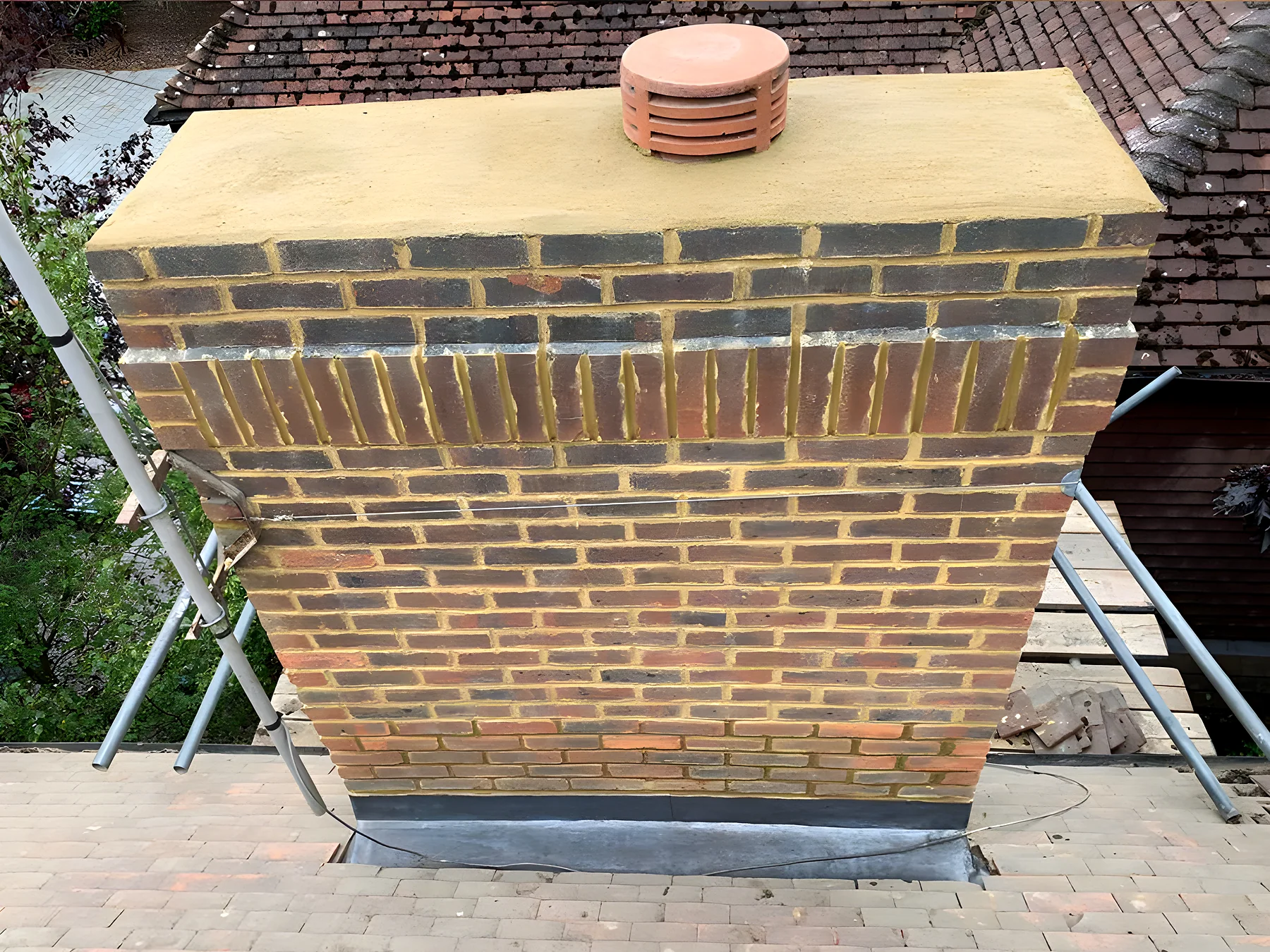
Chimney Flashings
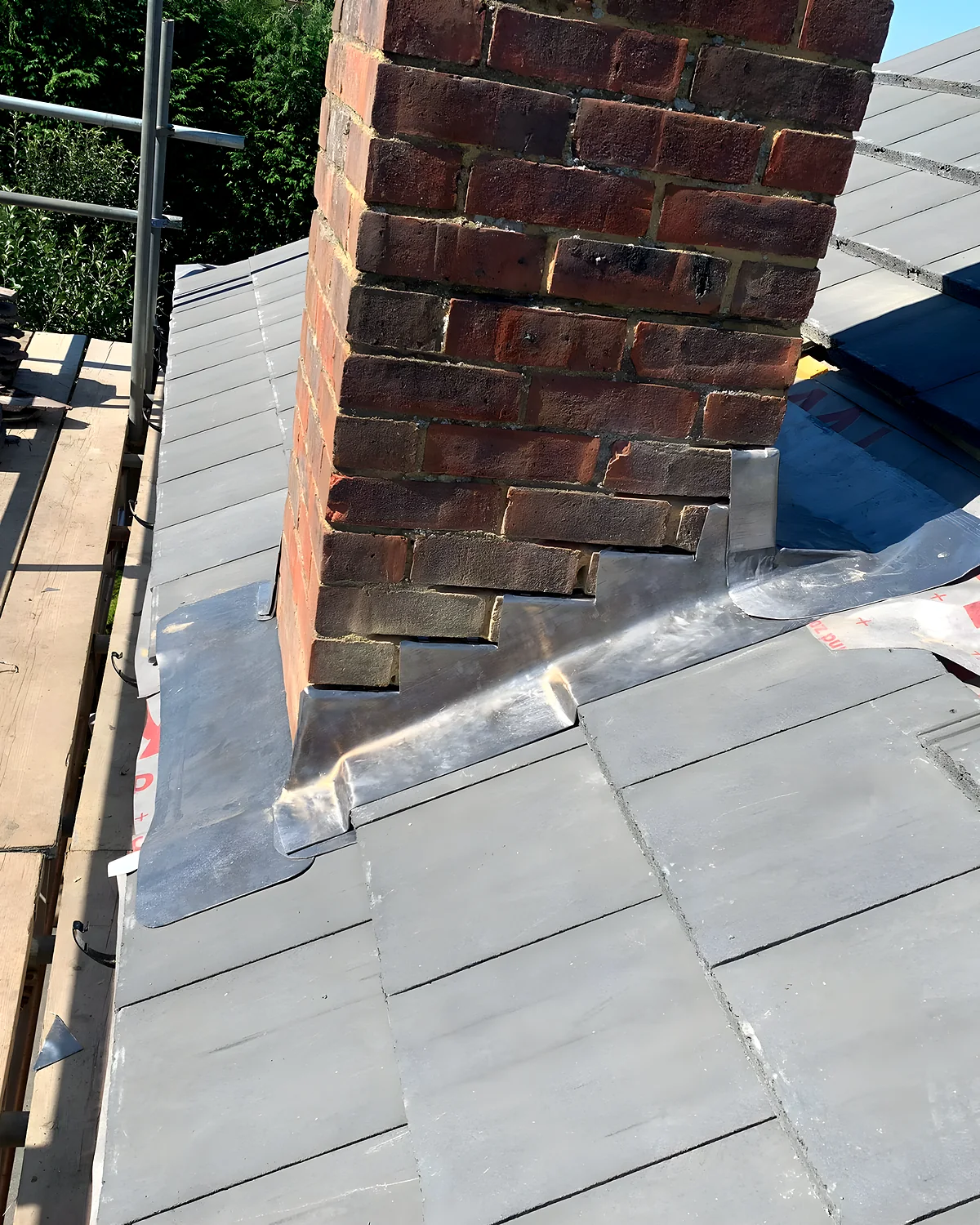
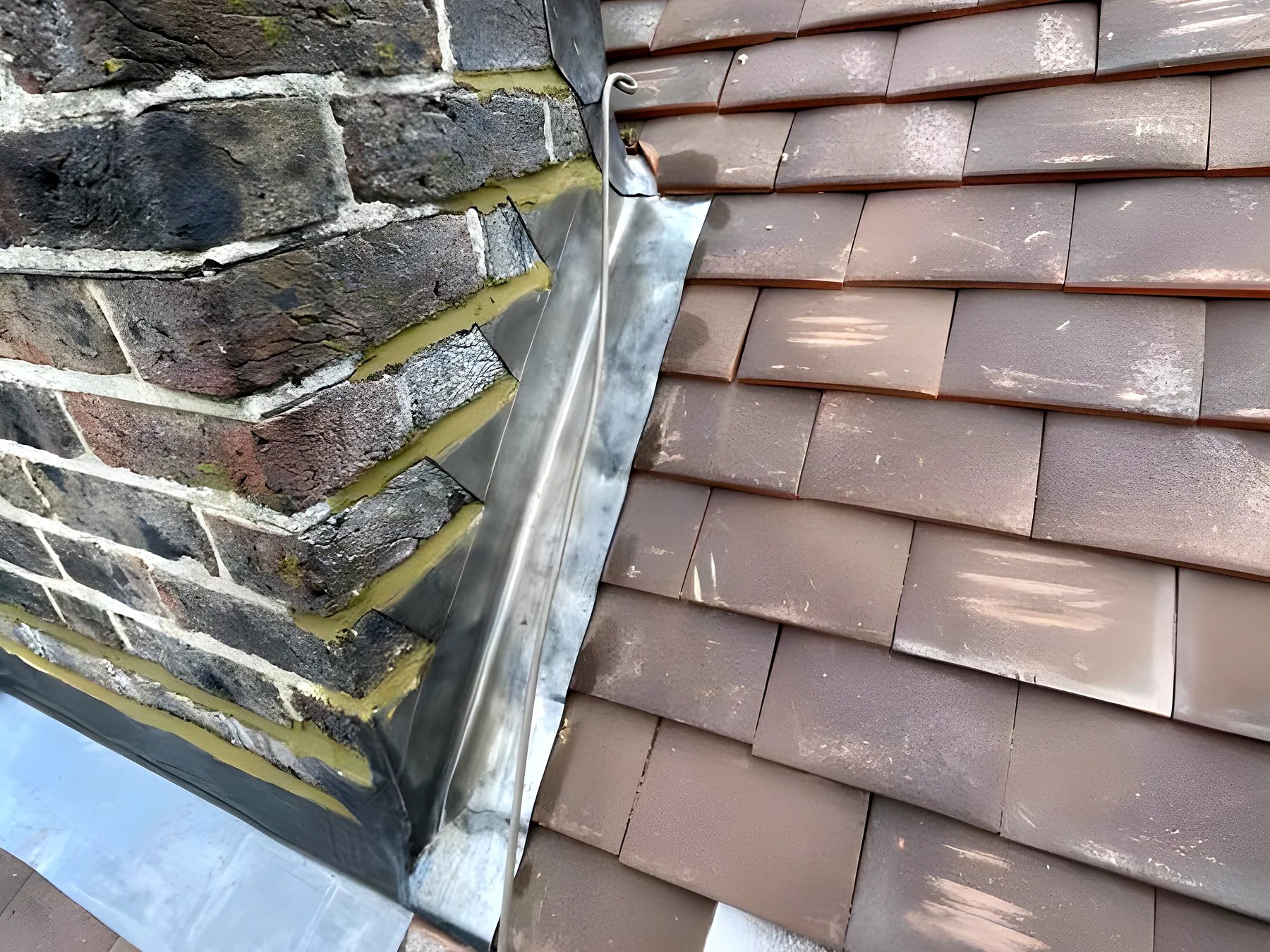
The step flashing up the side of a stack, the back gutter behind it and the apron in front. This is the single most common source of a leak we are called to, and it is usually blamed on the roof. We form new lead and dress it into the brickwork properly rather than patch it with mastic.
The step flashing is cut into the mortar joints as they rise up the side of the stack, with soakers under the tiles or slates, an apron across the front and a back gutter behind. Each piece overlaps the next so water is always running onto lead, never under it. When one piece pulls out or splits, the water goes straight down the brickwork and shows on the chimney breast inside.
We form the pieces on site, chase them into the joints, wedge and point them, and use lead of the right code for the size of each piece, so it moves with the weather without fatiguing.
Chimney flashings are worked in Code 4 lead, cut into the mortar joints at least 25 millimetres deep, wedged and pointed, with the step flashing lapping the soakers and the apron lapping the tiles below. A typical stack is re flashed in a day from the scaffold.
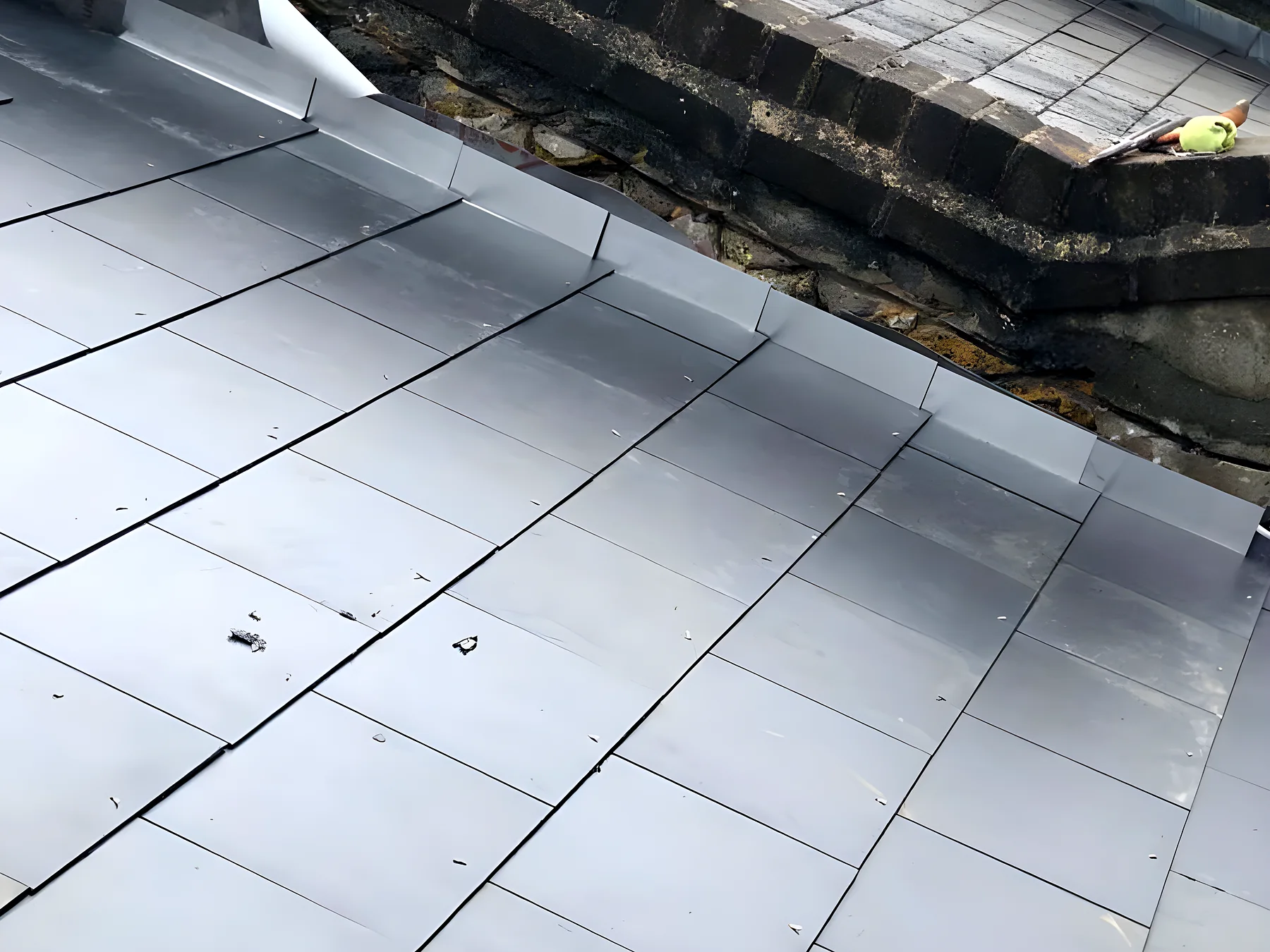
Valleys
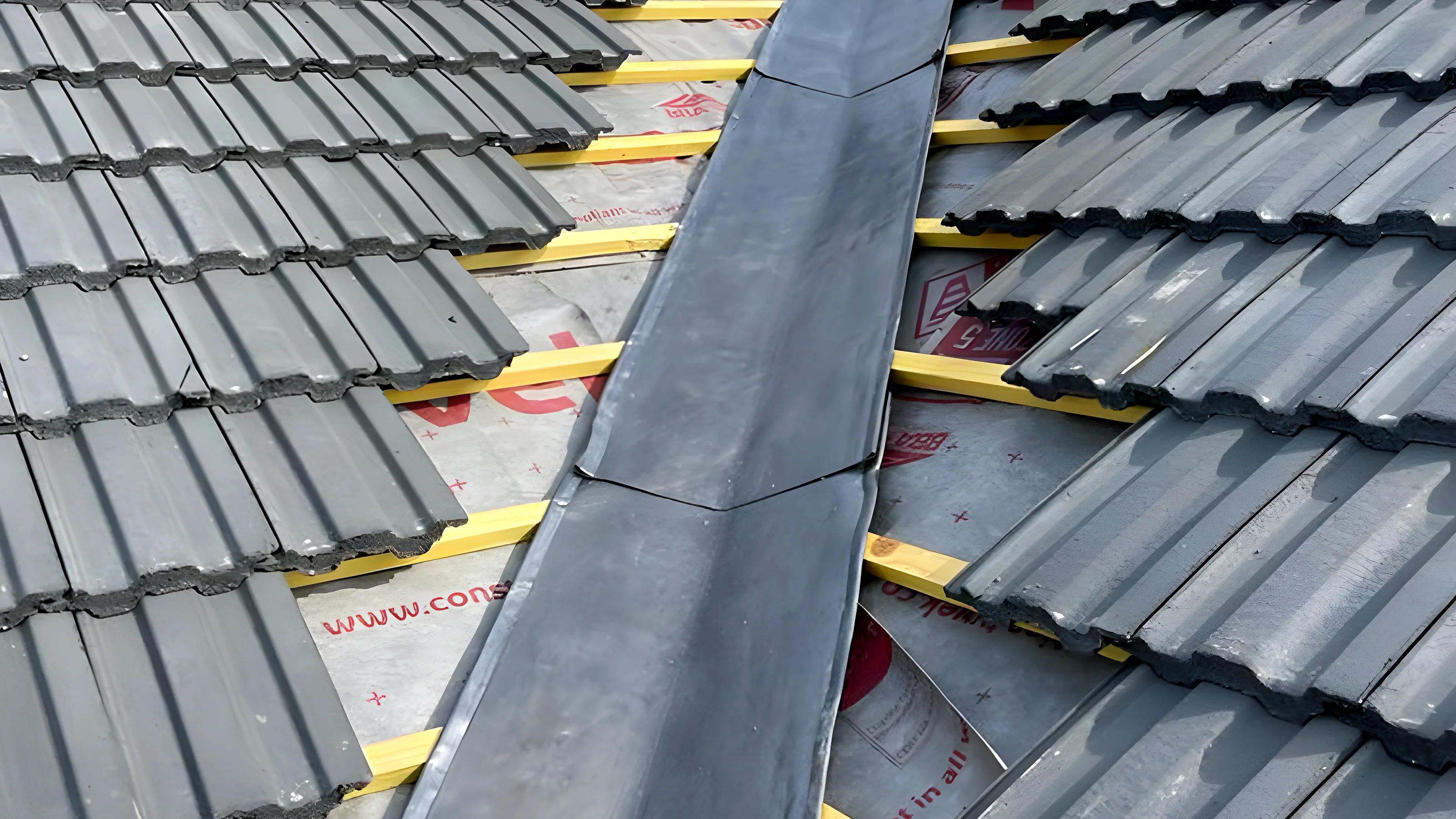
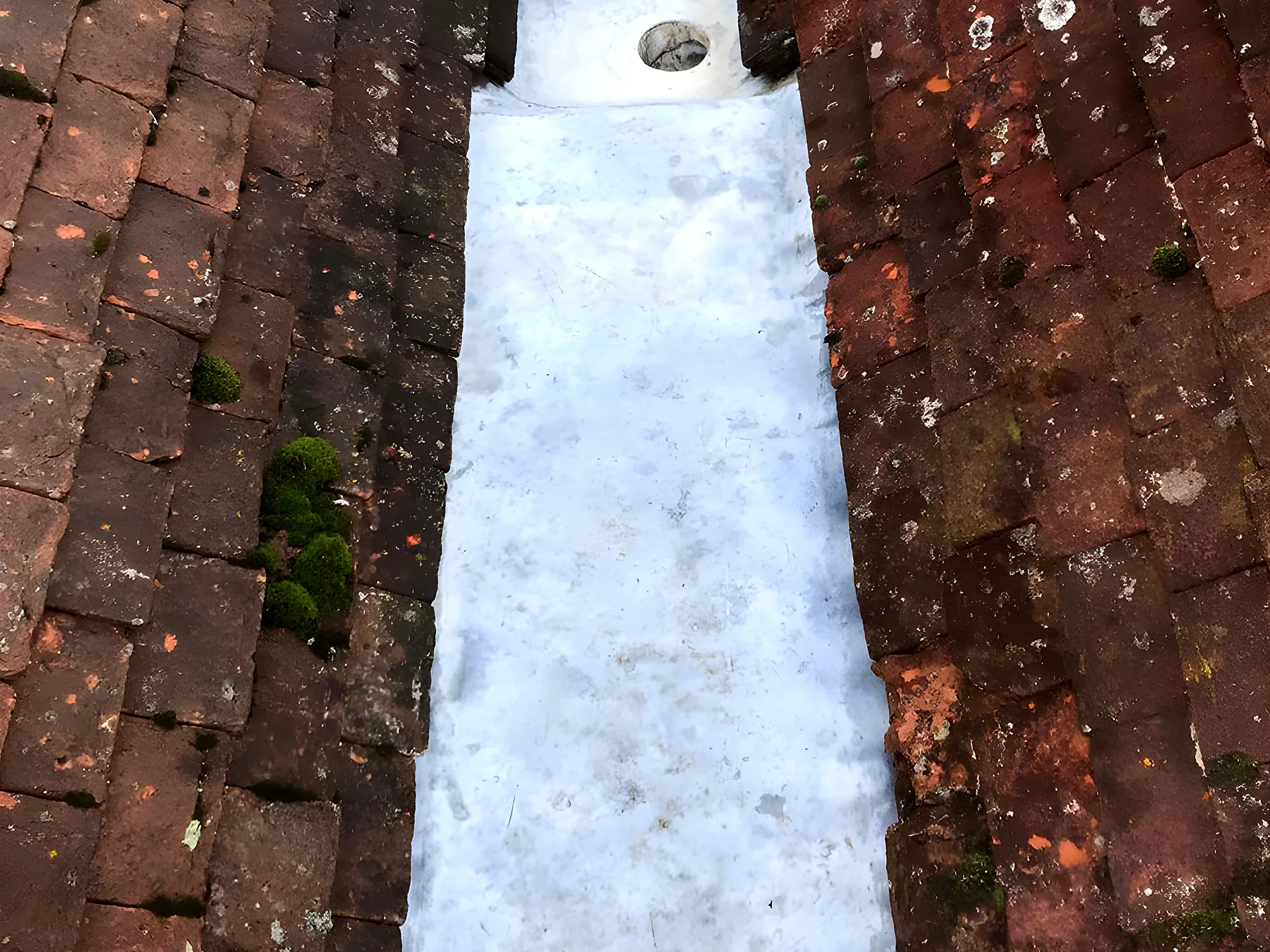
Where two slopes meet, the valley carries more water than anywhere else on the roof. Old lead valleys split; old tile valleys leak at the mortar. We replace with new lead of the right code, laid in lengths that can move with the roof.
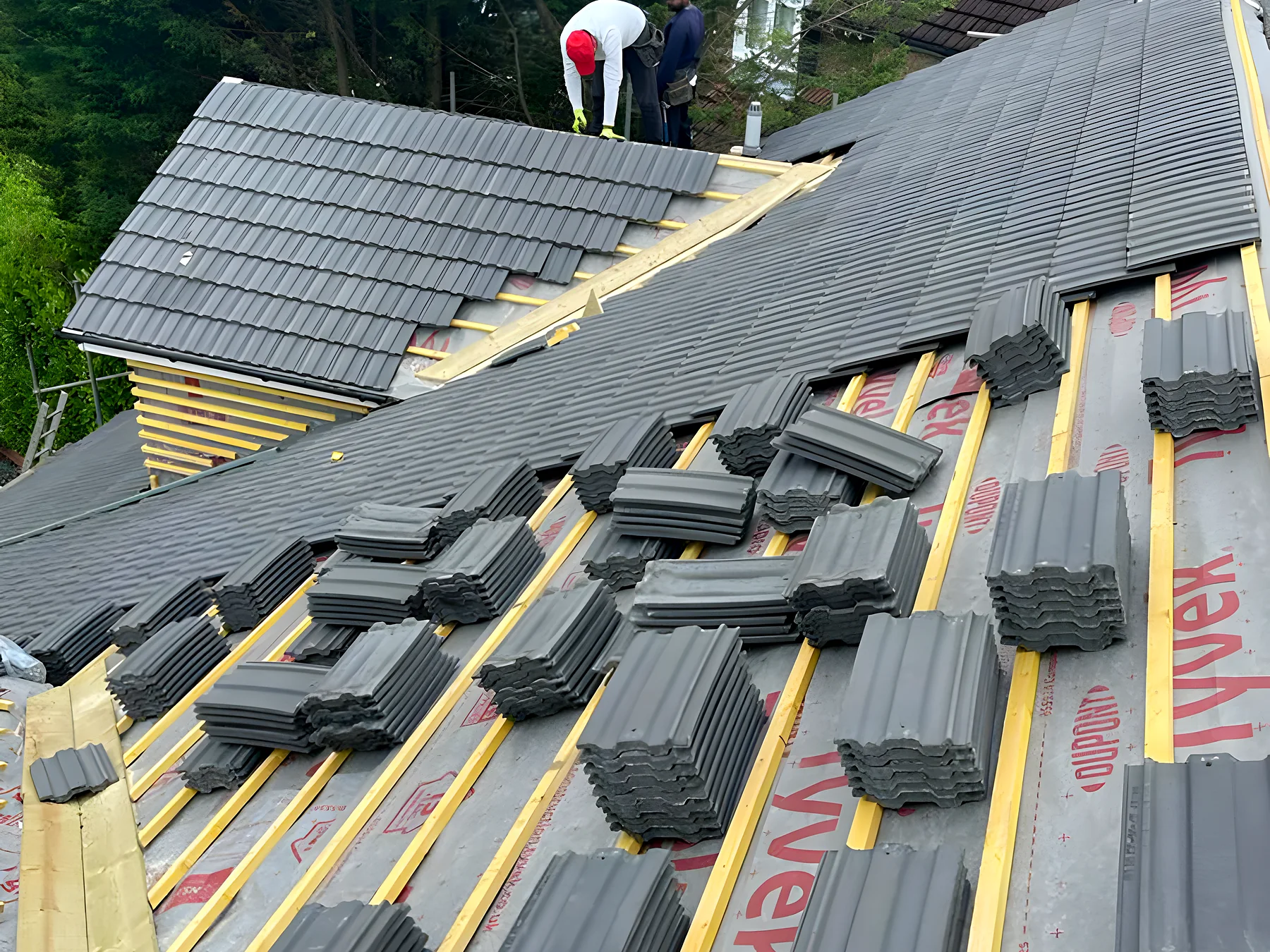
A lead valley is laid on boards in lengths short enough to expand and contract, each overlapping the one below. Old valleys split because they were laid too long, or because the lead was too thin for the job. The slates or tiles are cut back to the valley and re laid over the new lead so the water has a clear run.
Valleys carry the water from two slopes, so they are laid in Code 5 lead in short lengths with a lap of at least 150 millimetres, over a timber valley board and an underlay, and the tiles or slates are cut back to leave a clear channel down the middle.
Dormers and Abutments
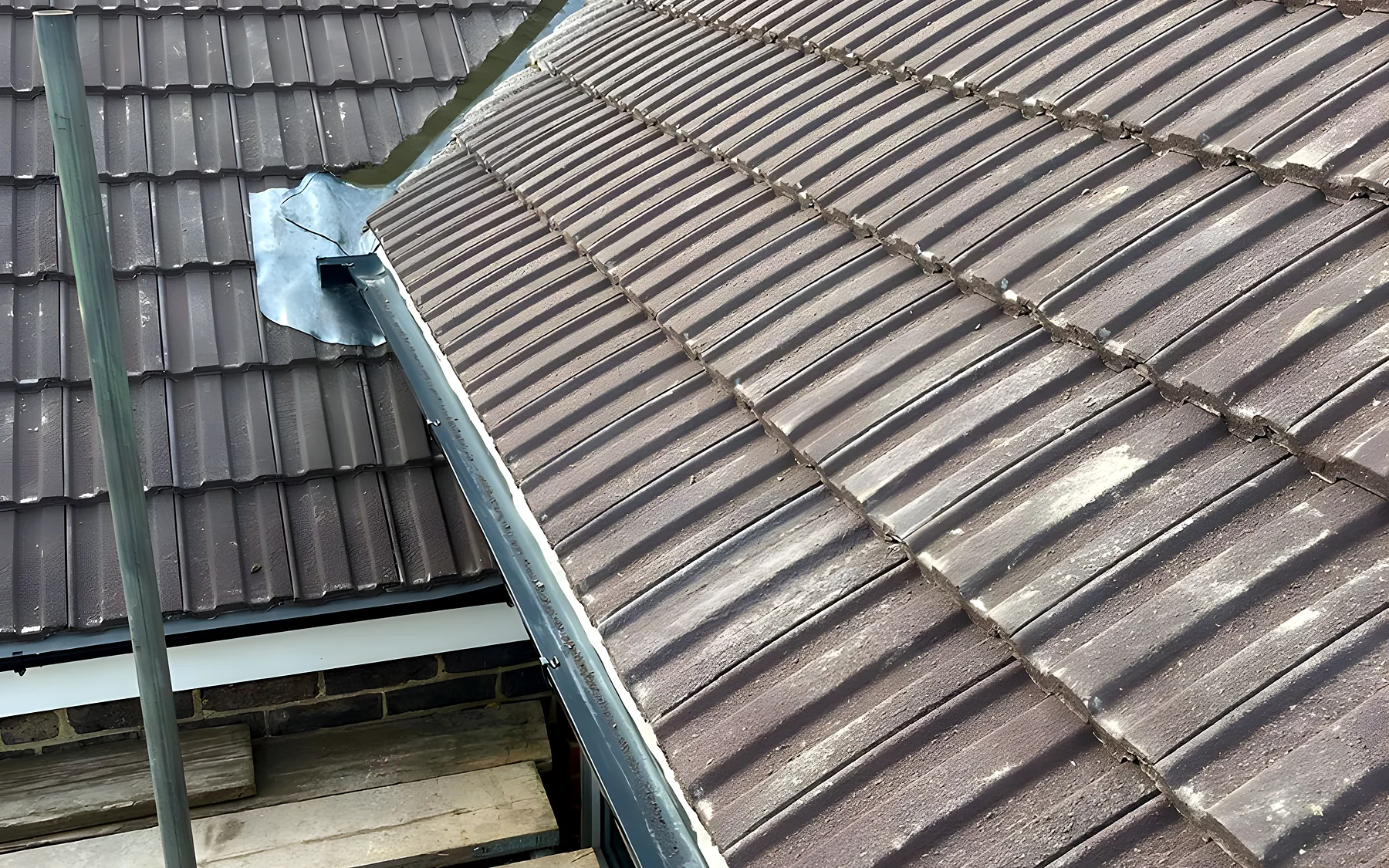
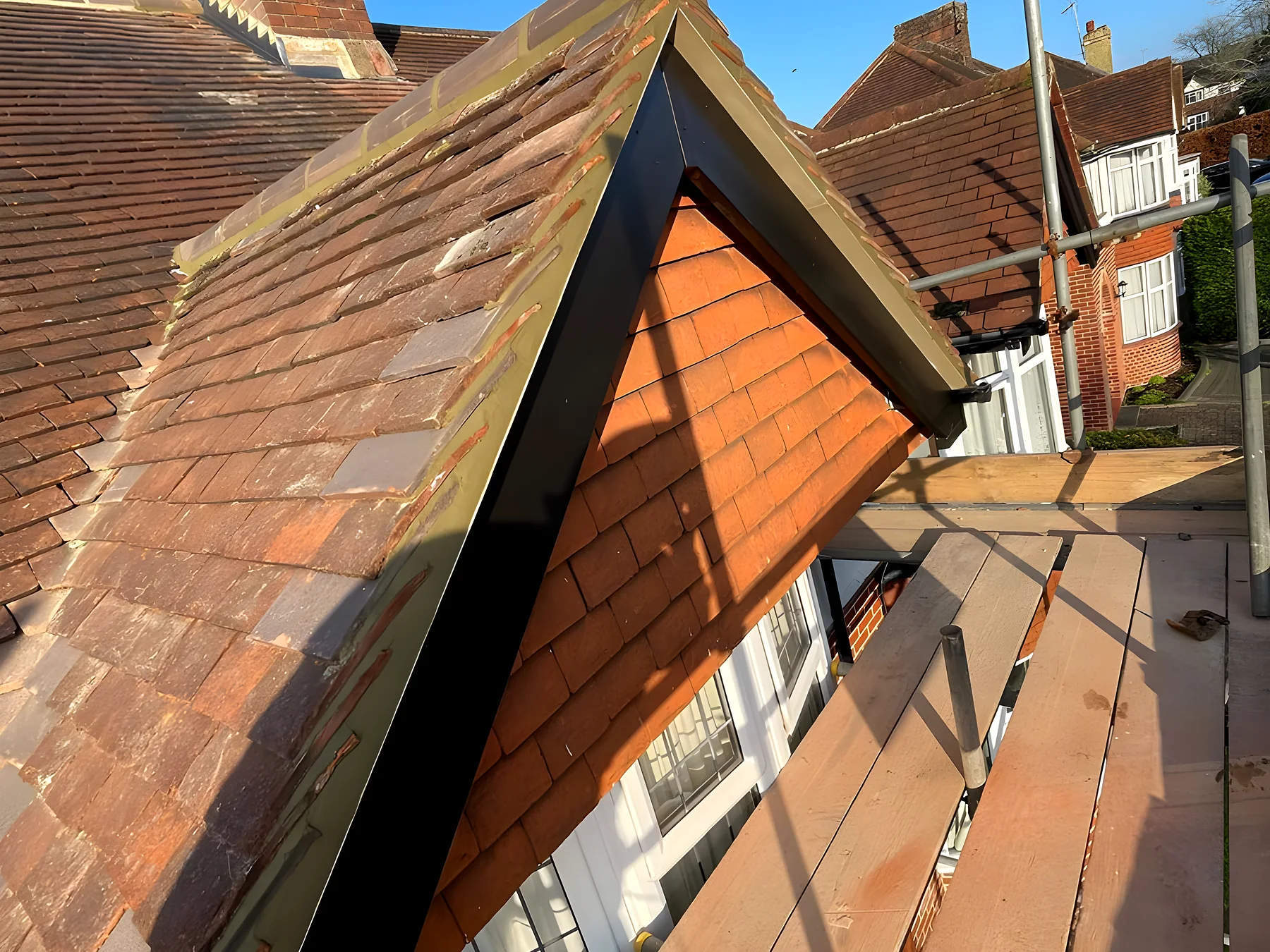
Dormer cheeks, tops and aprons; the lead where a roof meets a wall. Formed on site to the shape of the roof, not bought off a shelf.
Wherever a roof meets a wall or a dormer there is a junction the covering cannot seal on its own. Cover flashings, aprons and cheeks are formed to the exact shape of the roof and let into the wall, which is why they are made on site and not bought in.
Where a roof meets a wall, a cover flashing let into the wall laps over an upstand at least 75 millimetres high, and where a dormer sits in a slope the cheeks and top are finished in welded or lapped lead to suit the shape. Each piece is formed on site to the actual dimensions.
Heritage and Listed Work
Lead has been the roofing detail on British buildings for centuries. We work on period and listed properties, matching the details that are there and using the right code of lead for the job.
Period lead is often part of what is protected on a listed building. We match the details, codes and finishes that are there, and work with the conservation officer where consent requires it.
On period roofs the lead details are often part of the building’s character, and on a listed building they can be part of what is protected. We work to the Lead Sheet Association’s guidance and match the sizes, laps and finishes that are there, with the conservation officer involved where consent requires it.
Lead Roofs and Gutters
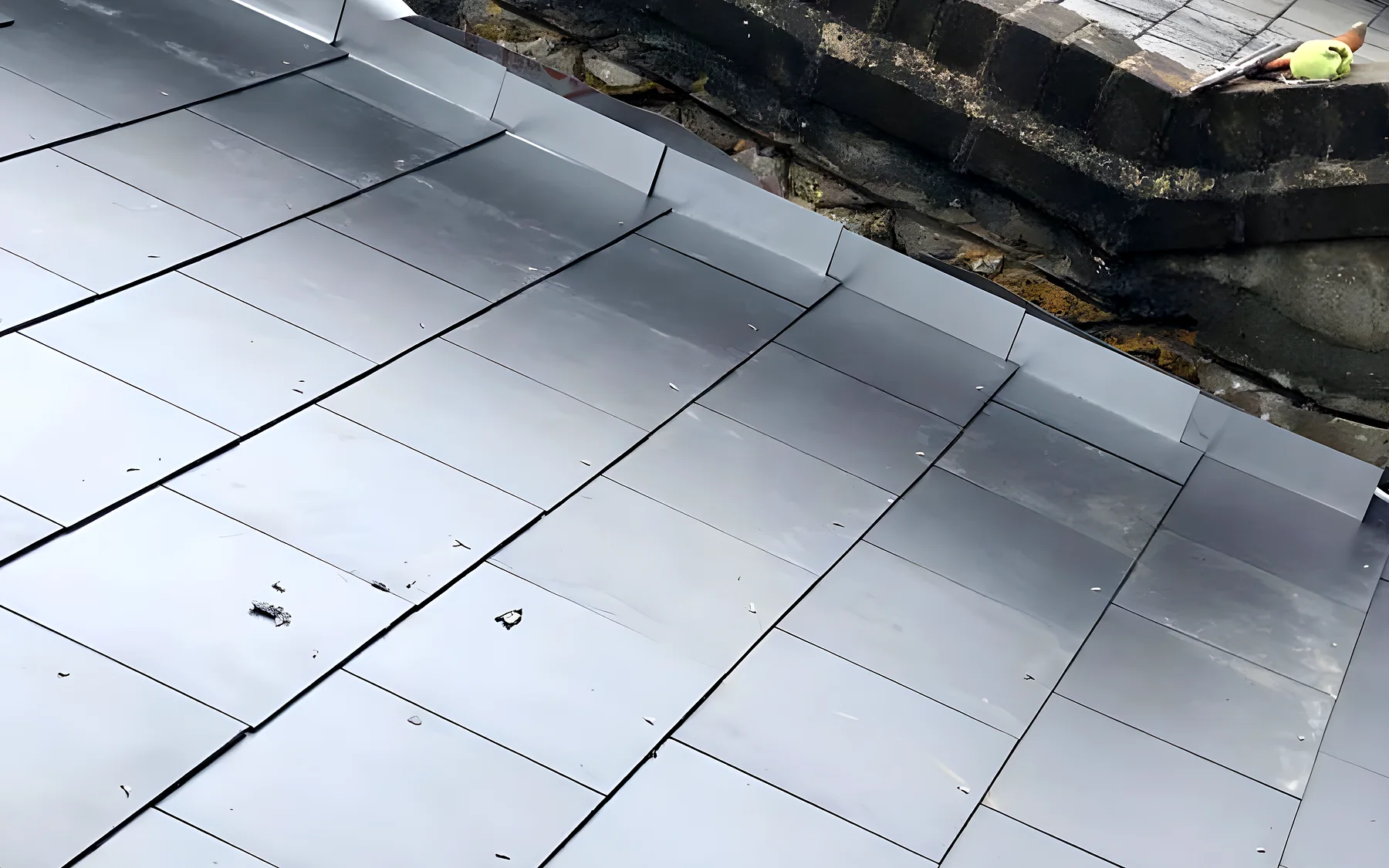
Flat lead roofs on bays and porches, lead lined parapet gutters and rainwater goods. The same craft, larger sheets.
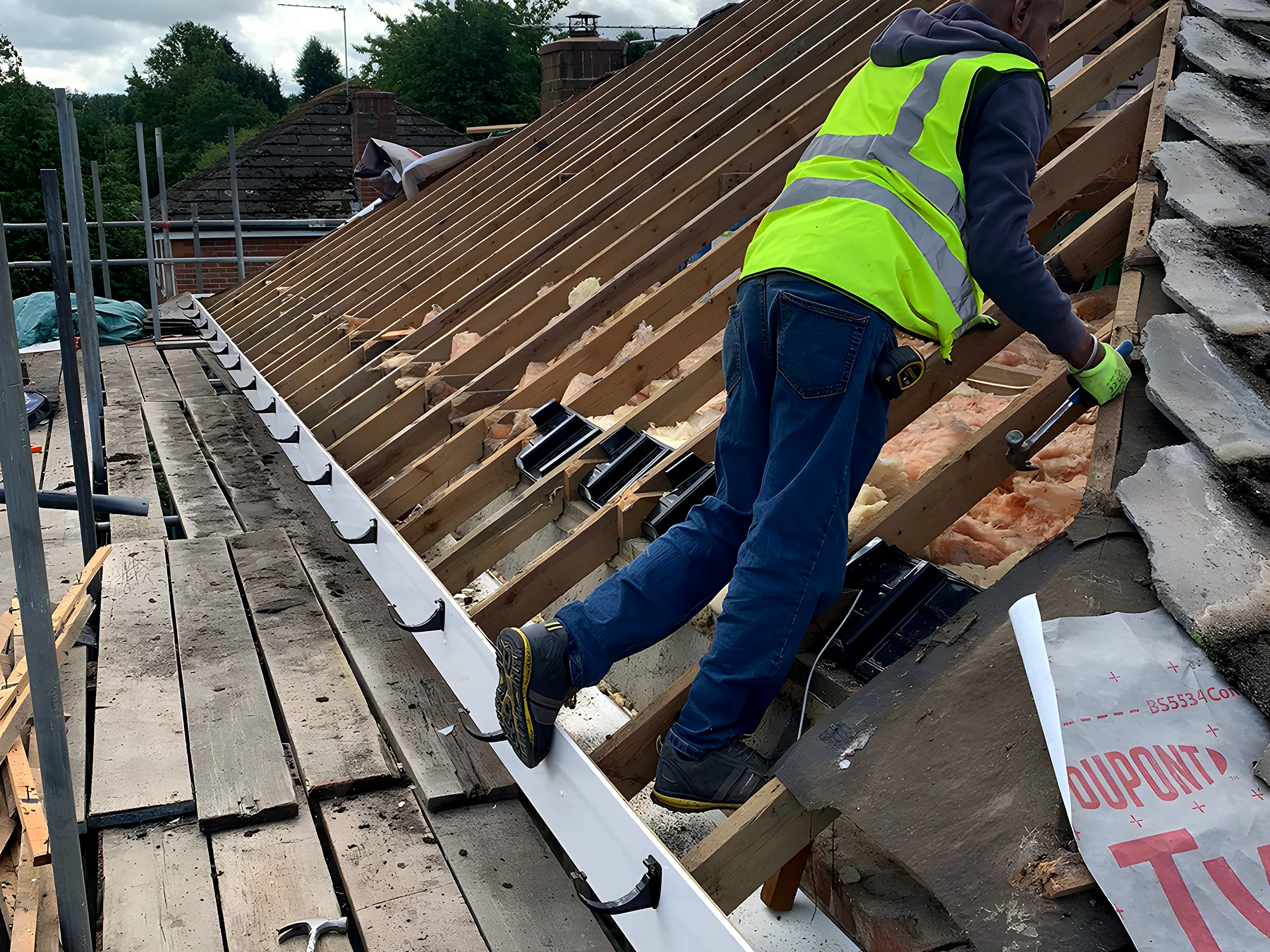
Bay window roofs, porches and parapet gutters are lined in lead sheet, laid with rolls or drips so each piece can move. We replace them in the same way, sized to the current guidance, so they last as long as the originals did.
Lead flat roofs and parapet gutters are laid in bays sized to the code of lead, separated by wood cored rolls or drips so that each bay can move, and finished with a patination oil so they weather evenly. A bay roof or porch is normally a one or two day job.
Sounds like your roof?
The Signs We AreUsually Called For.
- A wet patch on the chimney breast
- Damp around a dormer window
- Lead visibly lifted, cracked or pulled out of the brickwork
- Mastic or sealant smeared over old lead, which means someone gave up
- A leak at the point where a roof meets a wall
How it works
Leadwork:How It Works.
What happens between getting in touch and the finished job.
- 01
Get in Touch
Call or send a photograph of the chimney, valley or abutment that is leaking. Lead is where most leaks start, and a picture usually shows us the failure.
- 02
Find the Failure
We inspect the lead, the brickwork and the covering around it, and trace the leak to the detail rather than to the roof.
- 03
A Written Quote
An itemised price for new lead of the right code, formed on site, with any repointing or tiling around it.
- 04
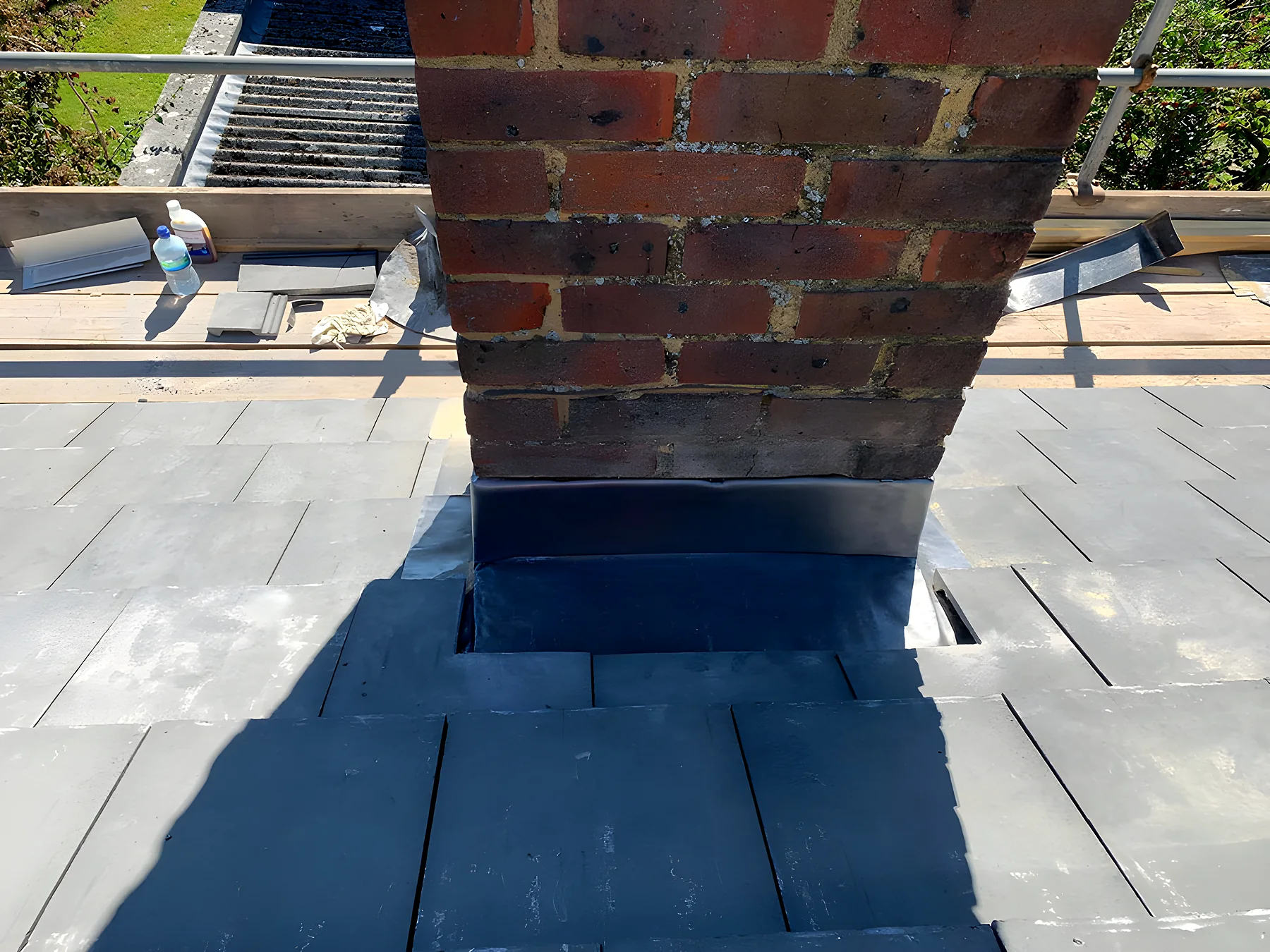
Formed on Site, Photographed
New flashings, valleys or aprons dressed in properly, and photographs of the finished detail.
Get in touch
01 / 04
Leadwork questions
The QuestionsPeople Ask First.
Anything not covered here, call 01372 540 258 and ask. You will get a roofer, not a call centre.
How long does leadwork last?
Done right, longer than the roof around it. Lead flashings from Victorian houses are often still doing their job. What fails is lead that was too thin for the job, laid in lengths too long to move, or patched with sealant.
Why is there sealant on my lead?
Because a previous repair gave up. Sealant on lead is a six month fix. The proper repair is new lead dressed into the brickwork.
Is my chimney leaking or my roof?
If the damp is on the chimney breast, it is almost always the flashing or the stack, not the roof. We check both.
Free survey and quote
Call Us, or Senda Photograph.
A picture from the ground is usually enough for us to tell you what we are looking at. The survey and the written quote are free, and there is no obligation on either.
- London
- 0203 507 1501
- Leatherhead
- 01372 540 258
- Reigate
- 01737 749202
- Mobile, 24 hours
- 07513 397 799