
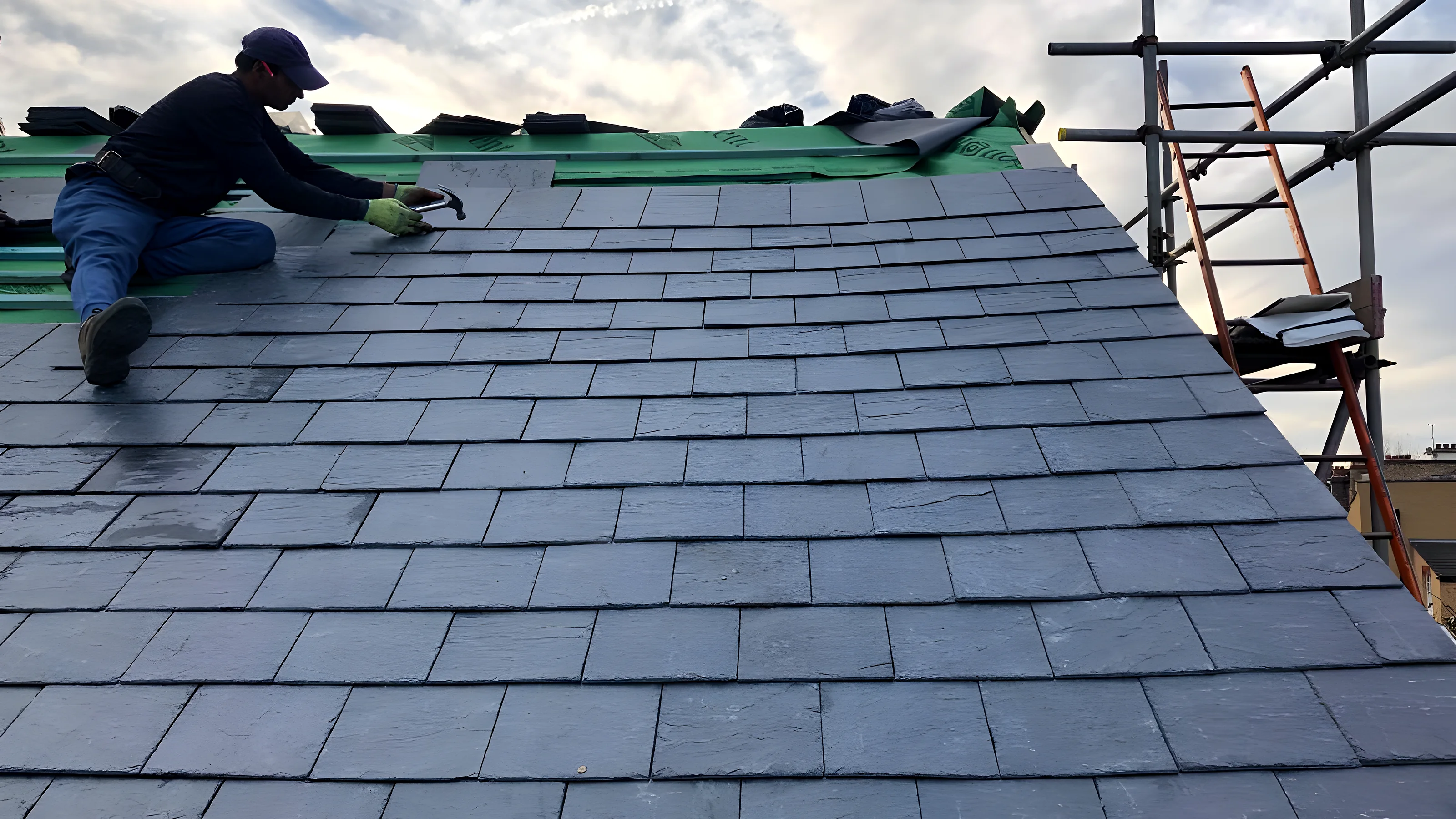
Roof repairs in Leatherhead, Surrey and South West LondonRoof Repairs That Fixthe Actual Problem.
Most of the roofs we are called to do not need replacing. They need one thing fixing properly, by someone who has found where the water is really getting in rather than where the stain is. That is the job.
Over 25 years on local roofs
Free survey and written quote
24 hour emergency call out
CORC member 8125
What we do
Roof Repairs,Start to Finish.
We find where the water is actually getting in, fix it, and tell you how long the roof has left.
Finding the Leak, Not the Stain
Water almost never comes through where you see it. It runs along a rafter, a batten or the top of the felt and drops somewhere else, sometimes a room away. We go up, find the point of entry, and fix that. A repair aimed at the stain is a repair you pay for twice.
The search starts on the roof and, where there is one, in the loft. From inside, daylight through the covering, dark tide marks on the underlay and damp battens show the line the water has taken. From above, we look at the details first, because that is where roofs fail: the lead around the chimney, the valleys, the eaves and the verges, and any tile or slate that has moved.
Once the point of entry is found we photograph it and show you before anything is priced. If there is more than one fault, and on an older roof there often is, the quote lists each one separately so you can see what is urgent and what can wait.
A typical leak trace takes under an hour on site, and the report you get names the detail that failed, shows it in a photograph, and says whether anything else on that slope is close behind. If the roof needs more than a repair, we tell you that on the same visit rather than in the small print of a quote.
Slipped, Cracked and Missing Tiles
The most common call we get. One tile moves, wind gets under the row, and the ones around it follow. We replace the damaged tiles, re fix the loose ones and check the rest of the slope while we are there, because if one nail has failed the others on that batten are the same age.
Tiles move for a reason. On a concrete roof it is usually a nail that has rusted through or a clip that was never there; on a clay roof it is often the nibs breaking on tiles that are eighty years old. Frost splits tiles that have soaked up water, and a footfall from a previous trade cracks them where they are not supported.
We match the replacement to what is on the roof, from reclaimed stock for older clay and slate and from current ranges for concrete, so the repair does not show from the road. Every replacement is fixed, not just slotted in, and the surrounding tiles are checked and re fixed while the ladder or scaffold is up.
Most tile repairs in Surrey and South West London are done in a morning from a ladder or a small tower, weather allowing. Tiles are fixed to the current British Standard for slating and tiling, BS 5534, which means every replacement is nailed or clipped rather than laid loose, so the same tile does not slip again in the next wind.
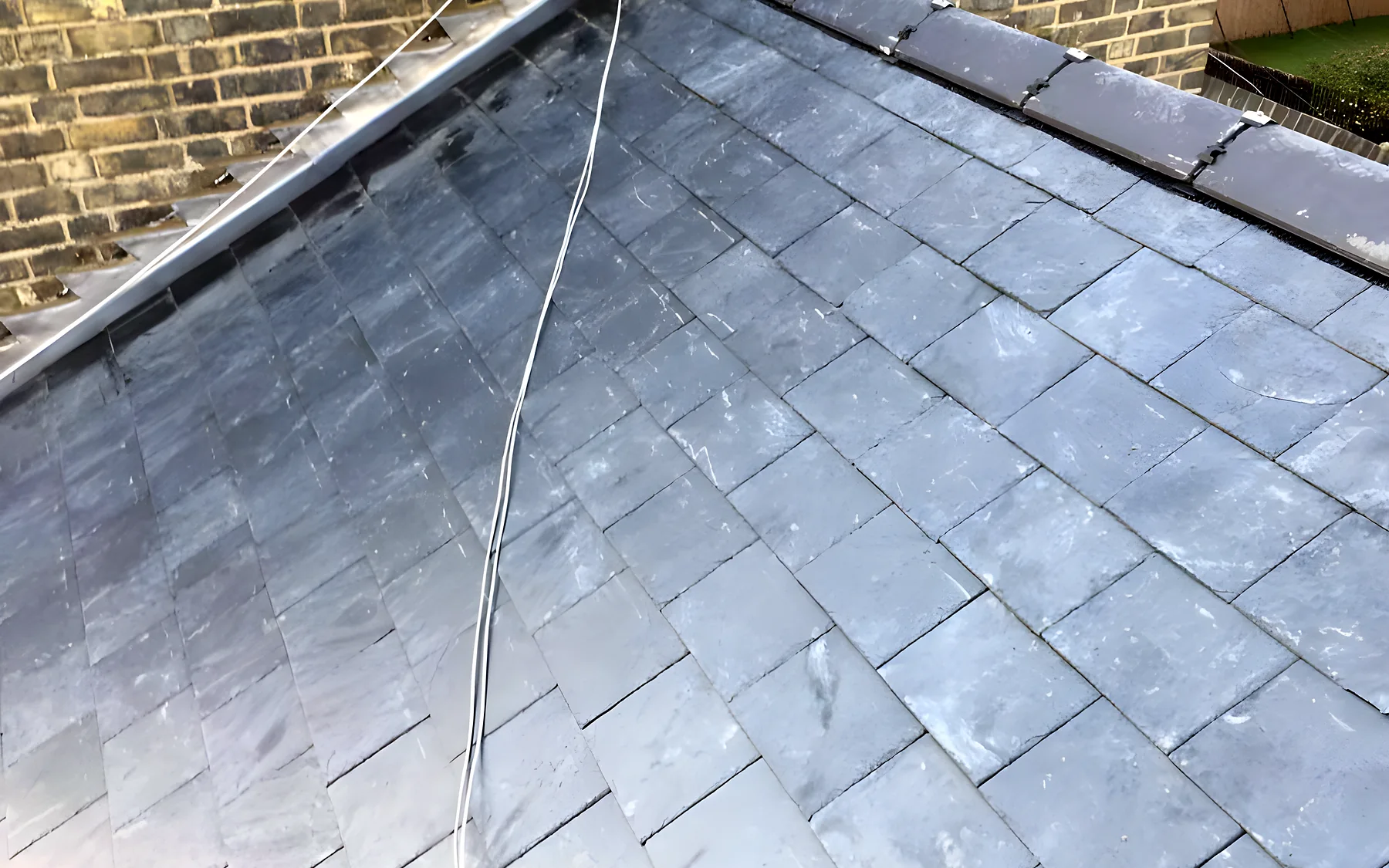
Lead, Valleys and Chimneys
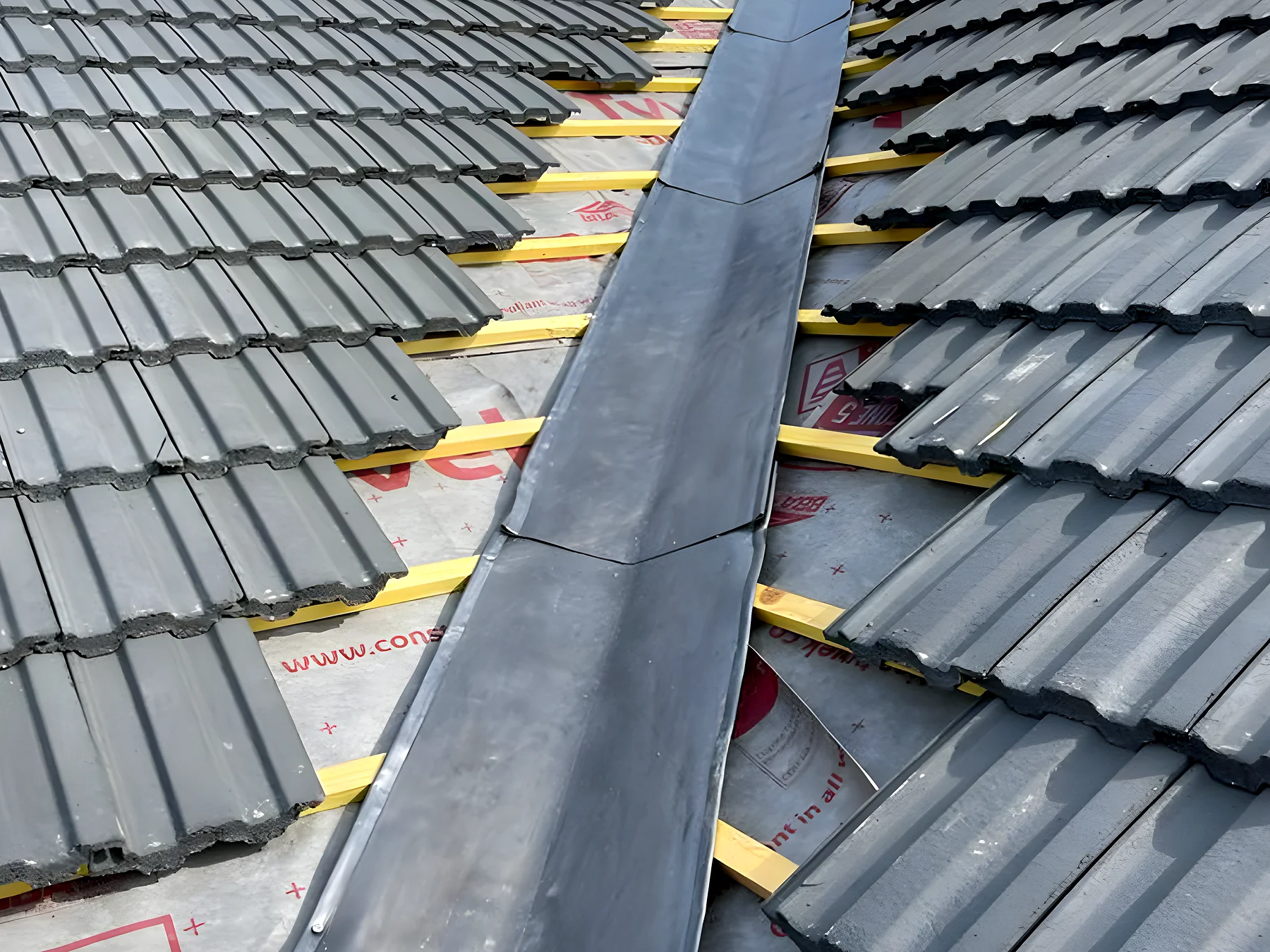
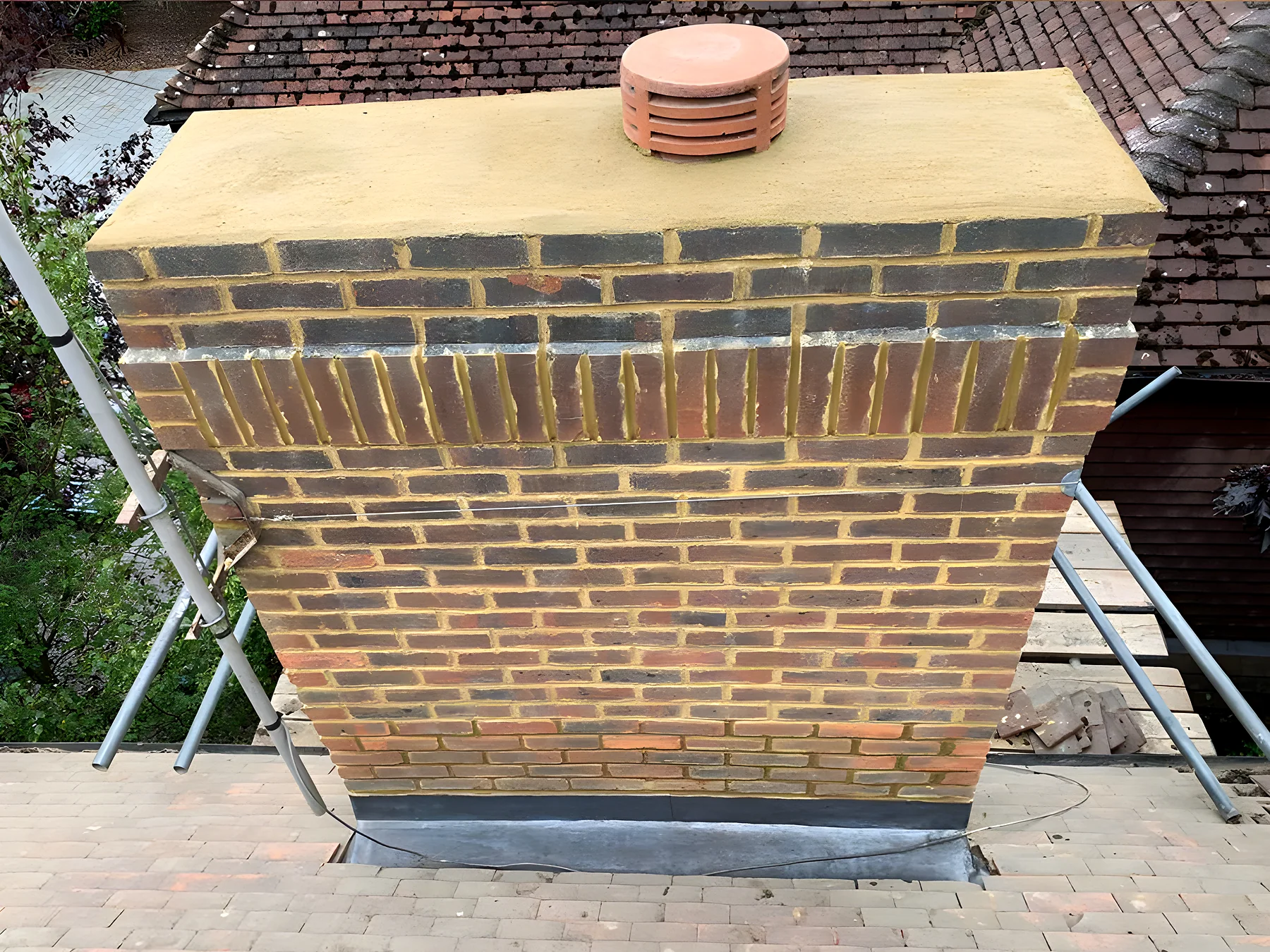
The details are where roofs leak. Lead flashing that has pulled away from a chimney, a valley that has split, a soaker that was never there. We dress new lead on site rather than use sealant, because sealant is a short term repair on a material designed to last fifty years.
Lead fails in predictable ways. Step flashing pulls out of the mortar joint it was chased into, back gutters behind a chimney split where the lead has fatigued, and long valleys crack because they were laid in one length with no room to move. Each one lets water in at a point the covering cannot protect.
We form new lead of the right code for the detail, in lengths that can expand and contract, and dress it into the brickwork with a proper chase and lead wedges. It is more work than a tube of sealant and it is the difference between a repair and a delay.
Lead is specified by code, the thickness for the job: Code 4 for flashings and soakers, Code 5 for valleys and gutters that carry water. We use the code the detail needs and dress it by hand, which is why a lead repair from us is quoted as a repair to last rather than a seal to get you through the winter.
Flat Roof Repairs
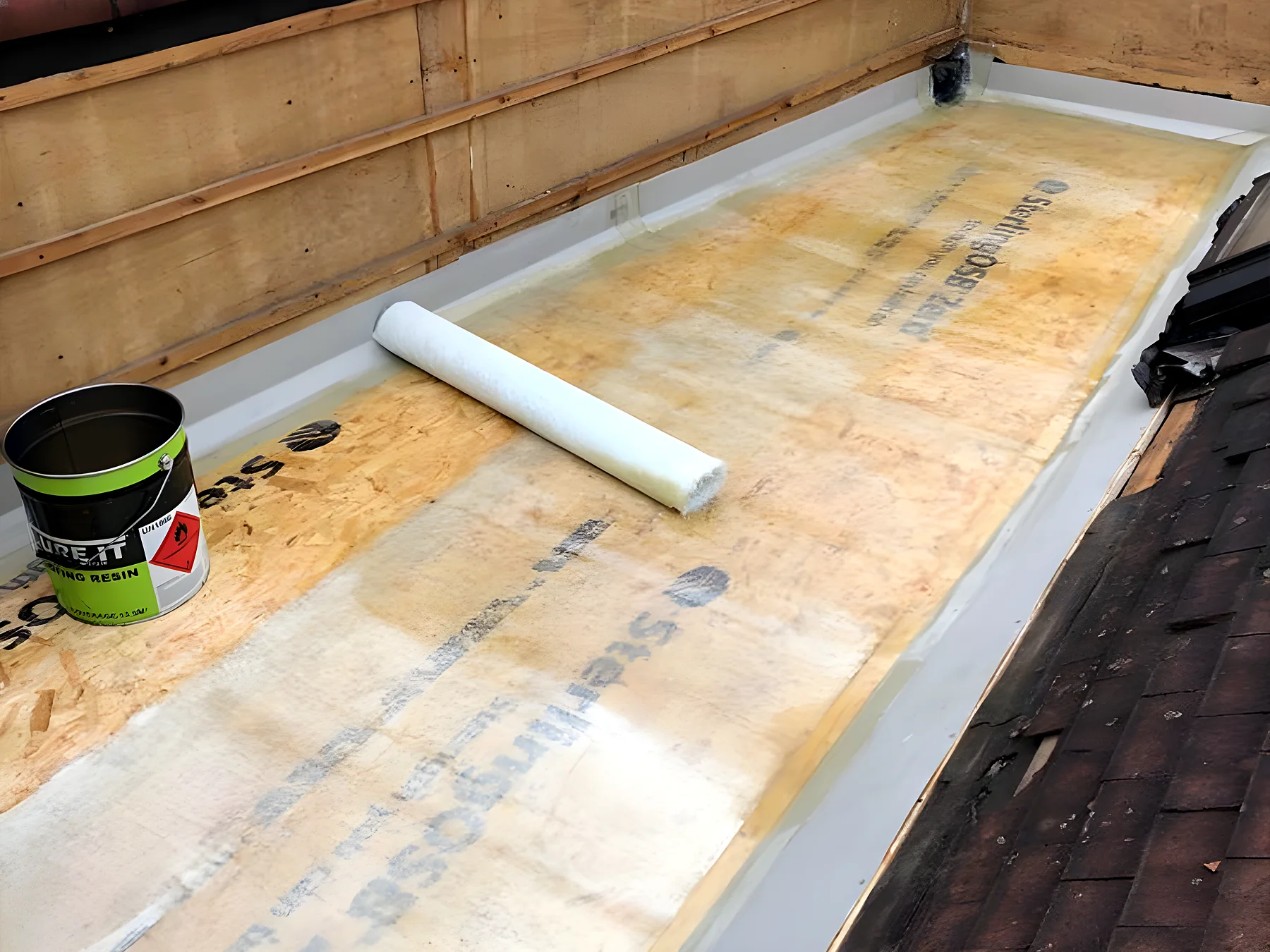
GRP, EPDM and felt. Blisters, splits, ponding and failed edges. Some can be repaired; some are past it and we will say so rather than patch a roof that will be leaking again by spring.
On a flat roof we look at the whole covering, not just the wet patch, because the water shows up where the deck sags rather than where it got in. Splits at the upstands and laps, blisters, failed edge trims and blocked outlets are the usual finds, and each can be repaired on a roof that is otherwise sound.
Where the deck is soft underfoot or the covering has been patched several times already, a repair only buys a season. We will tell you that plainly and quote for a new GRP or felt roof instead, so you can decide with the facts in front of you.
A flat roof repair is quoted after we have walked the roof, because the deck tells us more than the surface. Where a repair is right, it is done in a day and photographed. Where the deck is soft, the honest answer is a new GRP or felt roof, and we will show you the photographs that make that case.
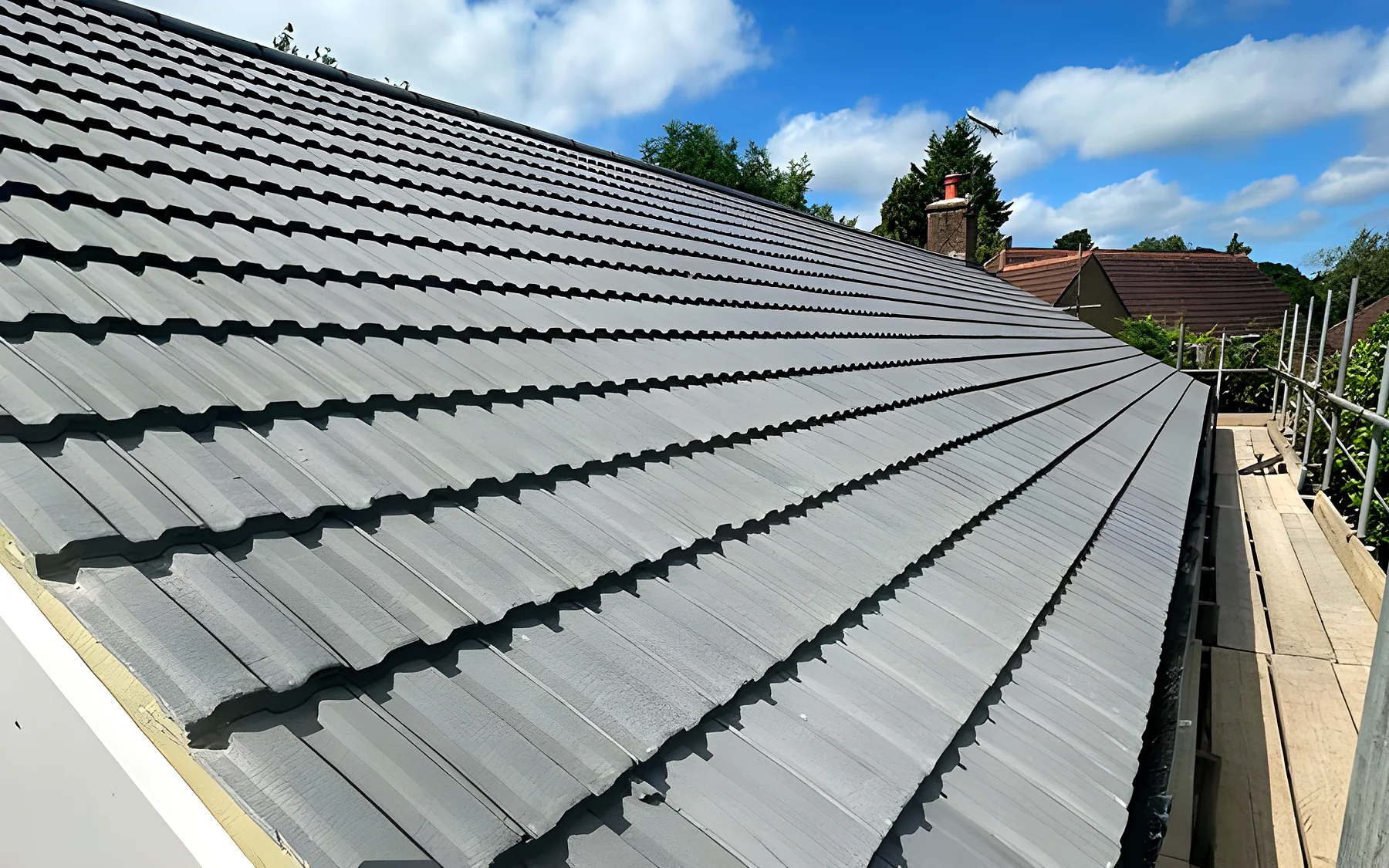
Storm Damage and Emergencies
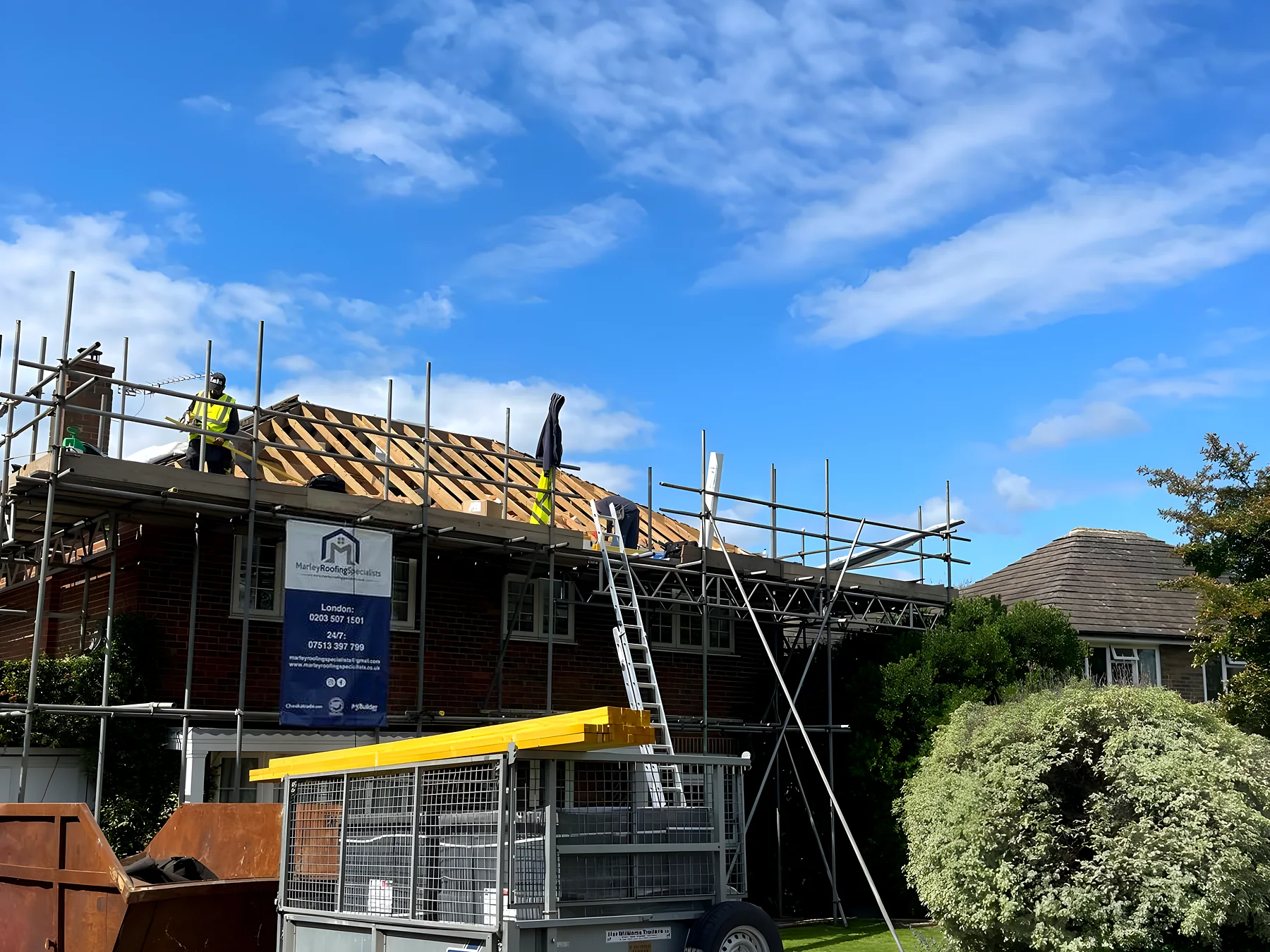
Ridge tiles down, a hole in the felt, water coming through a ceiling. We make it safe and watertight first, with a temporary cover if that is what the weather needs, then come back and do the permanent repair when it is dry. There is someone on the phone 24 hours a day.
The first visit is about stopping the damage: loose tiles and slates taken down before they fall, a cover over any opening, a hanging gutter or a cracked pot made safe. We photograph the roof as we found it, which is what an insurer will ask for.
The permanent repair follows when the roof is dry, with the slope around the damage checked as well, because a storm rarely moves one tile without loosening its neighbours.
Storm calls in our area come with the south westerlies, and the roofs that lose tiles are usually the ones bedded on old mortar at the ridge and the verge. A temporary repair from us holds until the permanent one, and both are photographed for the insurer with the date and a description a claims handler can use.
Photographs Before and After
You cannot stand on your roof and look. So we photograph what we found and what we did and send them to you. It is how you know the work happened, and it is how we keep ourselves honest.
The photographs are part of the job, not an extra. You see the fault as we found it, the repair as we left it, and anything else we noticed while we were up there. They go with the invoice, and they are useful for an insurance claim, for a buyer or seller, and for the next roofer in twenty years.
The photographs are also the record for the next owner. A buyer’s surveyor who can see a dated photograph of the valley being relined in lead asks fewer questions than one who is told it was done. Keep them with the house paperwork.
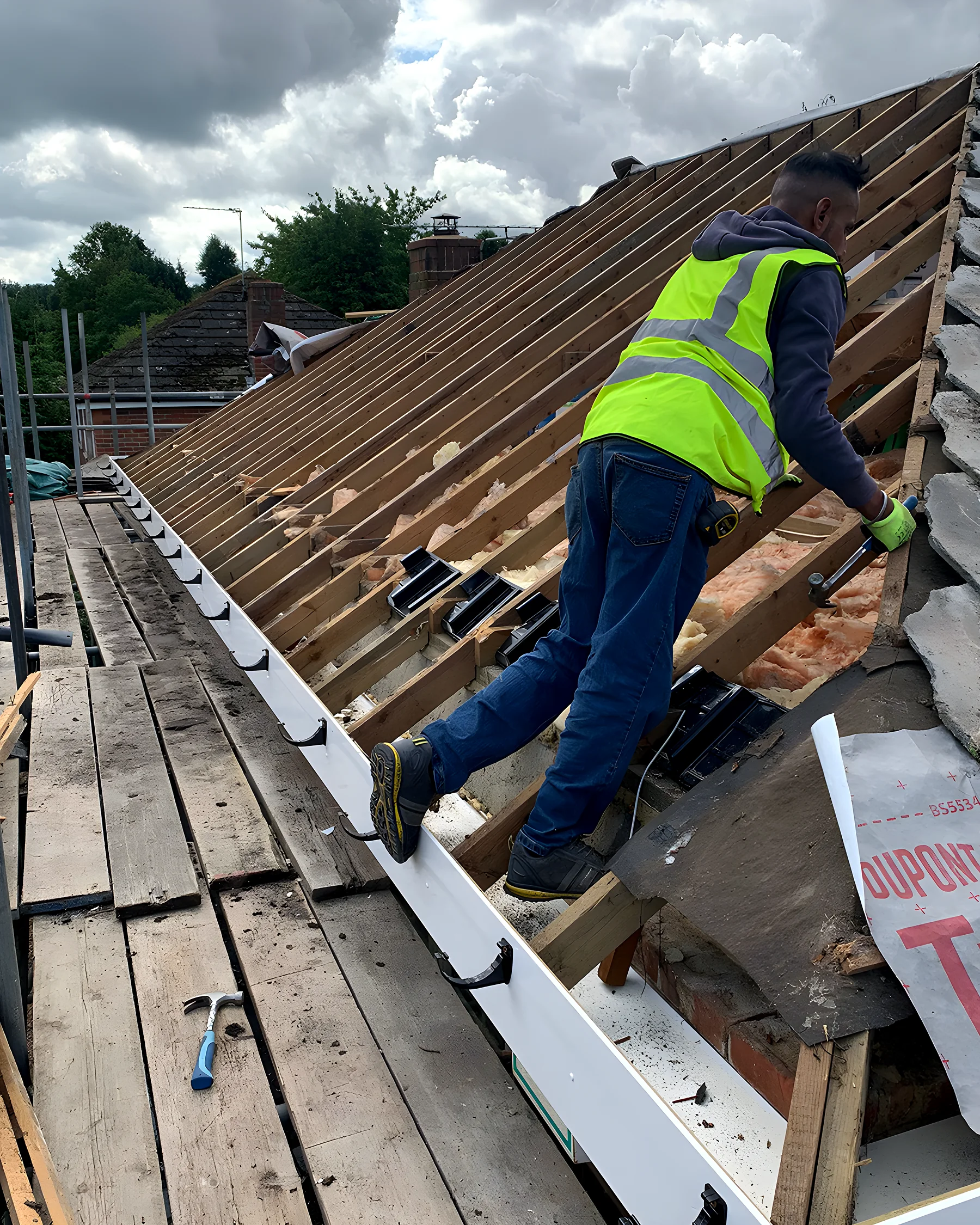
Sounds like your roof?
The Signs We AreUsually Called For.
- A damp patch or stain on an upstairs ceiling
- Tiles or slates on the ground after wind
- Daylight visible from inside the loft
- A wet patch on the chimney breast
- Moss and debris building up in the gutters
- A flat roof that holds water after rain
- Peeling paint or damp on an outside wall below the roofline
- A leak that only appears in driving rain
How it works
Roof Repairs:How It Works.
What happens between getting in touch and the finished job.
- 01
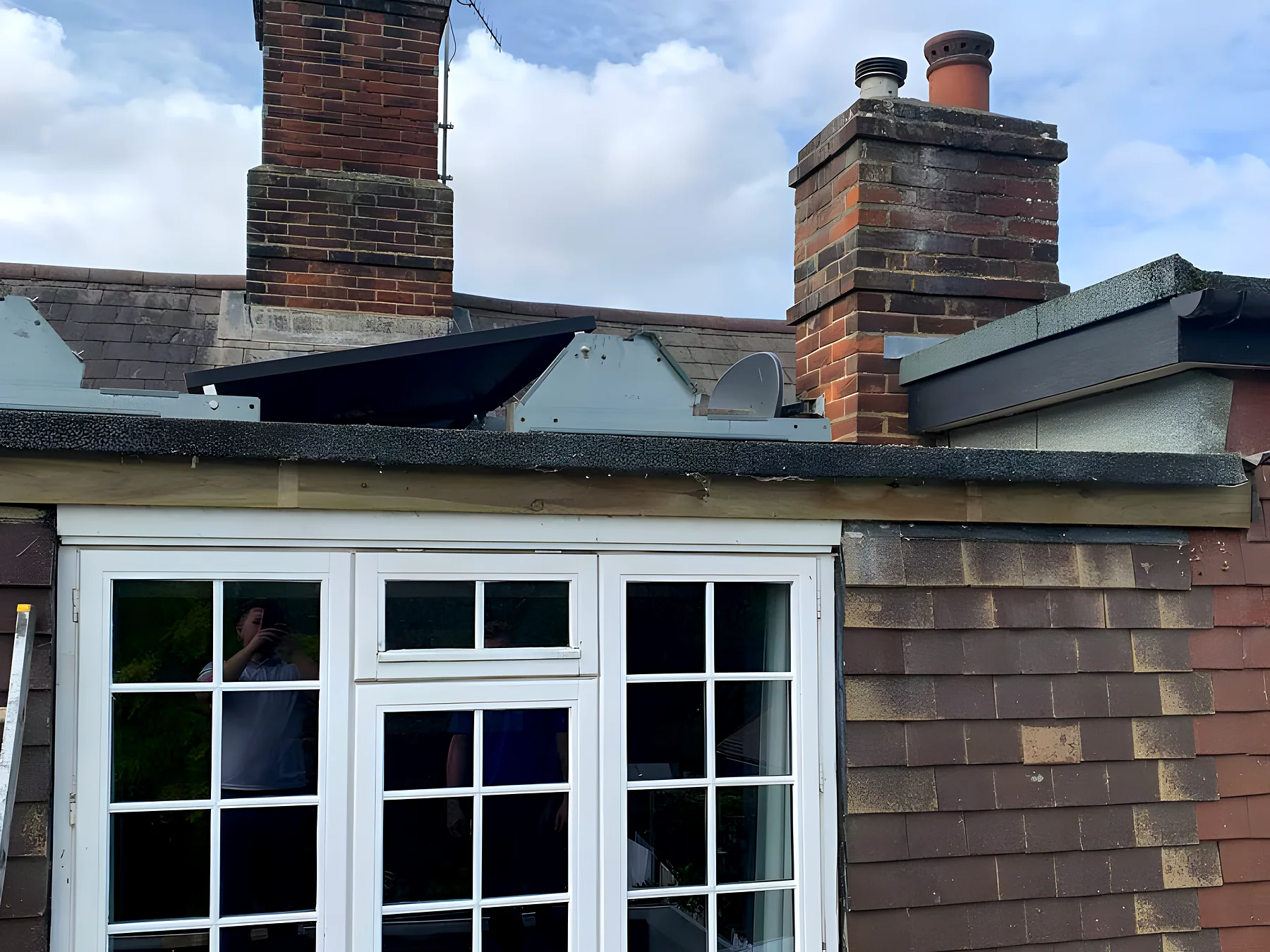
Get in Touch
Call us or send a photograph from the ground. A picture of the roof and one of the stain is usually enough for us to tell you roughly what it is and whether it can wait.
- 02
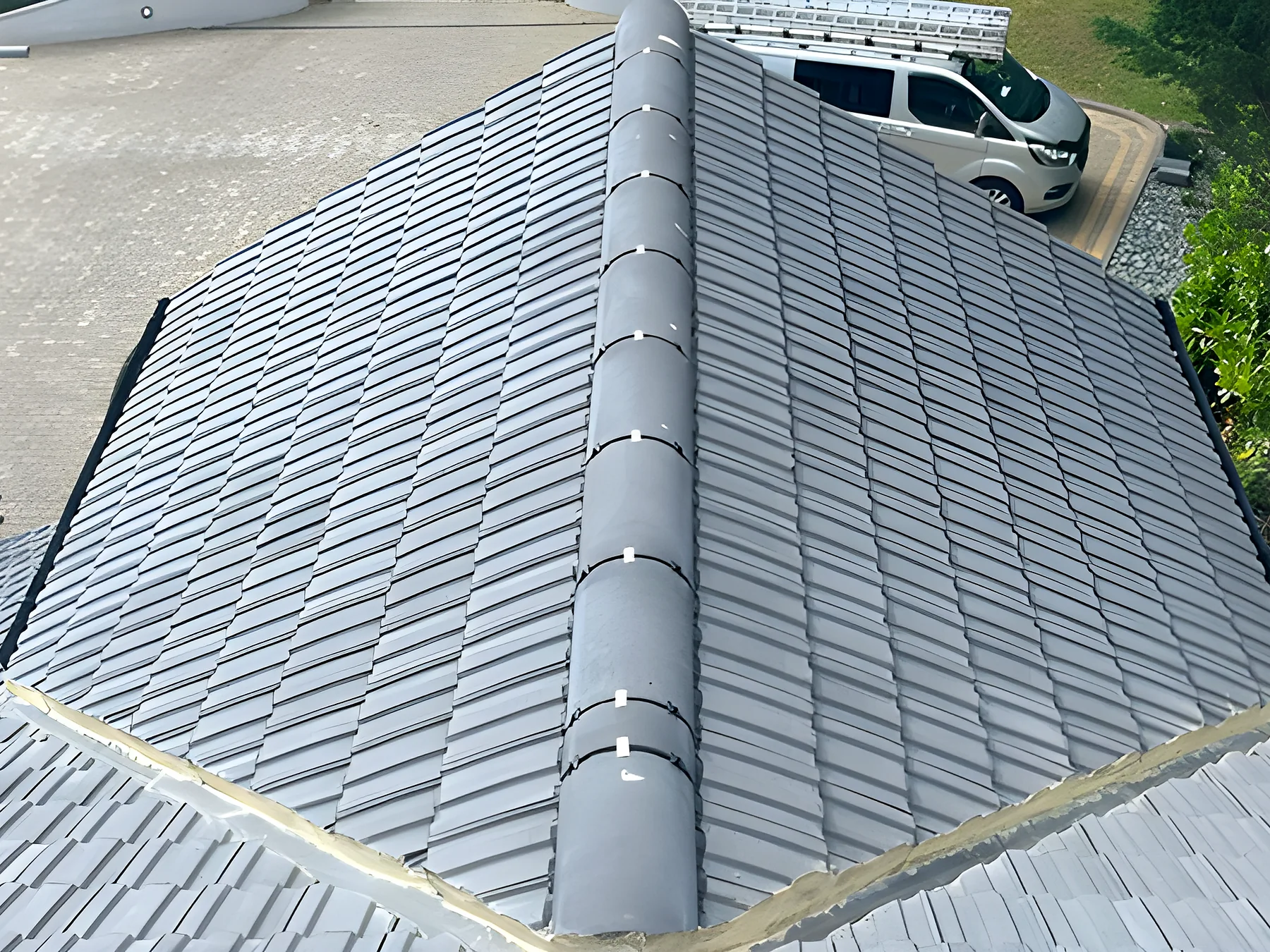
We Survey the Roof
We go up and look, and into the loft where there is one. The point of entry is found on the roof, not guessed from the ceiling, and photographed.
- 03
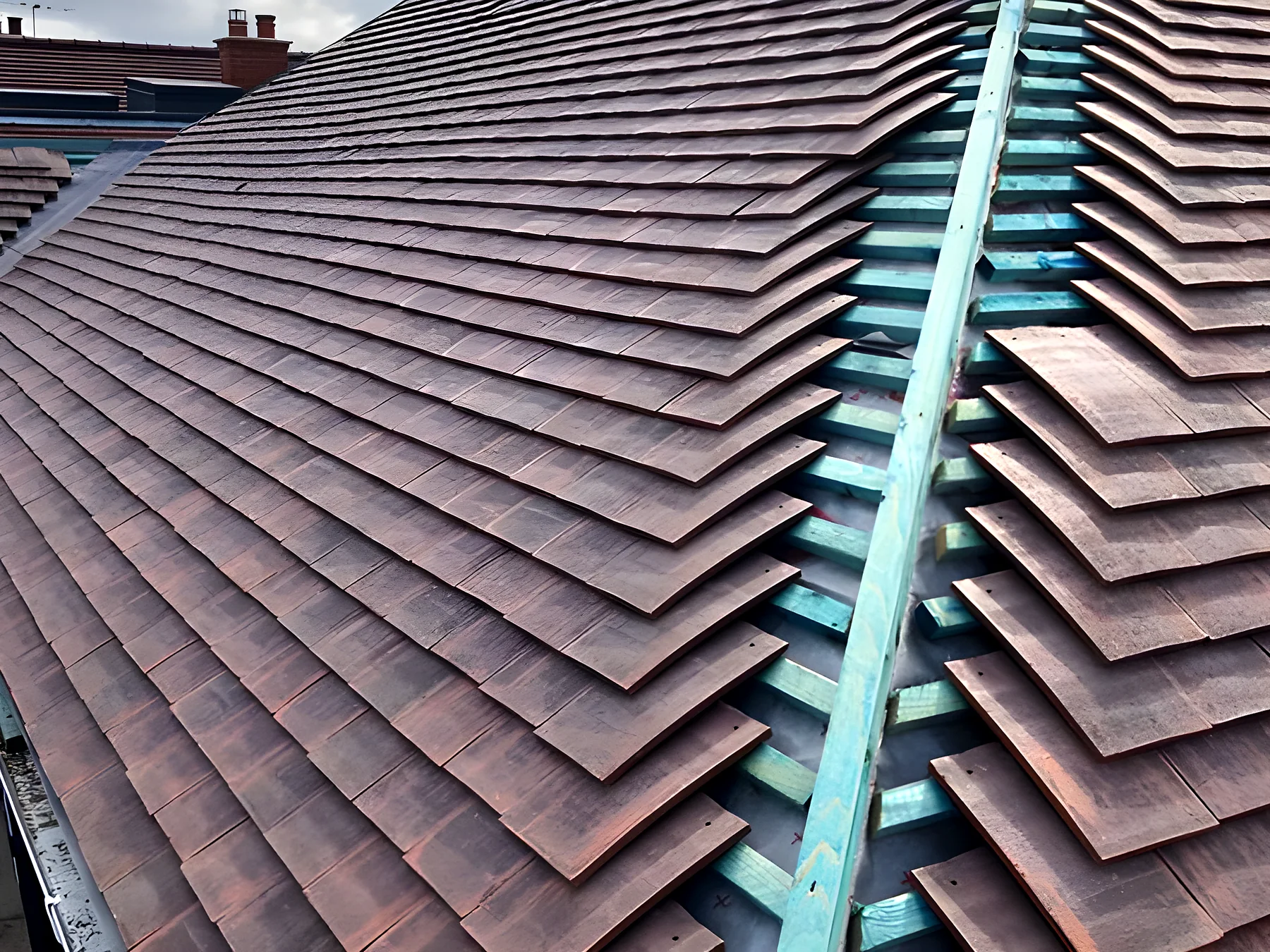
One Written Quote
An itemised price for the repair, with no obligation. If it is a repair we quote for a repair; we do not sell a new roof to someone who needs a tile.
- 04
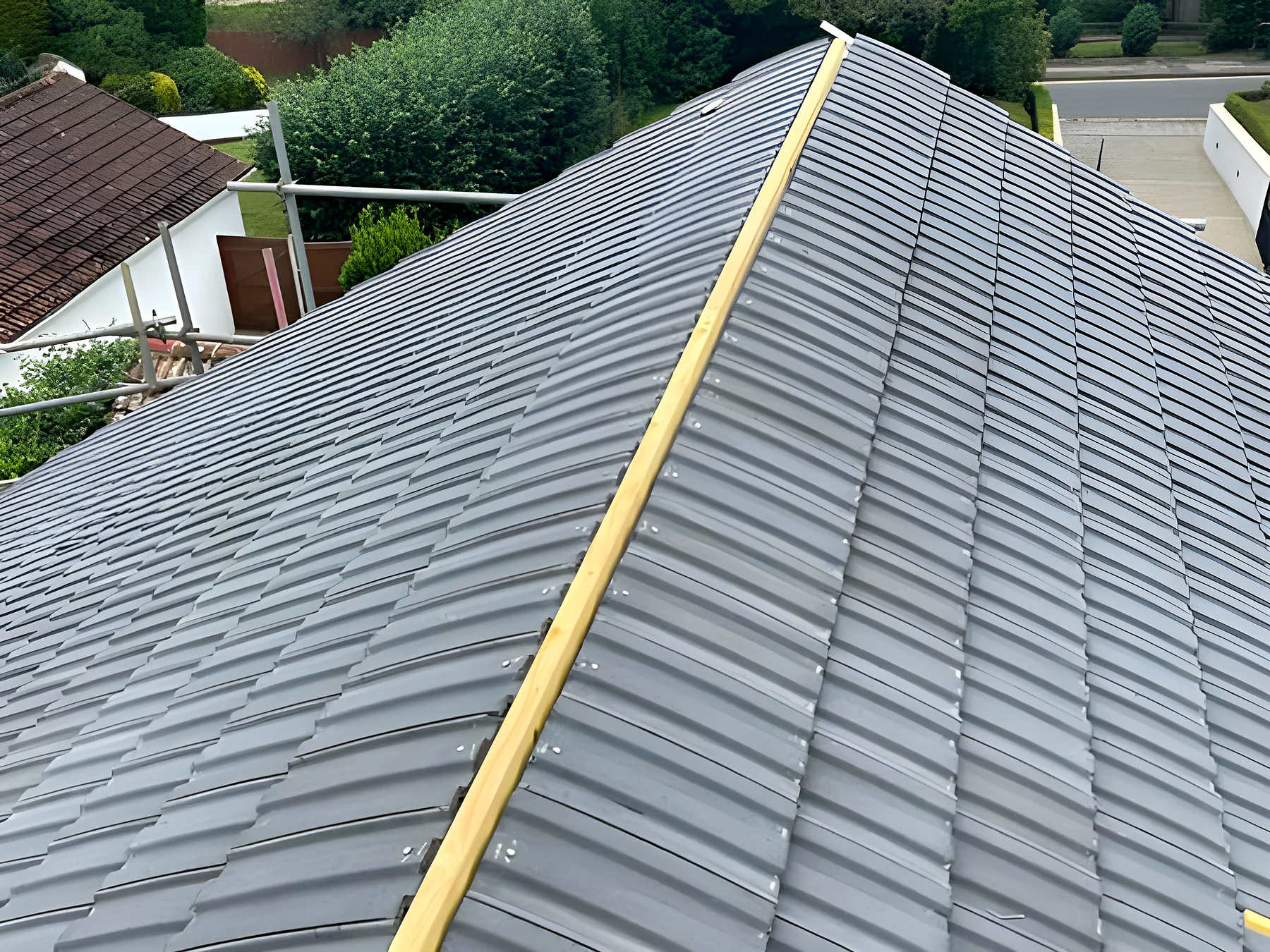
The Repair, Photographed
The work is done, the roof and gutters are left clean, and you receive the before and after photographs with the invoice.
Get in touch
01 / 04
Roof repairs questions
The QuestionsPeople Ask First.
Anything not covered here, call 01372 540 258 and ask. You will get a roofer, not a call centre.
How quickly can you come out?
For a live leak or storm damage, the same day wherever we can, and there is someone on the phone 24 hours. For a repair that can wait, usually within the week for the survey.
Will I need scaffolding for a repair?
Often not. A single tile on a bungalow or a low slope can be reached from a ladder. Anything on a second storey, or anything that takes more than a few minutes, needs scaffold for safety and it is included in the quote.
Can you match my existing tiles?
Nearly always. Concrete interlocking tiles are still made in the common profiles, and we keep reclaimed clay and slate for older roofs so the repair does not stand out.
How do I know the repair has worked?
You get photographs of what we found and what we did. And you get the next heavy rain, which is the real test. If it comes back, so do we.
Is it worth repairing an old roof?
Usually yes. A sound roof with one failed detail has years left in it. We will tell you when a roof is genuinely at the end, and show you the photographs of why, but that is the minority of what we see.
Free survey and quote
Call Us, or Senda Photograph.
A picture from the ground is usually enough for us to tell you what we are looking at. The survey and the written quote are free, and there is no obligation on either.
- London
- 0203 507 1501
- Leatherhead
- 01372 540 258
- Reigate
- 01737 749202
- Mobile, 24 hours
- 07513 397 799