
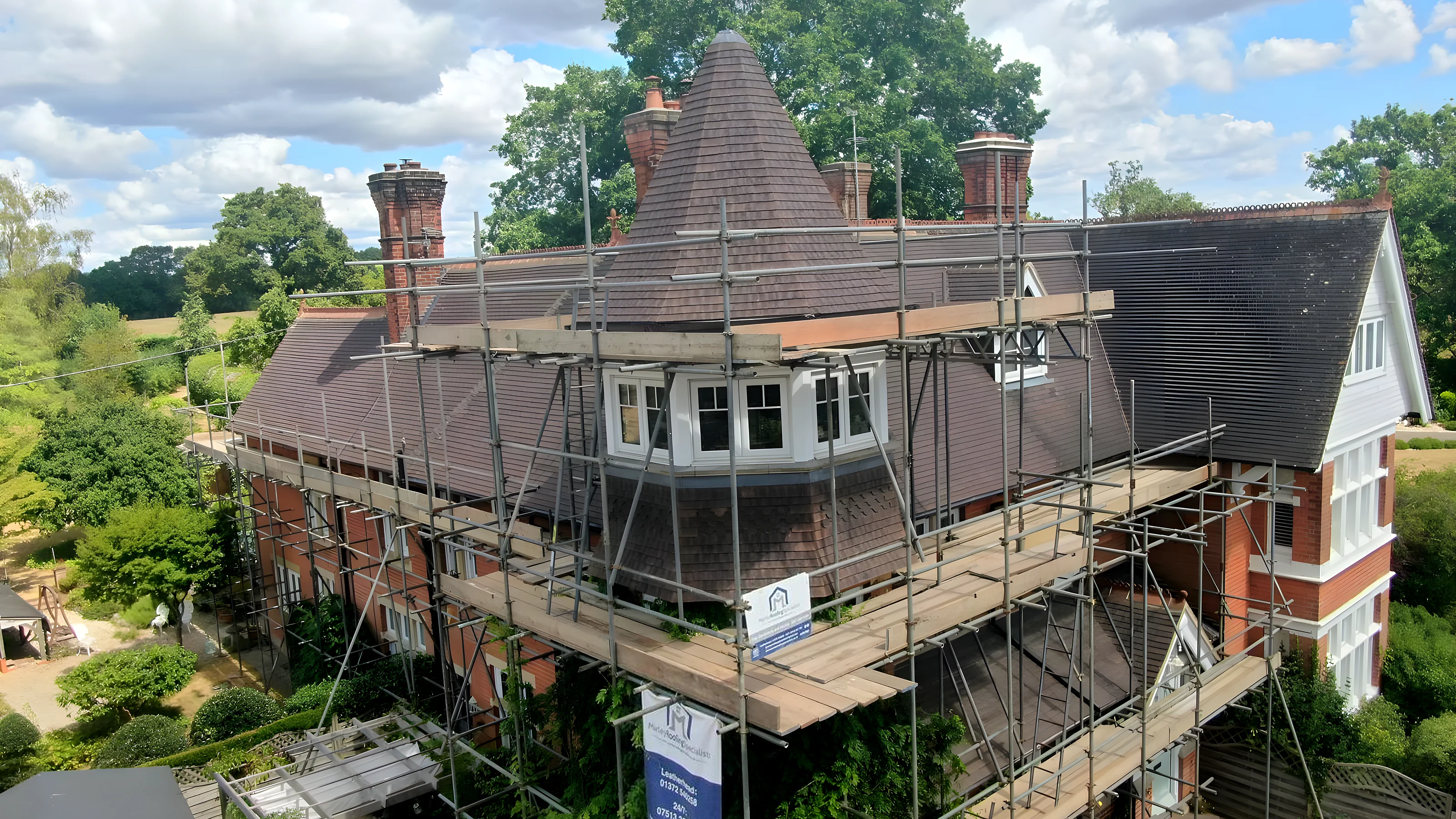
New roofs in Leatherhead, Surrey and South West LondonA New Roof,Done Once.
A new roof should be the last one you think about for thirty years. That means the timbers, the underlay and the battens matter as much as the tiles, because the tiles are the only part you can see.
Over 25 years on local roofs
Free survey and written quote
24 hour emergency call out
CORC member 8125
What we do
New Roofs,Start to Finish.
A new roof should be the last one you think about for thirty years. That means the timbers, felt and battens matter as much as the tiles.
When a Roof Really Is Done
Perished felt on every slope, battens rotten, nail sickness across the whole roof, or a covering that has simply reached the end of its life. We see plenty of roofs that are patched every winter and would cost less over five years to replace. We will show you the photographs that make the case, or tell you it is not there yet.
The signs are consistent: underlay that tears when touched, battens that are soft, slates sliding from several courses at once, tiles that have lost their nibs, and a loft that is damp every winter. A roof like that can be patched, but every patch disturbs the tiles around it and the next leak is already forming.
We survey the roof from above and from the loft, photograph what we find and set out the case either way. Plenty of roofs we look at are not there yet, and we say so.
Age alone is not the test. A Welsh slate roof can pass a hundred years; a concrete tile roof from the sixties is usually fine but its felt underlay is not; a clay tile roof fails at its fixings long before its tiles. The survey looks at each part and the report says which of them is at the end.
Strip and Re Roof
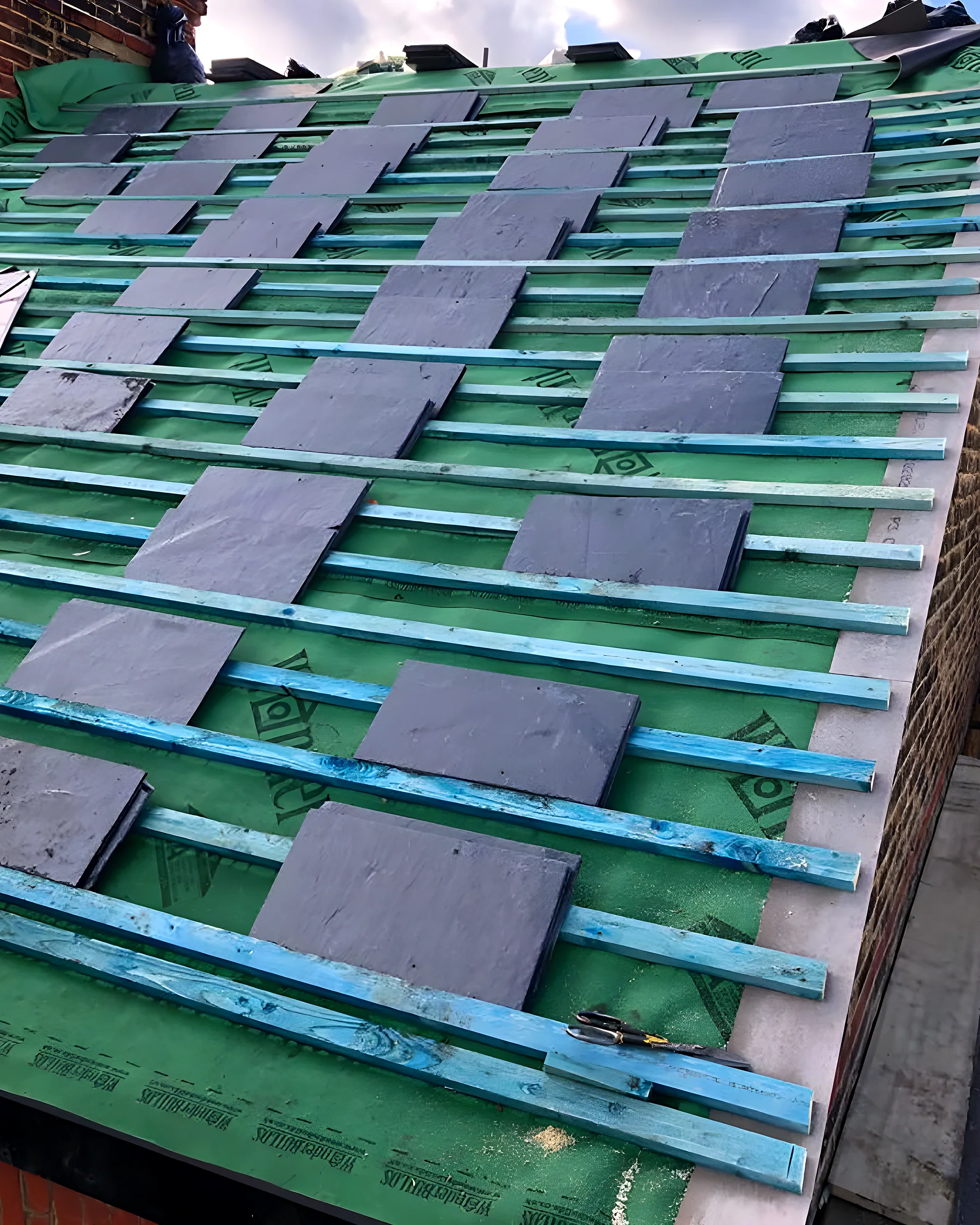
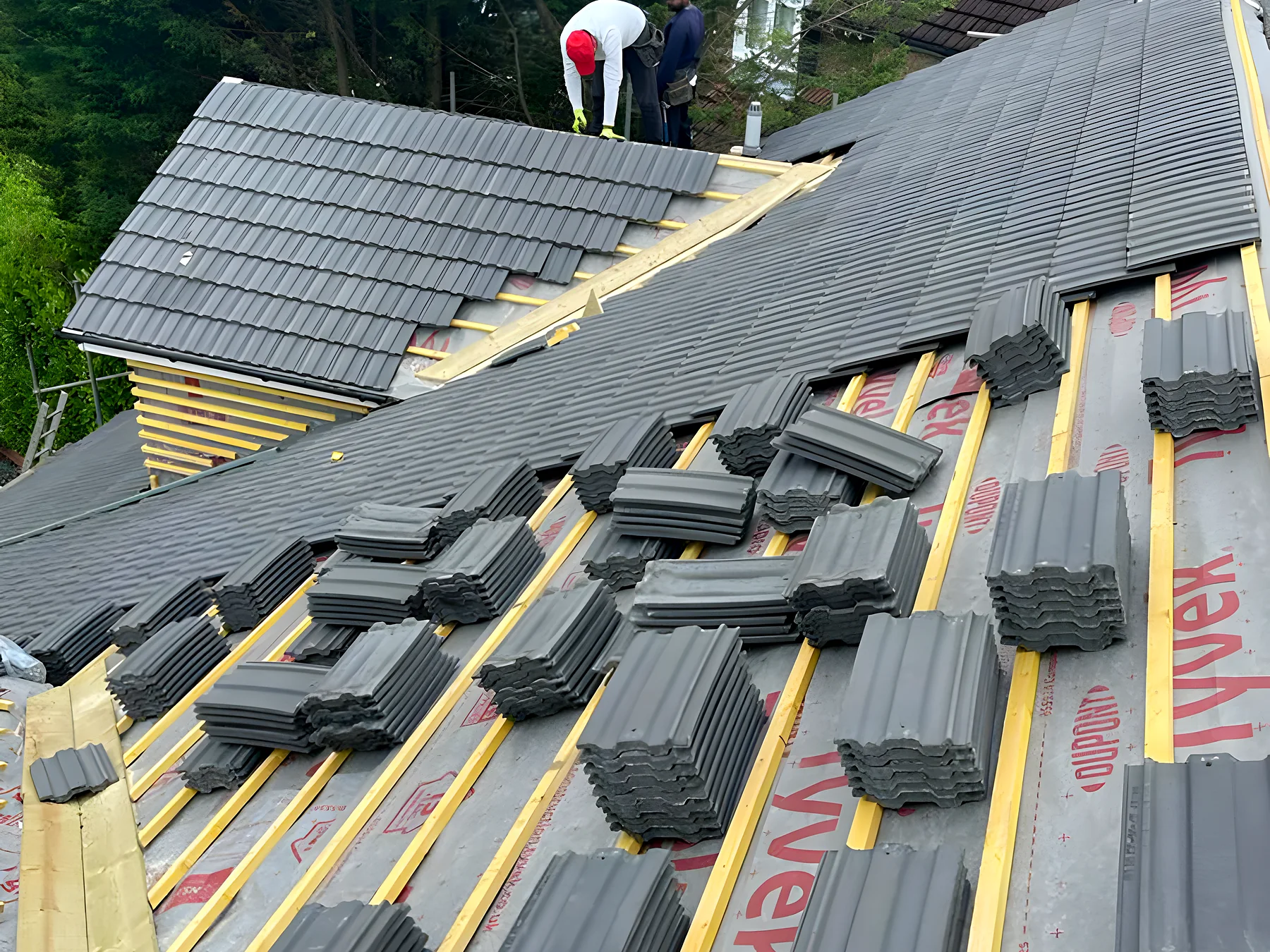
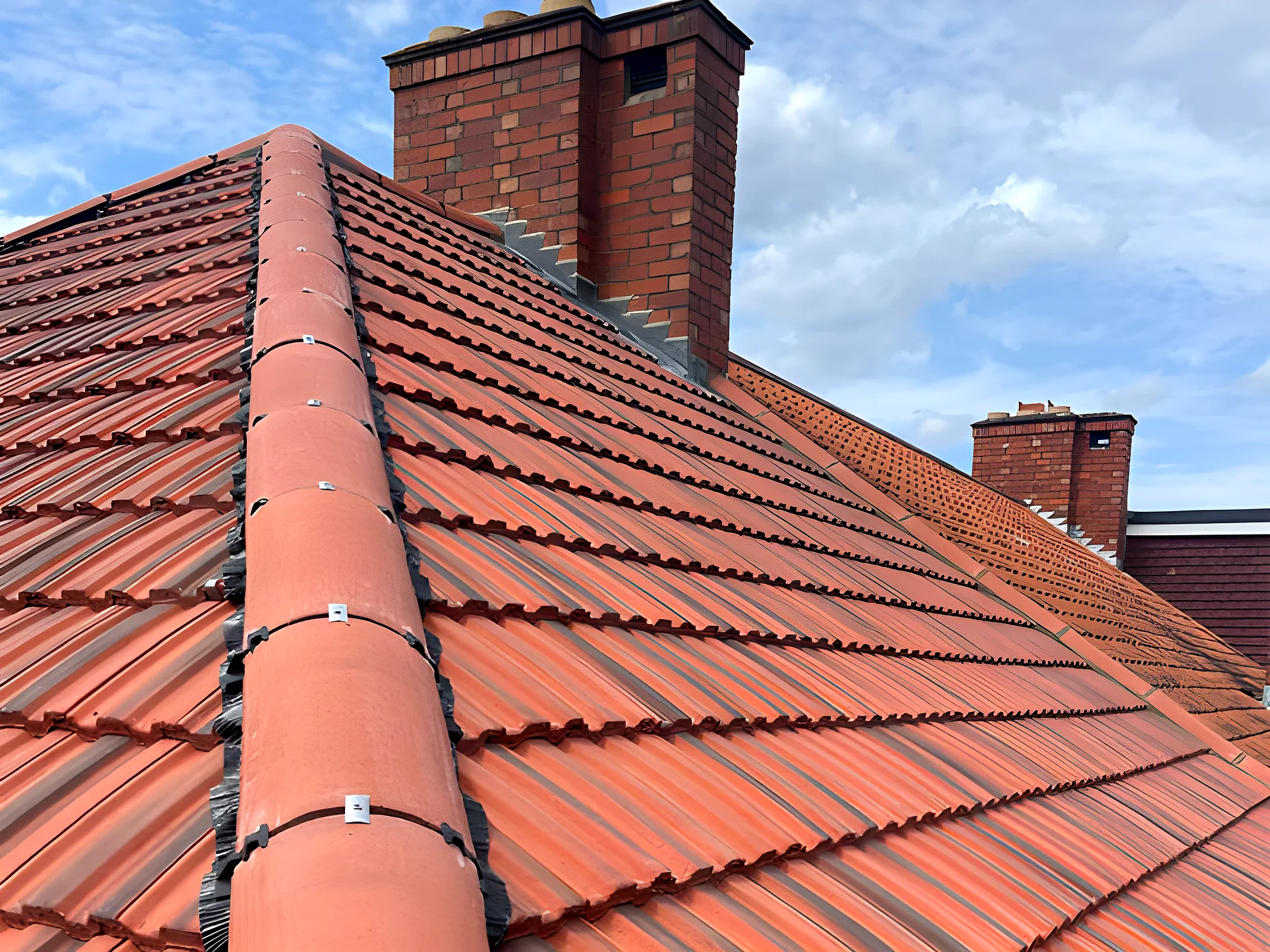
Scaffold up, old covering off, timbers checked and repaired, new breathable underlay, new treated battens at the right gauge, then slates or tiles laid and mechanically fixed to the current standard. Ridges and verges dry fixed. Lead formed new. Every tile on a modern roof is fixed, which is more than most old roofs ever had.
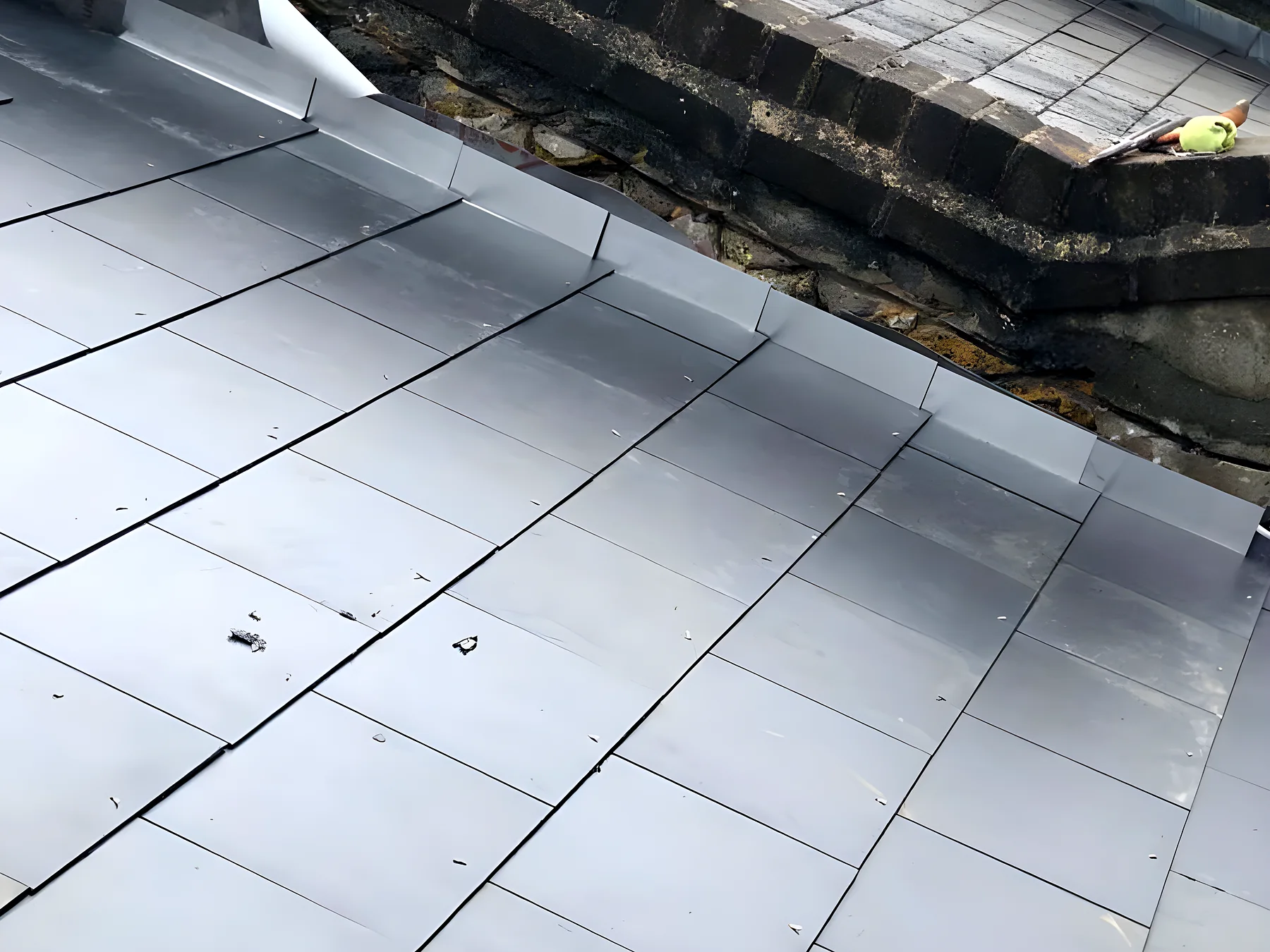
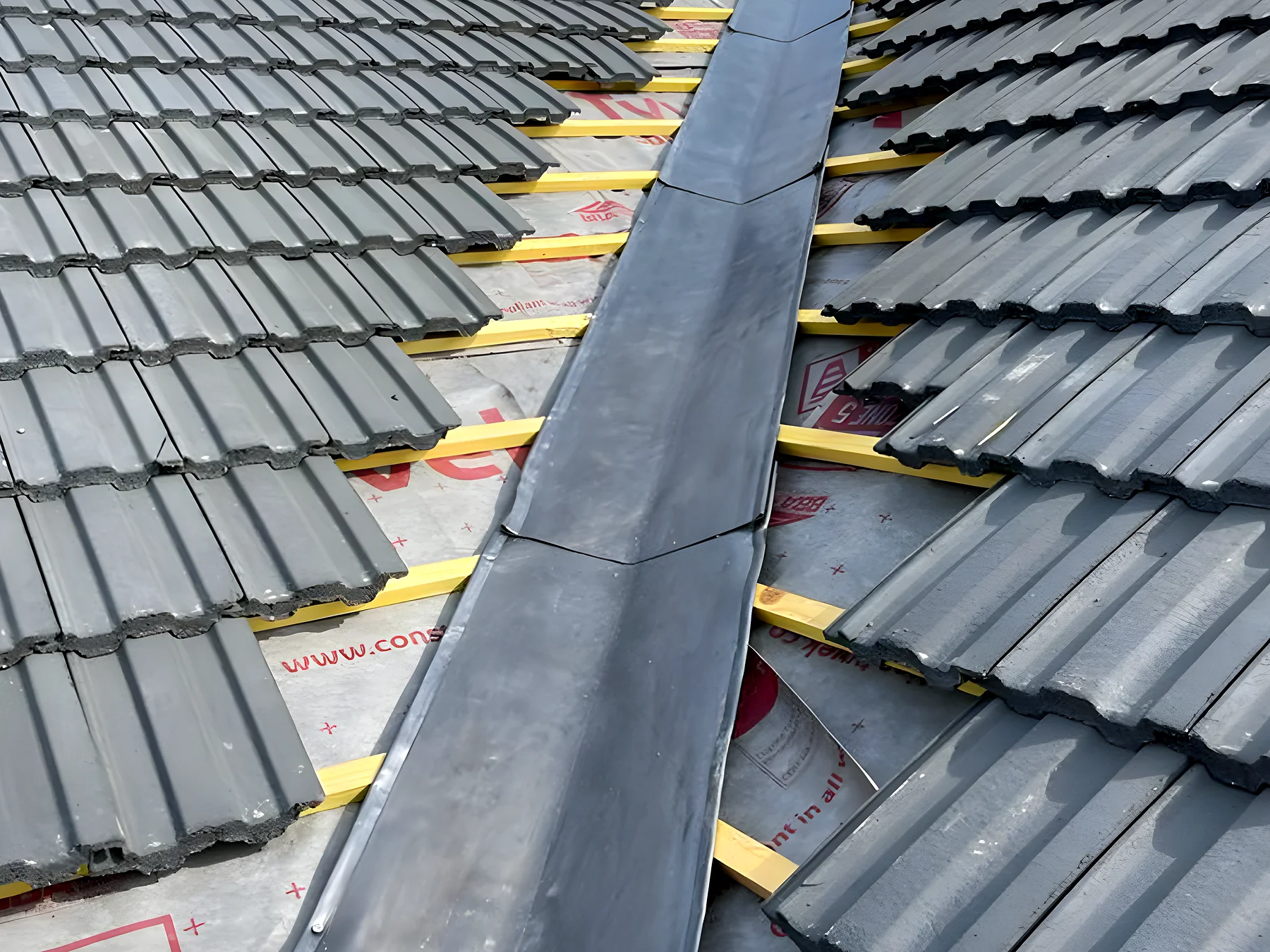
A re roof runs in a set order. The scaffold goes up. The old covering, battens and underlay come off and the rafters are checked and repaired. New breathable underlay and treated battens go on at the gauge the covering needs. The slates or tiles are laid, every one fixed, with dry ridge and dry verge systems, new lead at the chimneys and valleys, and ventilation built in at the eaves and the ridge.
A typical house takes one to two weeks depending on size and weather, and it is watertight every night of the job.
A new roof is built to BS 5534 for the slating and tiling and to the Building Regulations for insulation, ventilation and structure. Re covering more than a quarter of a roof is notifiable building work, so Building Control is told and the insulation is brought up to the current standard; we handle that paperwork as part of the job.
Reusing What Is Good
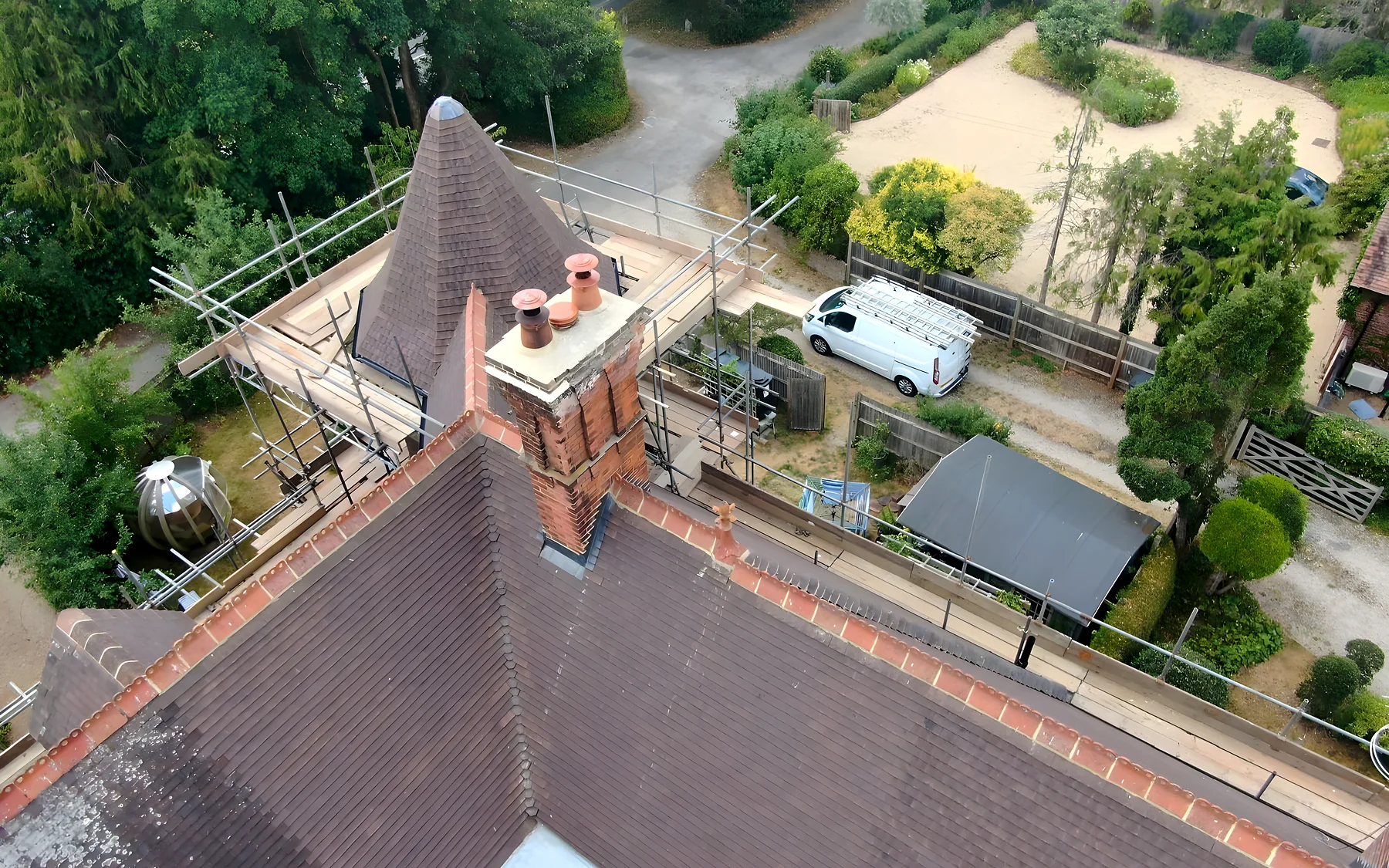
Sound natural slate and clay tiles are worth keeping. We re lay them on new battens and underlay and make up the shortfall with matched reclaimed stock, which keeps the look and a good deal of the cost down.
Welsh slate and hand made clay tiles are often better than anything you could buy new, and reusing them keeps the house looking like itself. We sort the sound ones, re lay them on the new battens and make up the difference from matched reclaimed stock.
Sound original slates or clay tiles can be re laid with new fixings, underlay and battens under them. It keeps the character of the roof, it is often the only way to match a period house, and it saves a good part of the material cost.
Ventilation and Insulation
With the roof off, the loft ventilation and the insulation can be done right. Dry vent ridges, eaves ventilation and the right depth of insulation, built in rather than bolted on later.
A new roof is the one chance to get the loft working properly. We fit ventilation at the eaves and the ridge, check the insulation depth and make sure the two do not fight each other, so the roof and the timbers stay dry from below.
Roof insulation on a cold loft is normally brought to 270 millimetres of mineral wool or its equivalent, with a clear air path at the eaves and ventilation at the ridge. On a room in roof or a loft conversion the insulation goes between and over the rafters instead, and the ventilation detail changes with it.
New Builds and Extensions
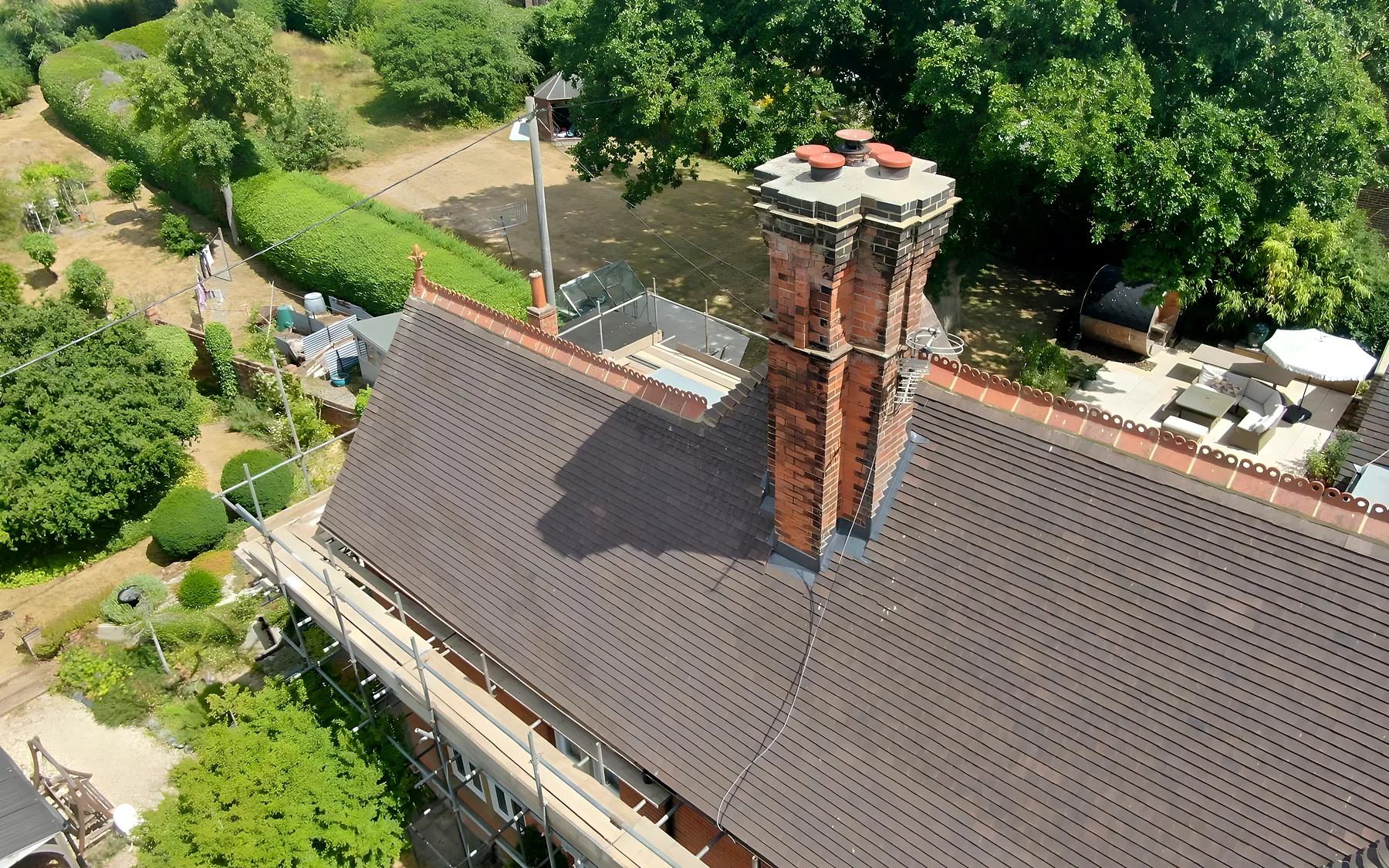
Roofs for new houses, extensions, garages and outbuildings, pitched or flat, to the drawings and to the current standard.
We roof new houses, extensions, garages and outbuildings, pitched or flat, working from the drawings and to the current standard, and we are used to fitting in with a builder’s programme.
We work from the architect’s drawings and the structural engineer’s specification, order the covering to the drawing, and fit in with the builder’s programme so the building is watertight when the trades inside need it to be.
Sounds like your roof?
The Signs We AreUsually Called For.
- Repairs every winter that never quite hold
- Felt visible and crumbling at the eaves or in the loft
- Slates or tiles slipping across every slope, not just one
- Battens you can push a screwdriver into
- Daylight in the loft in more than one place
How it works
New Roofs:How It Works.
What happens between getting in touch and the finished job.
- 01
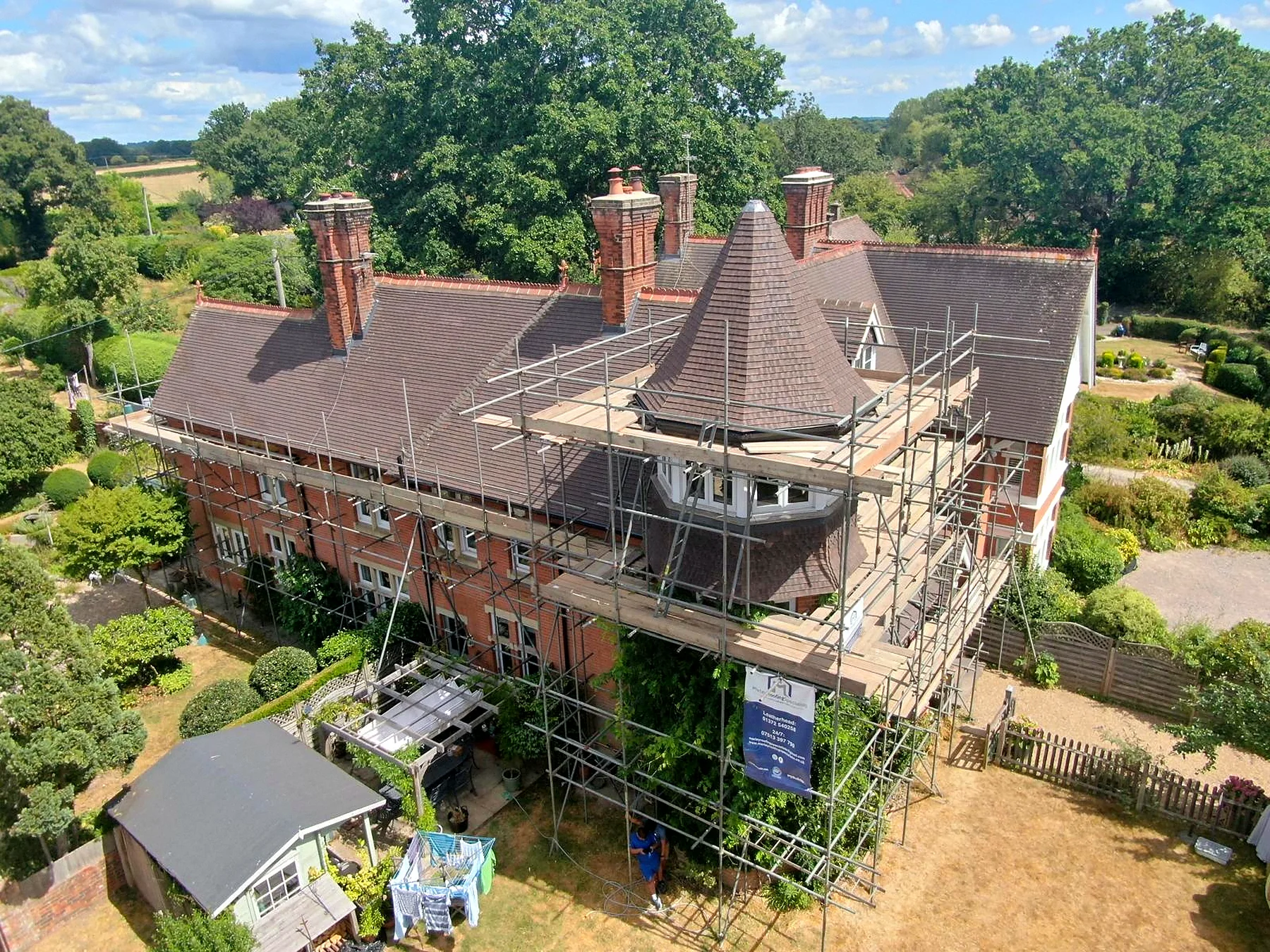
Get in Touch
Call or send photographs. If the roof is patched every winter we will look at whether replacing it is the better answer, and say so honestly if it is not.
- 02
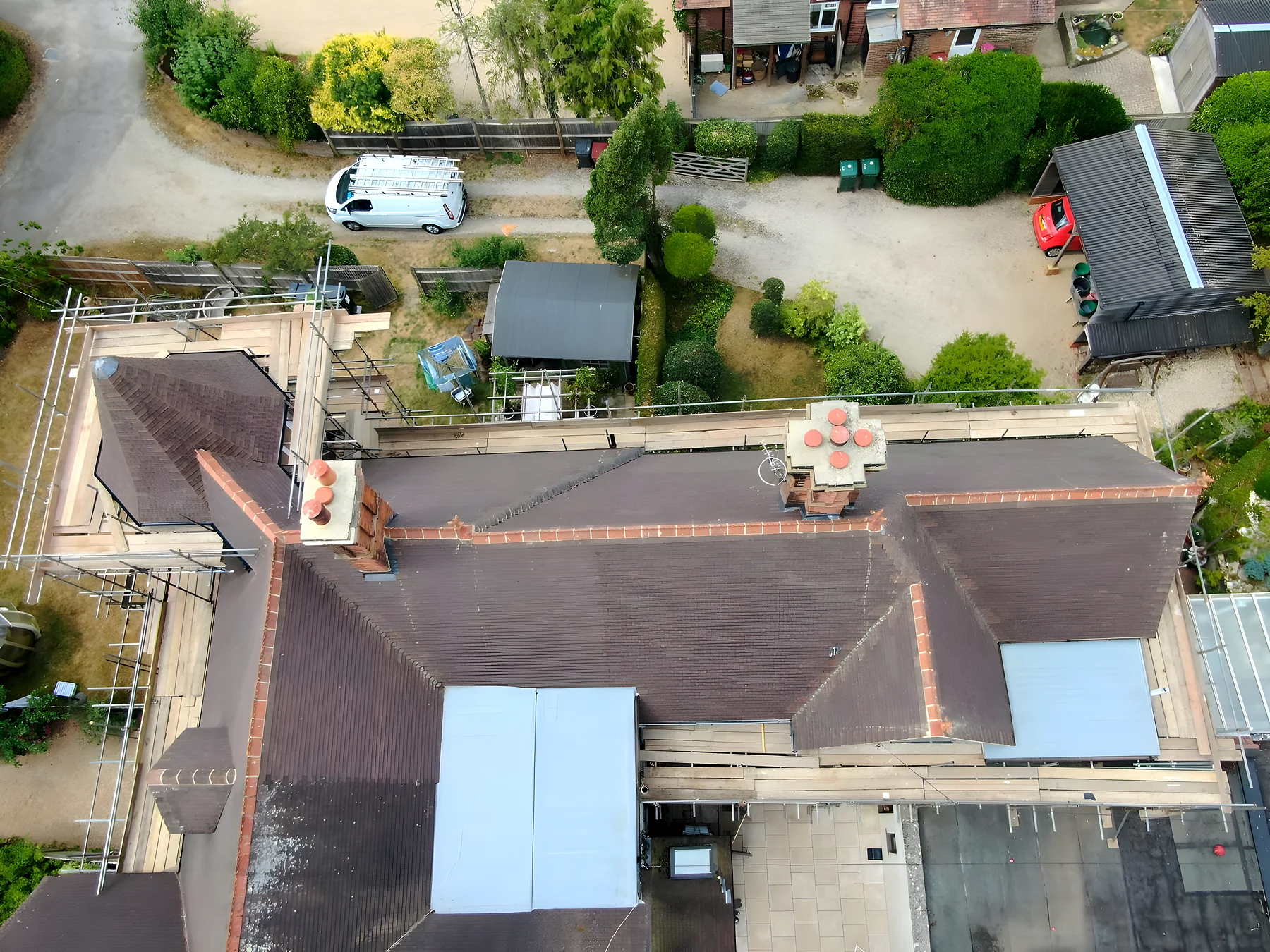
Survey and Photographs
We survey the roof, the timbers and the loft, photograph everything and show you the case for a new roof, or for waiting.
- 03
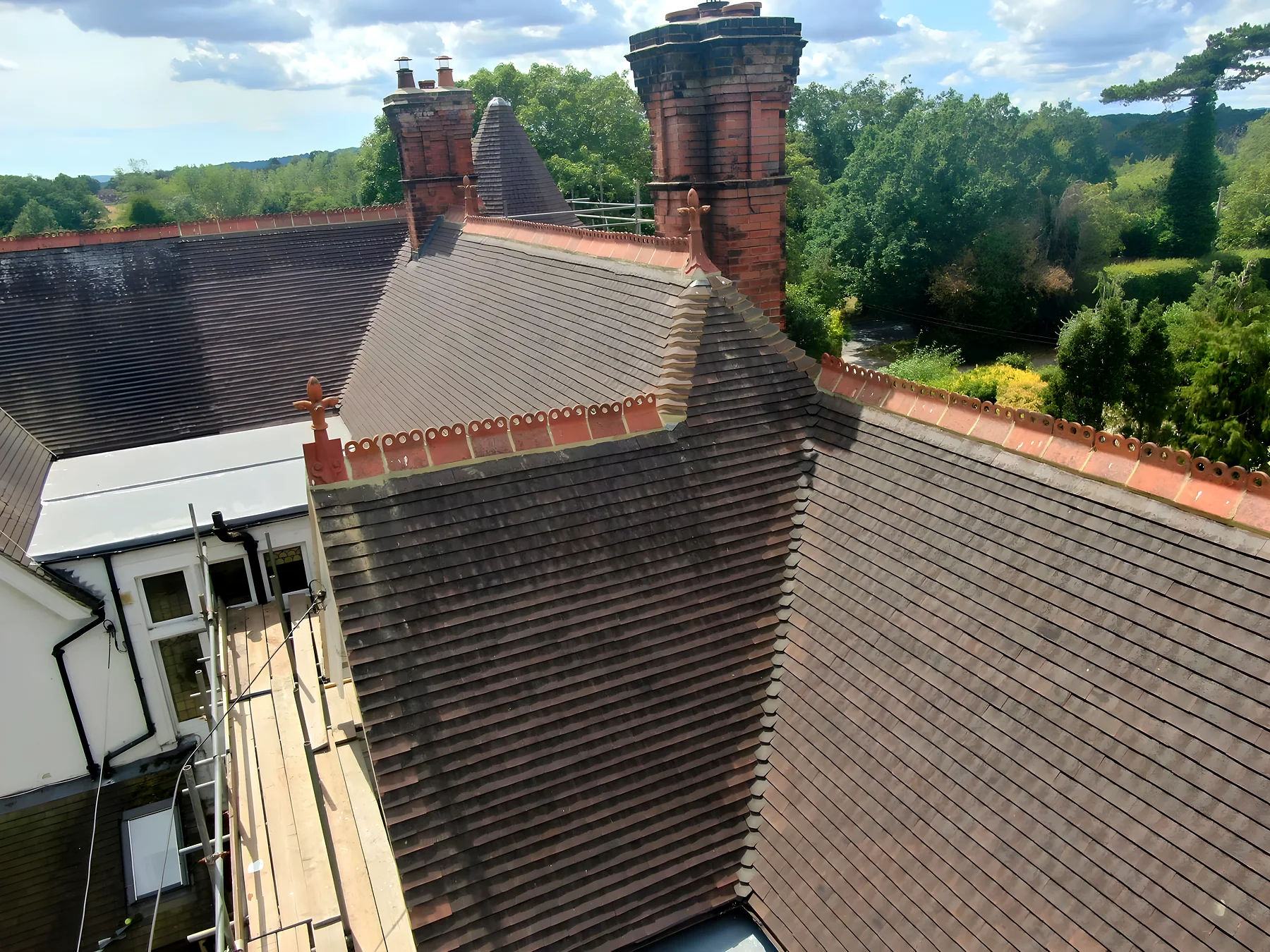
One Written Price
An itemised quote for the whole job: scaffold, strip, timbers, underlay, battens, covering, lead, ridges, ventilation and the clear up.
- 04
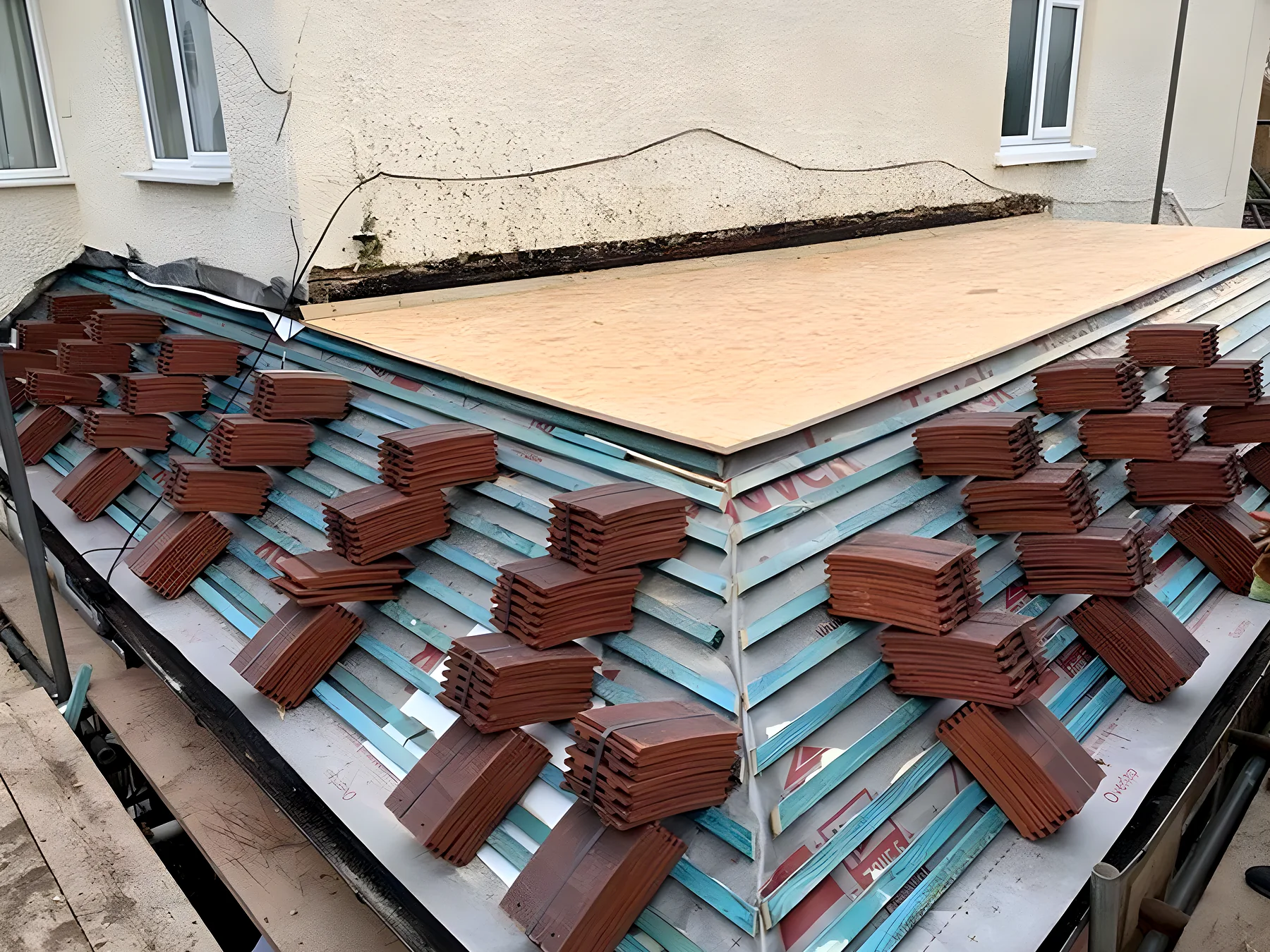
The Re Roof and Handover
Our own team does the work, the site is left clean, and you receive the photographs and the paperwork for the new roof.
Get in touch
01 / 04
New roofs questions
The QuestionsPeople Ask First.
Anything not covered here, call 01372 540 258 and ask. You will get a roofer, not a call centre.
How long does a re roof take?
A typical house, one to two weeks once the scaffold is up, depending on size and weather. We give you a timeline with the quote.
Can I stay in the house?
Yes. The roof comes off in sections and each section is covered before we leave for the day. Expect noise and a skip on the drive, not much else.
Do you need planning permission for a new roof?
Like for like, no. Changing the material or the shape, or on a listed building or in a conservation area, possibly. We will tell you before we quote.
Should I insulate at the same time?
Yes, if it is not already done. It is the cheapest time it will ever be, because the roof is off.
Free survey and quote
Call Us, or Senda Photograph.
A picture from the ground is usually enough for us to tell you what we are looking at. The survey and the written quote are free, and there is no obligation on either.
- London
- 0203 507 1501
- Leatherhead
- 01372 540 258
- Reigate
- 01737 749202
- Mobile, 24 hours
- 07513 397 799