
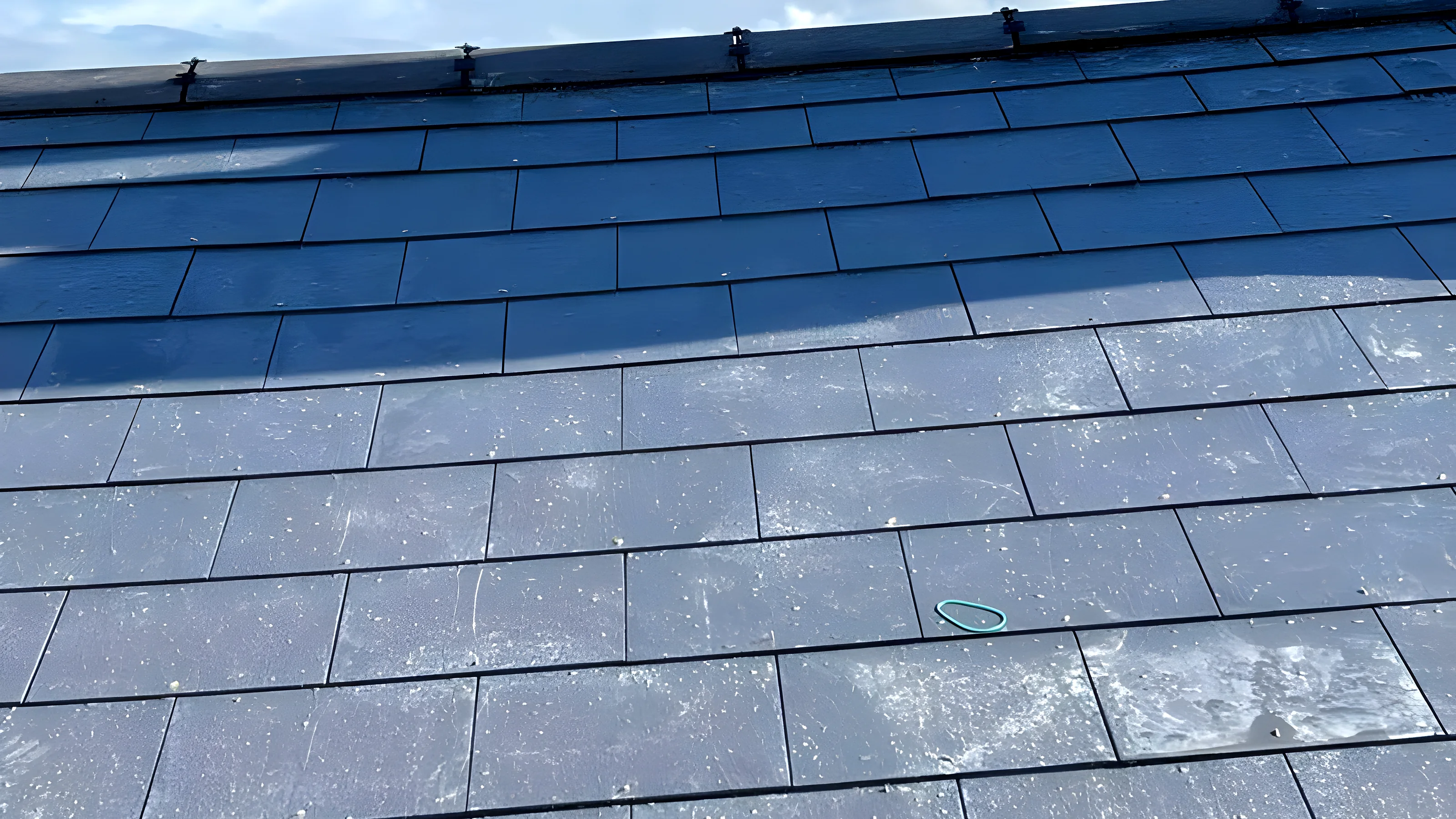
Slate roofing in Leatherhead, Surrey and South West LondonSlate Roofing,Laid the Right Way.
A slate roof lasts a century if it is laid properly and a decade if it is not. The difference is in the fixings, the headlap and the lead, none of which you can see from the ground.
Over 25 years on local roofs
Free survey and written quote
24 hour emergency call out
CORC member 8125
What we do
Slate Roofing,Start to Finish.
We work in natural and man made slate, on everything from Victorian terraces to new builds.
Natural and Man Made Slate
Welsh and Spanish natural slate for period houses and anyone who wants a roof that outlives them. Man made fibre cement slate where the budget or the roof structure calls for something lighter. We will tell you which suits your roof.
Welsh slate is the benchmark: dense, even and long lived, and the covering on most of the Victorian and Edwardian houses across our area. Spanish slate is a good, more affordable natural slate and the usual choice for a full re slate today. Both are graded, and we use the grade the roof deserves.
Fibre cement slate is lighter and cheaper and lays quickly, which suits some roofs and some budgets. It does not weather like natural slate and it is not a match for a period roof, so we say where it fits and where it does not.
Slate is graded under BS EN 12326 for water absorption, thermal cycling and the like; a good Spanish slate carries the top ratings and a Welsh slate exceeds them. We tell you the grade we are quoting and why, because two slates that look alike on the pallet can behave very differently after twenty winters.
Slate Repairs
Slipped and cracked slates are re fixed or replaced with matching stock. Nail sickness, where the old iron nails have rusted through and slates start sliding on a sound roof, is the commonest reason a Victorian roof needs work, and we will tell you whether yours is at that stage.
A single slipped slate is re fixed with a lead or copper tingle, or replaced with a matching slate from our reclaimed stock. Cracked slates are replaced. Where the failures are spread across a slope rather than in one place, we look at the nails, because a roof that is losing slates from several courses at once is usually one whose iron nails have rusted through.
Nail sickness cannot be repaired slate by slate. We will tell you when a roof has reached that point and quote for re laying the slope on new battens with new fixings, reusing the slates that are sound.
The commonest slate roofs round here are the Victorian and Edwardian terraces and villas of Wimbledon, Wandsworth, Clapham, Battersea, Richmond and Barnes, and the older streets of Leatherhead, Epsom and Reigate. Most are on their original nails, which is why nail sickness is the diagnosis we make most often on them.
Re Slating
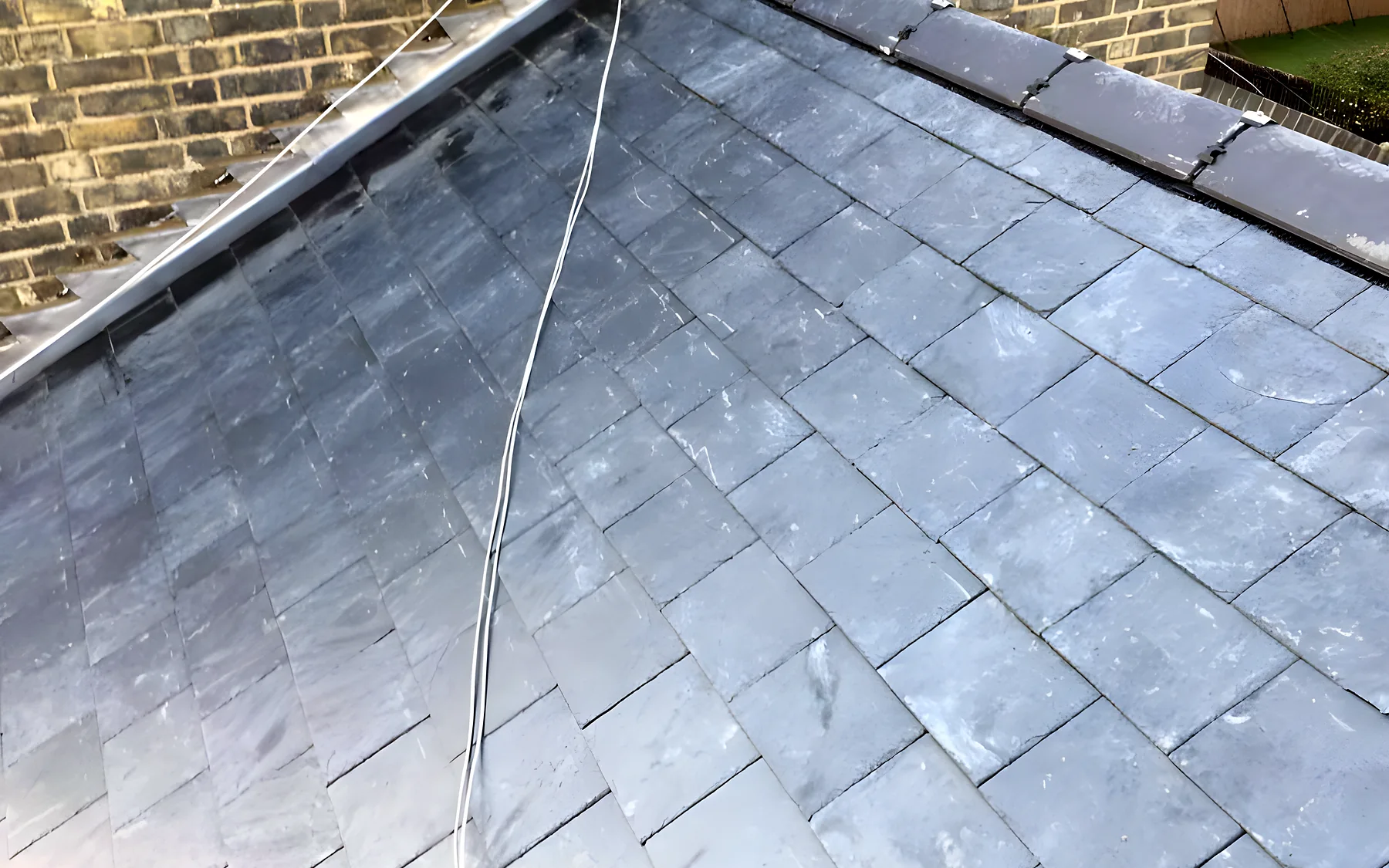
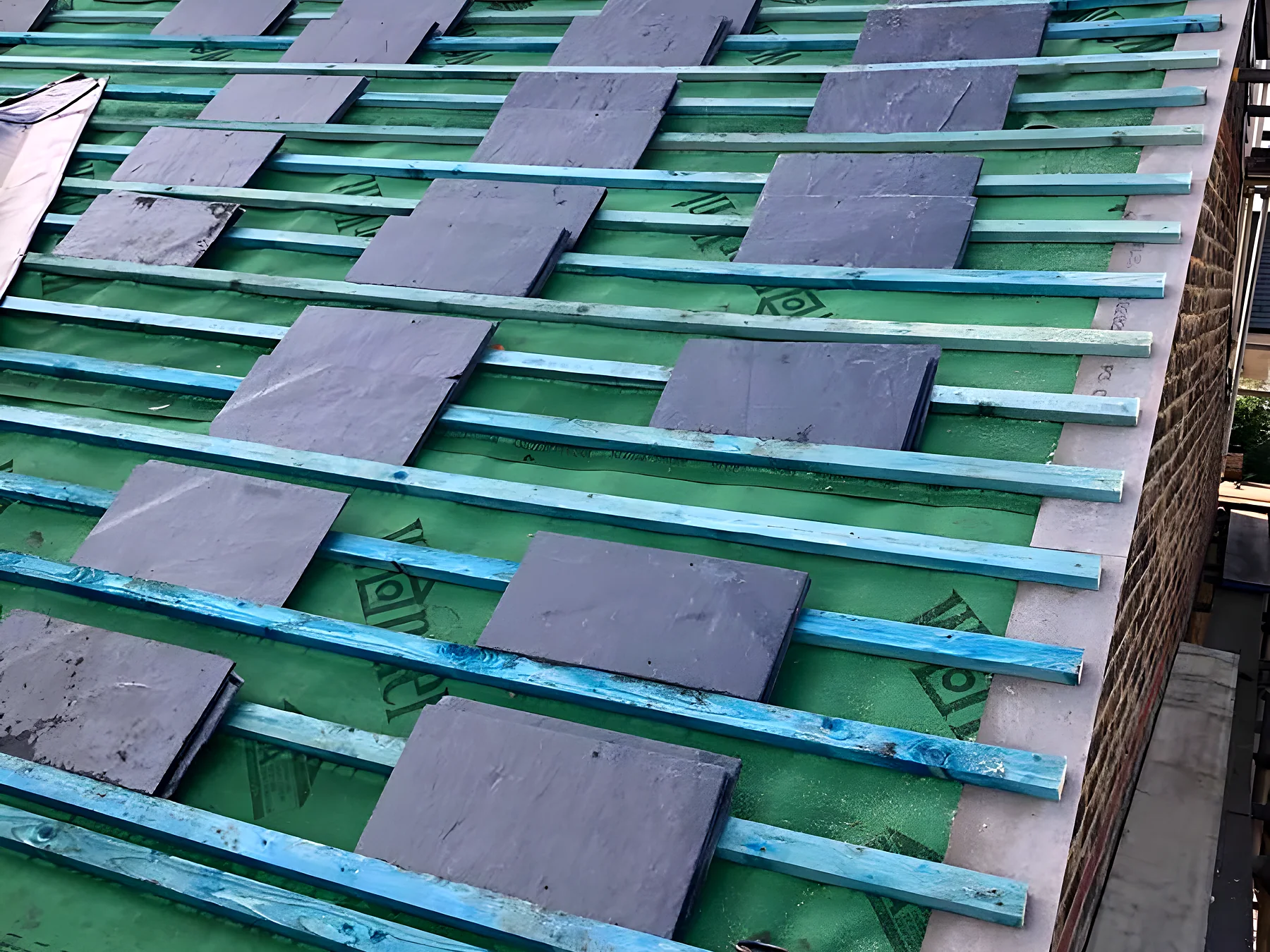
Strip, new breathable underlay, new treated battens, and slates re laid to the right headlap for the pitch, with copper or stainless nails so it does not happen again. Where the original slates are sound we reuse them and make up the difference with matched reclaimed stock.
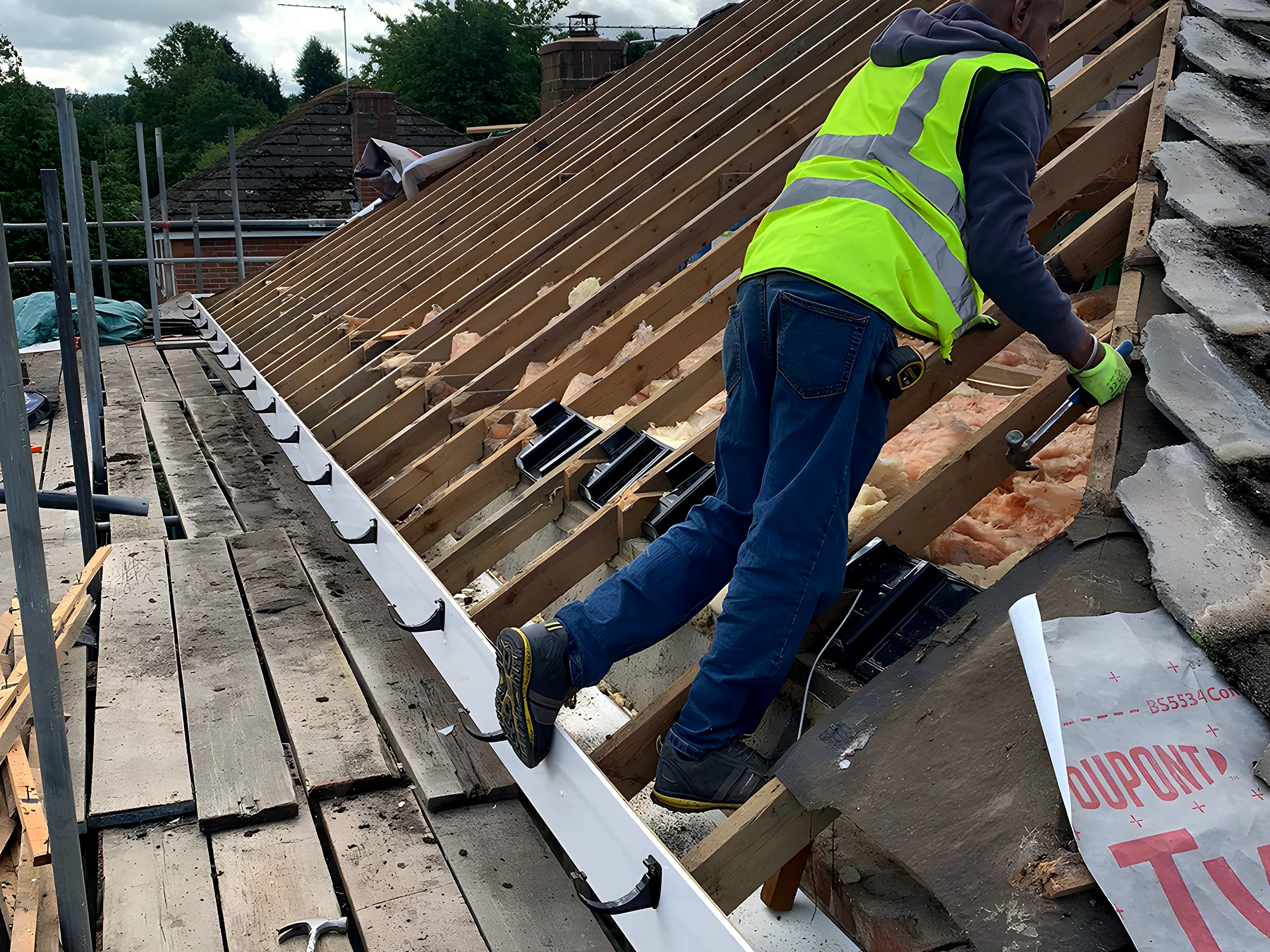
The roof comes off to the rafters, the timbers are checked and any that are soft or split are repaired or replaced. New breathable underlay and treated battens go on, set to the gauge the slate size and the pitch need, and the slates are laid with a headlap that keeps the roof dry in driving rain.
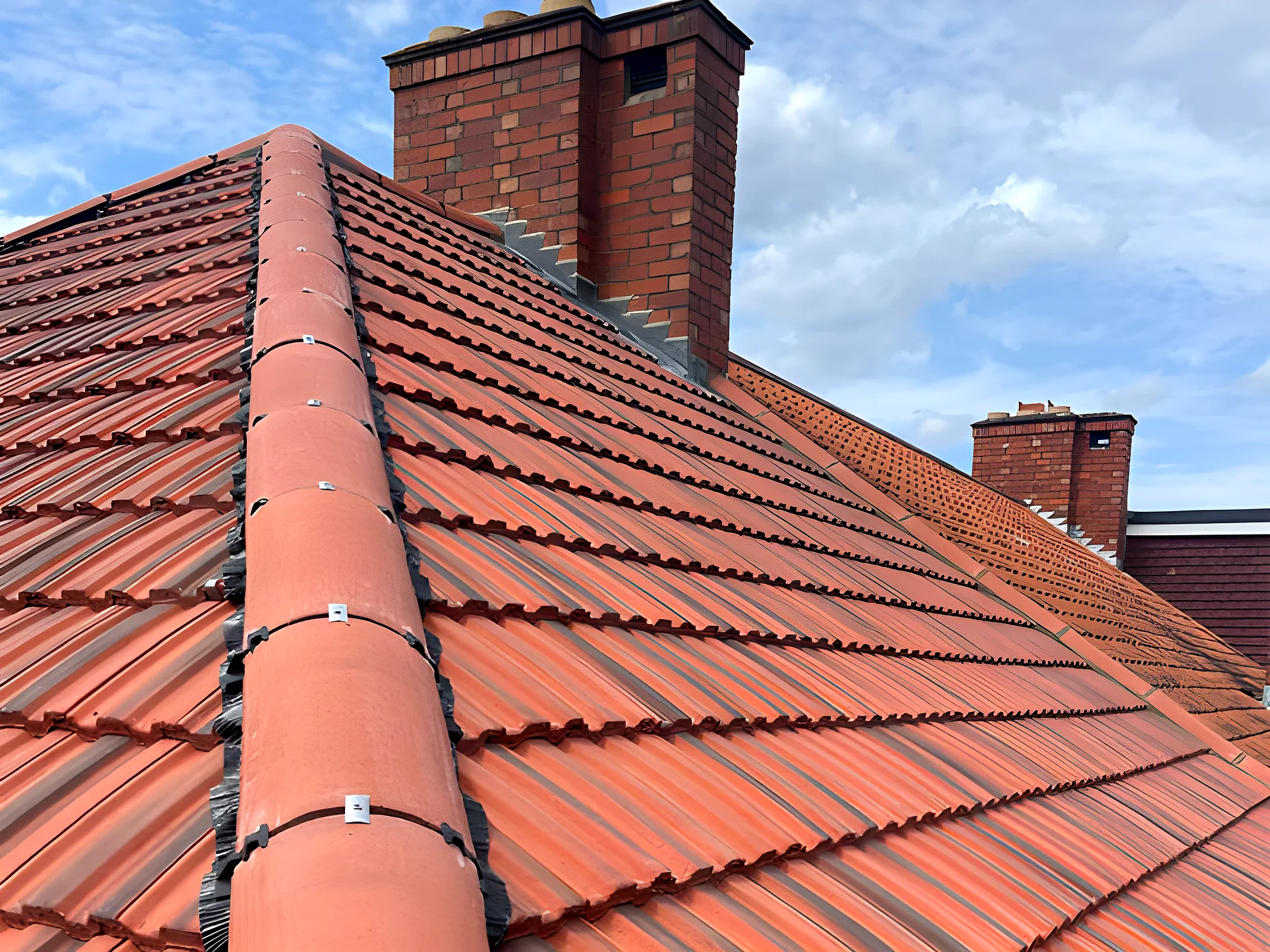
Each slate is fixed with two copper or stainless steel nails. Ridges, hips and verges are detailed to shed water without relying on mortar alone, and the lead is formed new, because a new slate roof over old lead is a leak waiting to happen.
A full re slate on a typical terraced or semi detached house takes one to two weeks with the scaffold up, and the roof is left watertight every night. Slates are laid to BS 5534 with the headlap set for the pitch, and the job comes with photographs of the timbers, the underlay and the finished roof.
Lead Valleys, Ridges and Hips
Slate roofs live and die by their lead. We form valleys and flashings on site and use proper ridge and hip details rather than mortar that will crack in two winters.
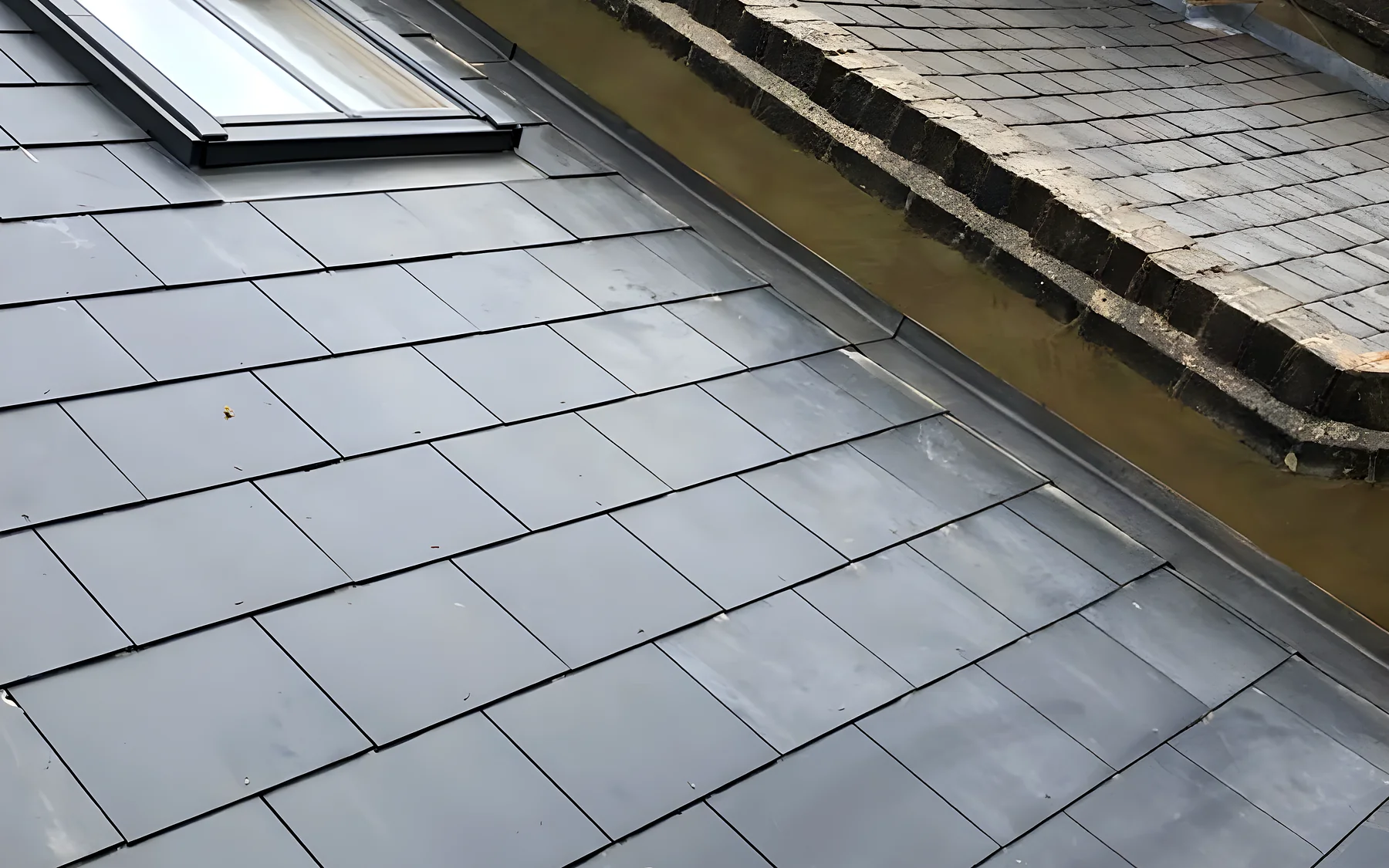
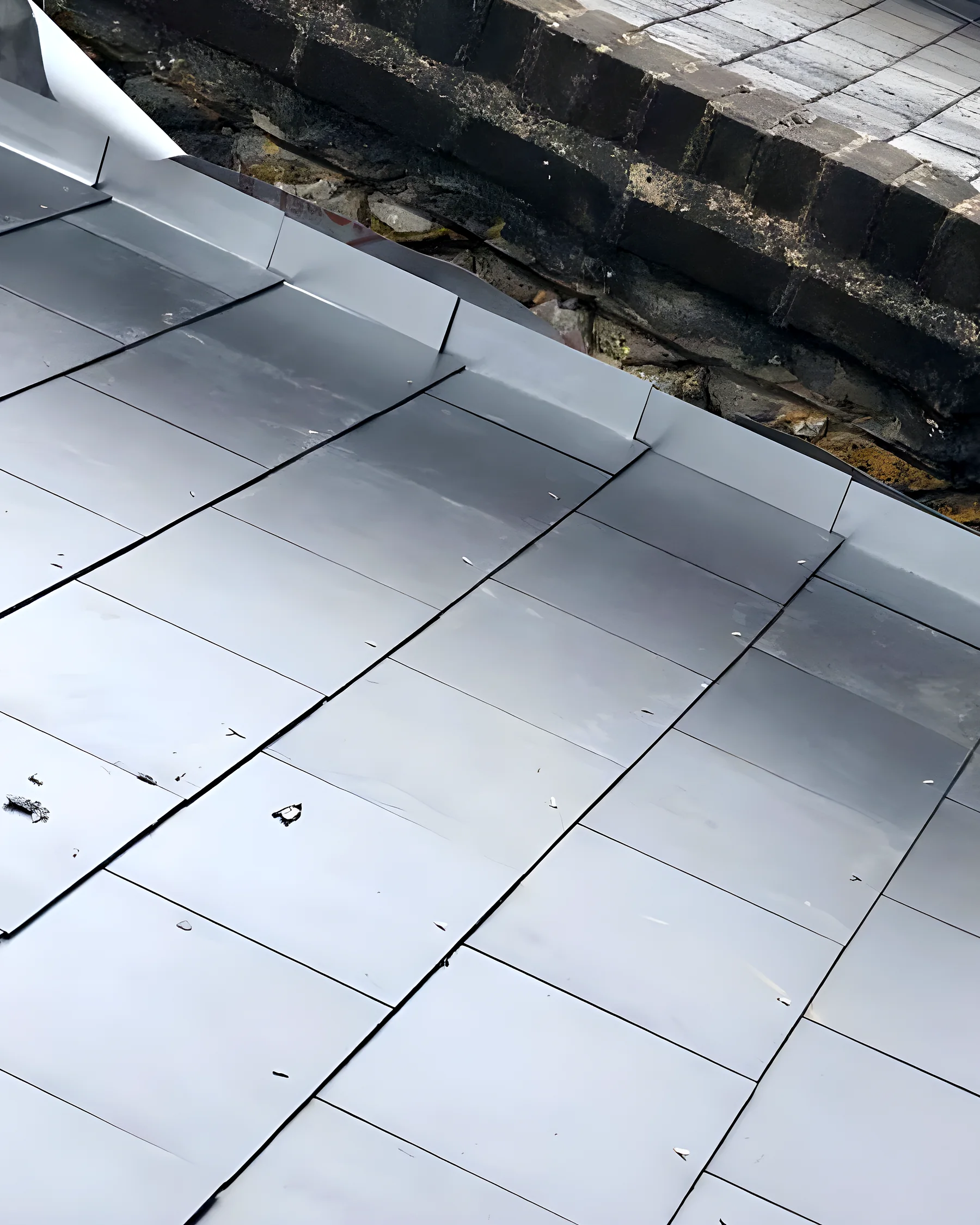
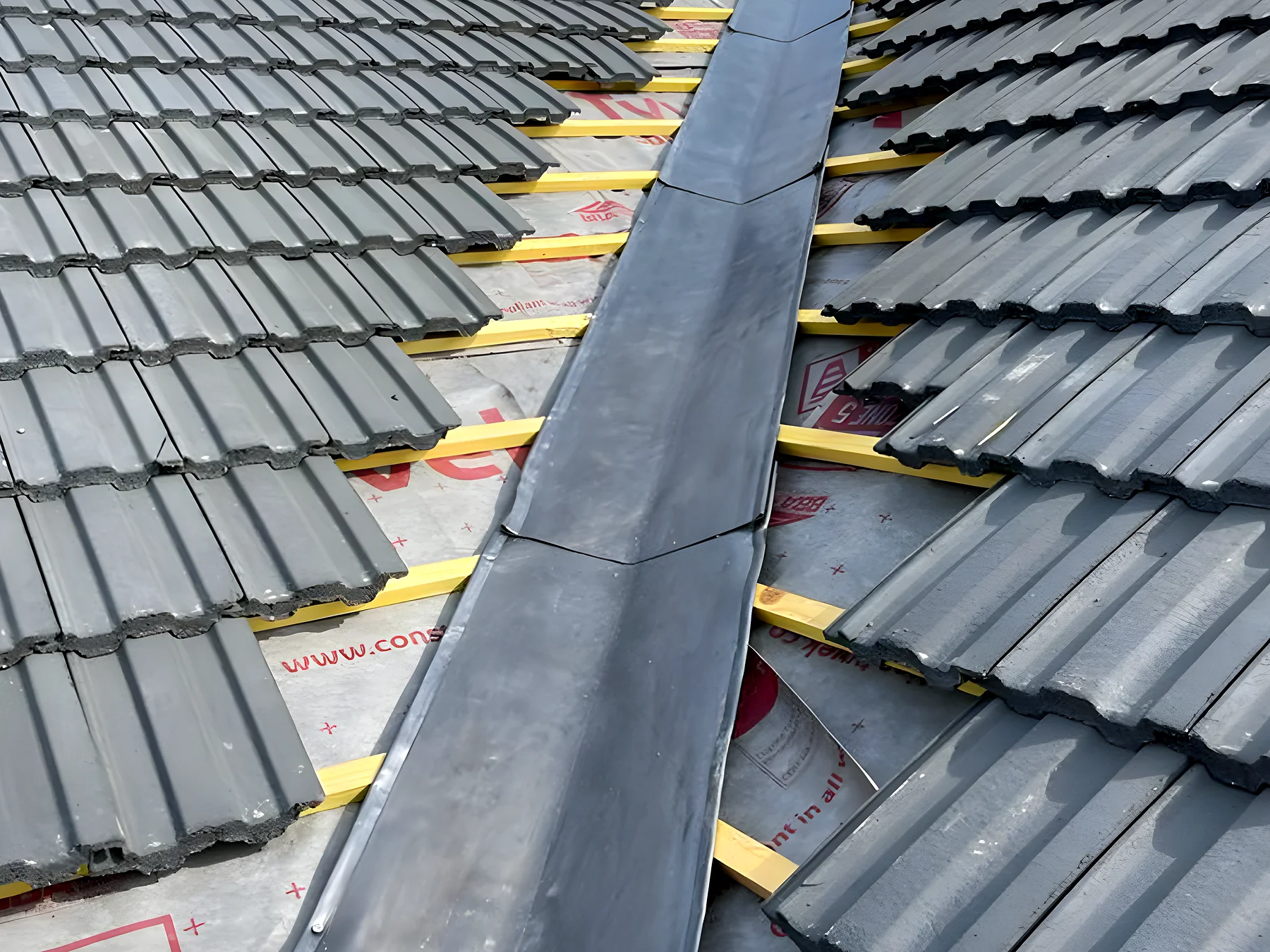
Valleys carry more water than any other part of a slate roof and they are usually the first lead to split. We replace them in new lead of the right code, laid in lengths that can move, and dress the slates back over them properly. Ridges and hips are re bedded or dry fixed so they stay put in the wind.
A slate valley is laid in Code 5 lead, in lengths of no more than 1.5 metres with a lap between each, so the lead can expand and contract without fatiguing. That detail alone is the difference between a valley that lasts fifty years and one that splits in ten.
Period and Listed Properties
Much of South West London and the Surrey towns is Victorian and Edwardian, and a lot of that is slate. We match what is there so the repair does not shout.
On a listed building or in a conservation area the details matter and may be a condition of consent. We match the slate size, the coursing and the lead details to what is there, and we can work with your conservation officer where the roof needs it.
In a conservation area a like for like repair is normally fine; a change of material on a listed building usually needs consent, and the conservation officer will want to see the slate matched in size, thickness and colour. We can put that case in writing for you.
Sounds like your roof?
The Signs We AreUsually Called For.
- Slates slipping down the roof or lying in the garden
- A rash of small slips across an otherwise sound looking roof, which is nail sickness
- Cracked or delaminating slates
- Lead valleys split or lifting
- Mortar ridges cracked and letting water in
How it works
Slate Roofing:How It Works.
What happens between getting in touch and the finished job.
- 01
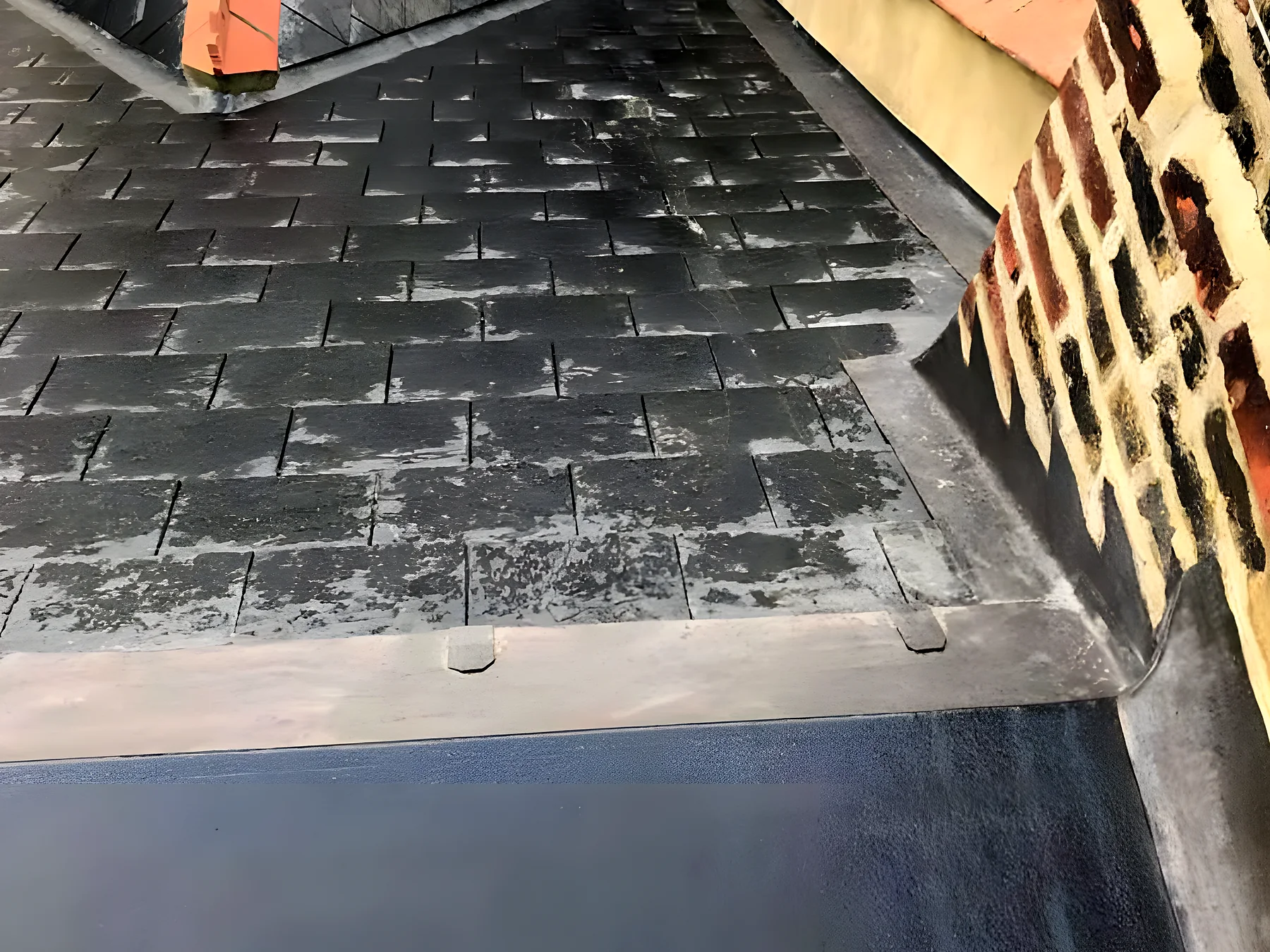
Get in Touch
Call or send a photograph. Slate is what we do most of, and a picture of the slope and of any slates on the ground tells us a lot.
- 02
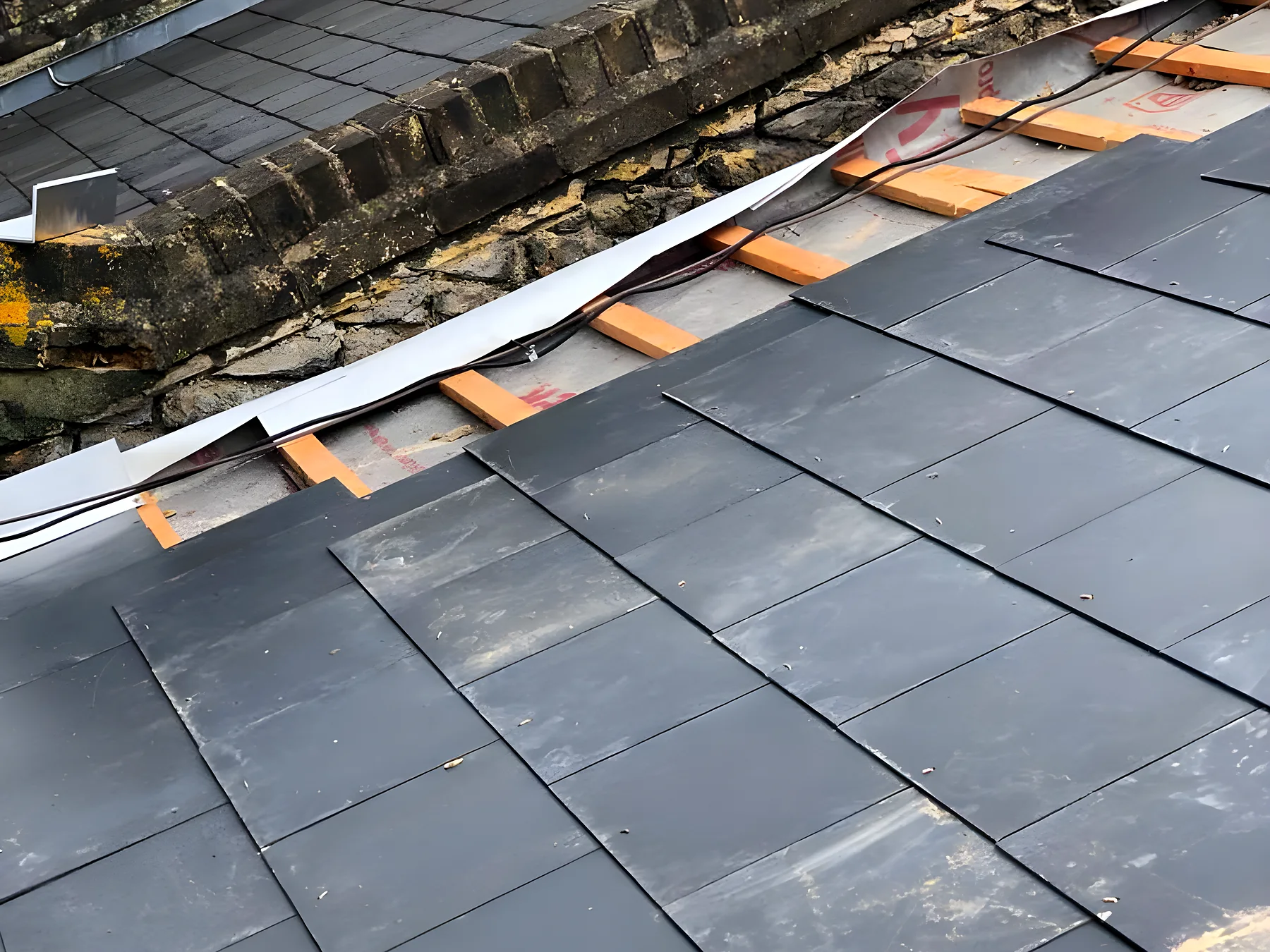
Survey and Match the Slate
We inspect the roof and the fixings, tell you whether it is a repair or nail sickness, and match the slate, Welsh, Spanish or reclaimed, to what is there.
- 03
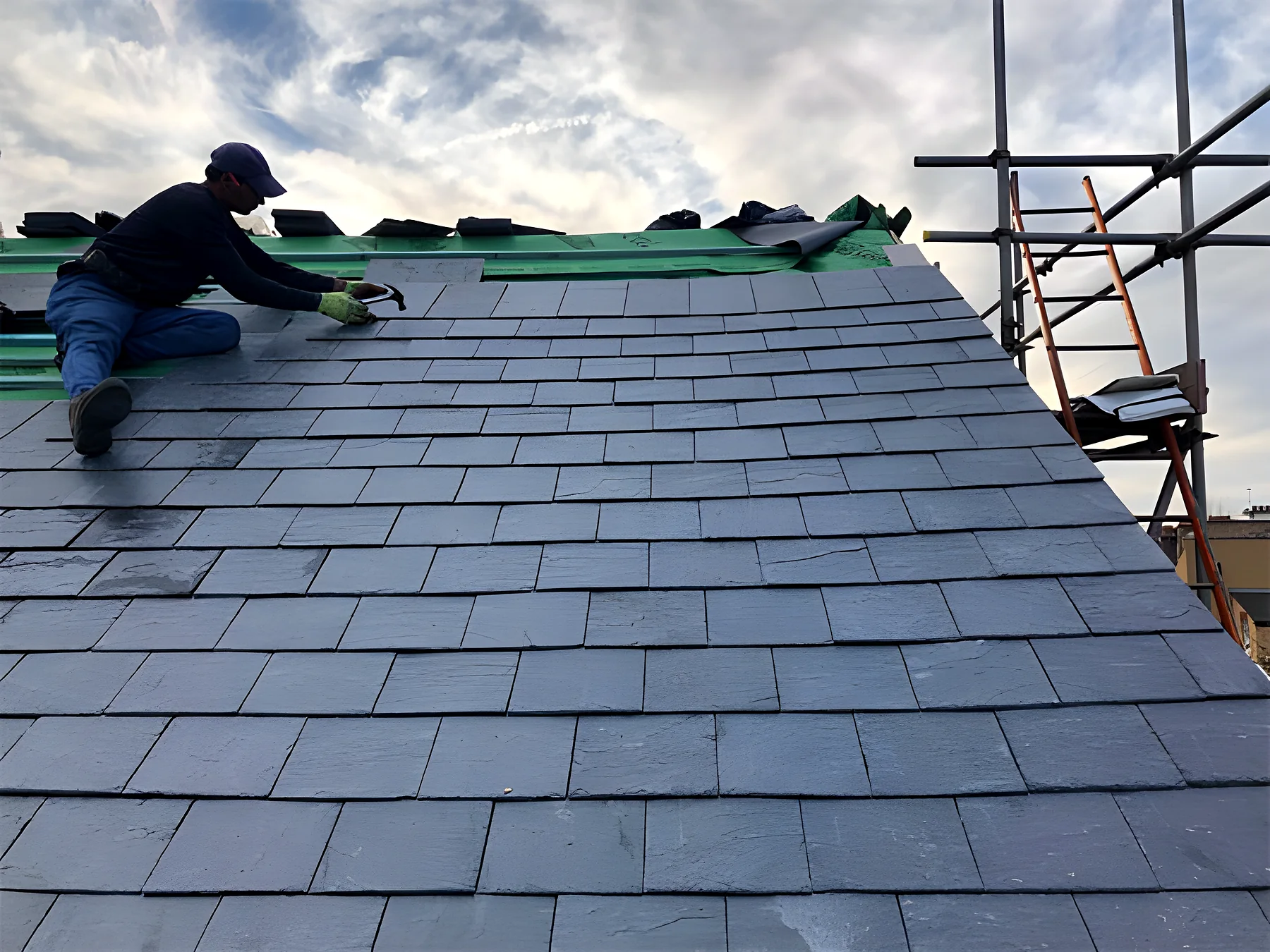
A Written Quote
An itemised price for the repair or the re slating, including the lead, the scaffold and the ridge and hip details.
- 04
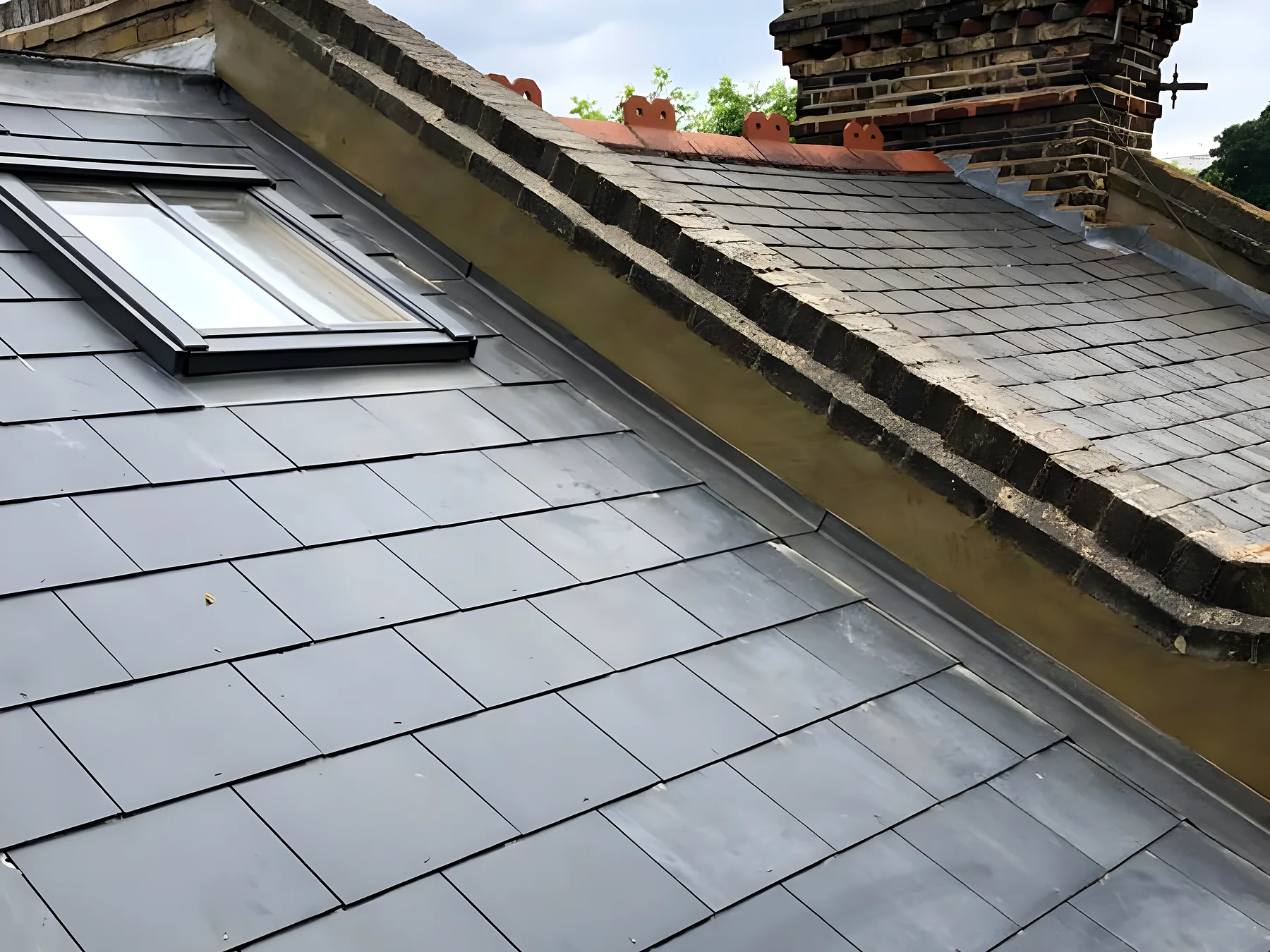
The Work, Photographed
New copper or stainless fixings, new lead where it is needed, and photographs of the finished roof.
Get in touch
01 / 04
Slate roofing questions
The QuestionsPeople Ask First.
Anything not covered here, call 01372 540 258 and ask. You will get a roofer, not a call centre.
How long does a slate roof last?
Natural slate, laid properly, commonly a hundred years or more. The fixings and the underlay usually fail long before the slate does, which is why an old slate roof can be re laid with mostly its own slates.
What is nail sickness?
The iron nails holding the slates rust through, and slates start sliding on a roof that otherwise looks fine. It shows as a few slips at first and then a lot. At that point re fixing individual slates becomes a losing battle and the roof needs re laying.
Natural or man made slate?
Natural lasts longer and looks better with age. Man made is lighter, cheaper and consistent. On a period house we would nearly always say natural; on a garage or an extension man made is often the sensible choice.
Free survey and quote
Call Us, or Senda Photograph.
A picture from the ground is usually enough for us to tell you what we are looking at. The survey and the written quote are free, and there is no obligation on either.
- London
- 0203 507 1501
- Leatherhead
- 01372 540 258
- Reigate
- 01737 749202
- Mobile, 24 hours
- 07513 397 799