
Chimney repairs in Leatherhead, Surrey and South West LondonWhere Most Roof LeaksActually Start.
A chimney stands above the roof in every wind and every frost. The mortar goes first, then the lead, then the water gets in. Most damp on a chimney breast starts at the stack, not the roof.
Over 25 years on local roofs
Free survey and written quote
24 hour emergency call out
CORC member 8125
What we do
Chimney Repairs,Start to Finish.
We repoint, rebuild, re flash and cap chimneys, and take down the ones that are past saving.
Repointing
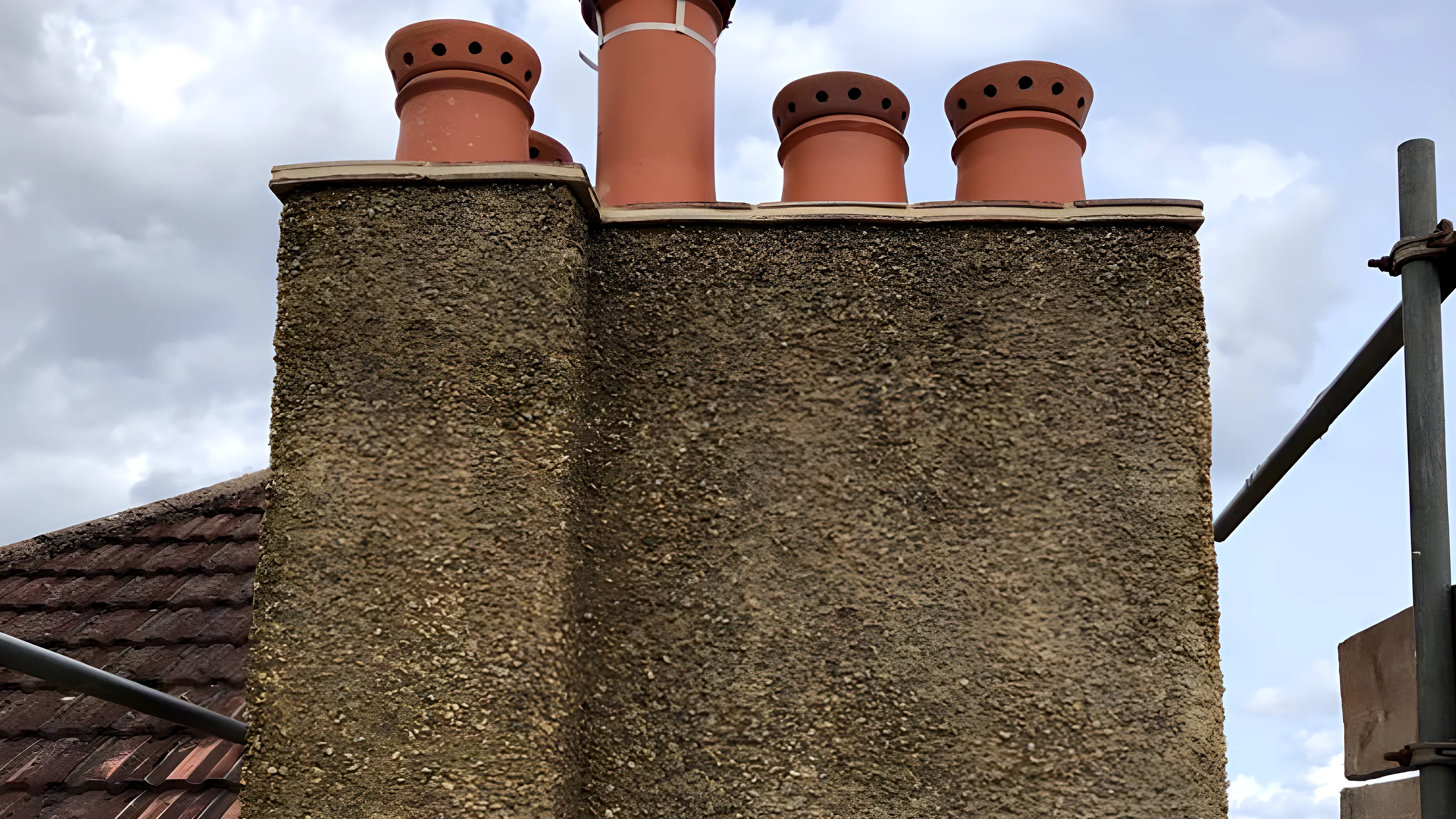
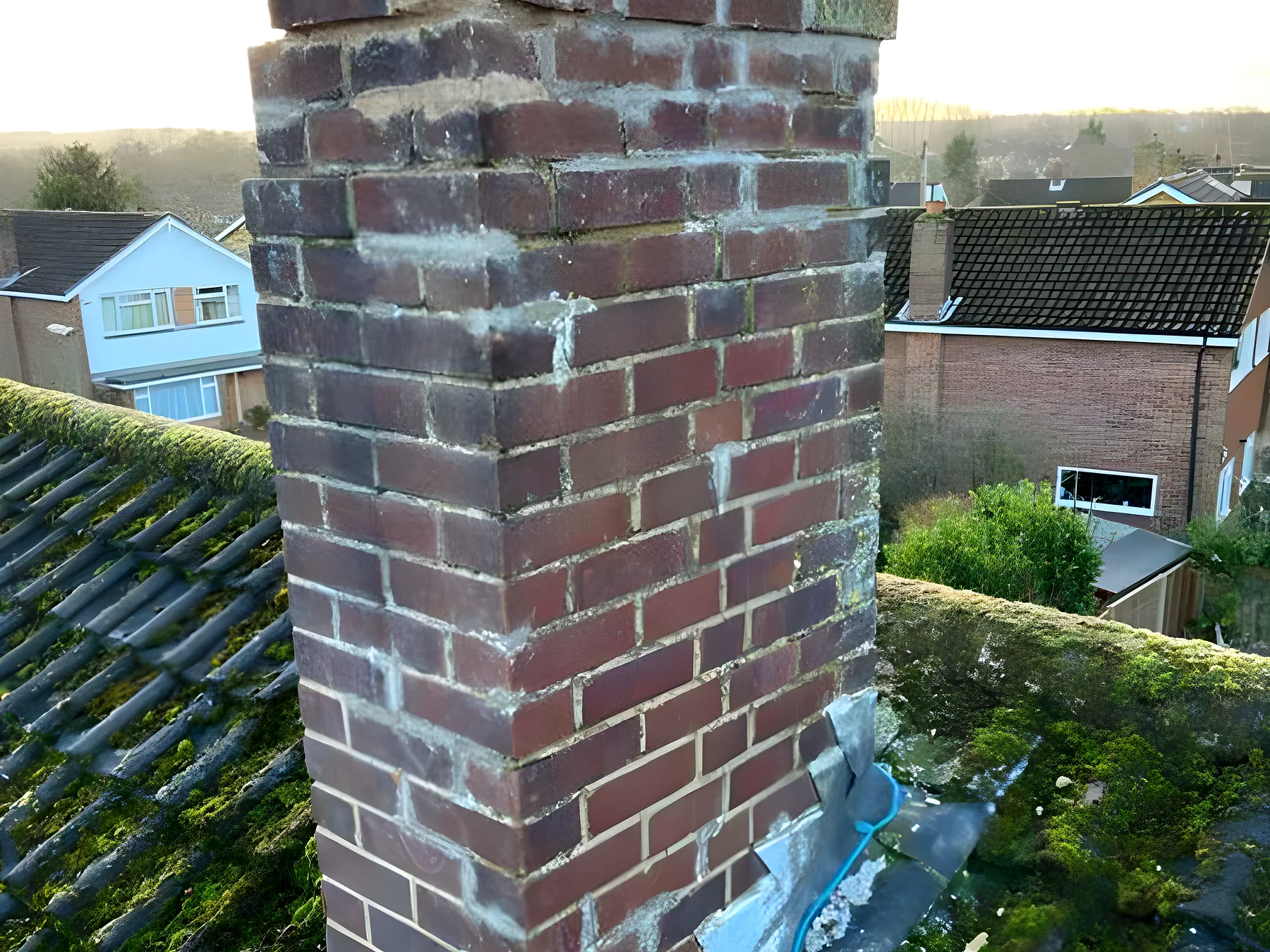
The mortar joints weather out long before the bricks do. We rake out the failed joints and repoint with the right mix, which on an older stack is a lime based mortar rather than hard cement that cracks the brick.
A chimney takes more weather than any other brickwork on the house, from every side, and the joints go first. Once they have weathered back, water sits in them, freezes, and works the bricks loose. Repointing is raking the failed mortar out to a sound depth and pointing again with a mortar that suits the brick.
On a Victorian or Edwardian stack that means a lime based mix. Hard cement pointing is stronger than the old brick and cracks it, which is why so many repointed stacks fail again within a few years.
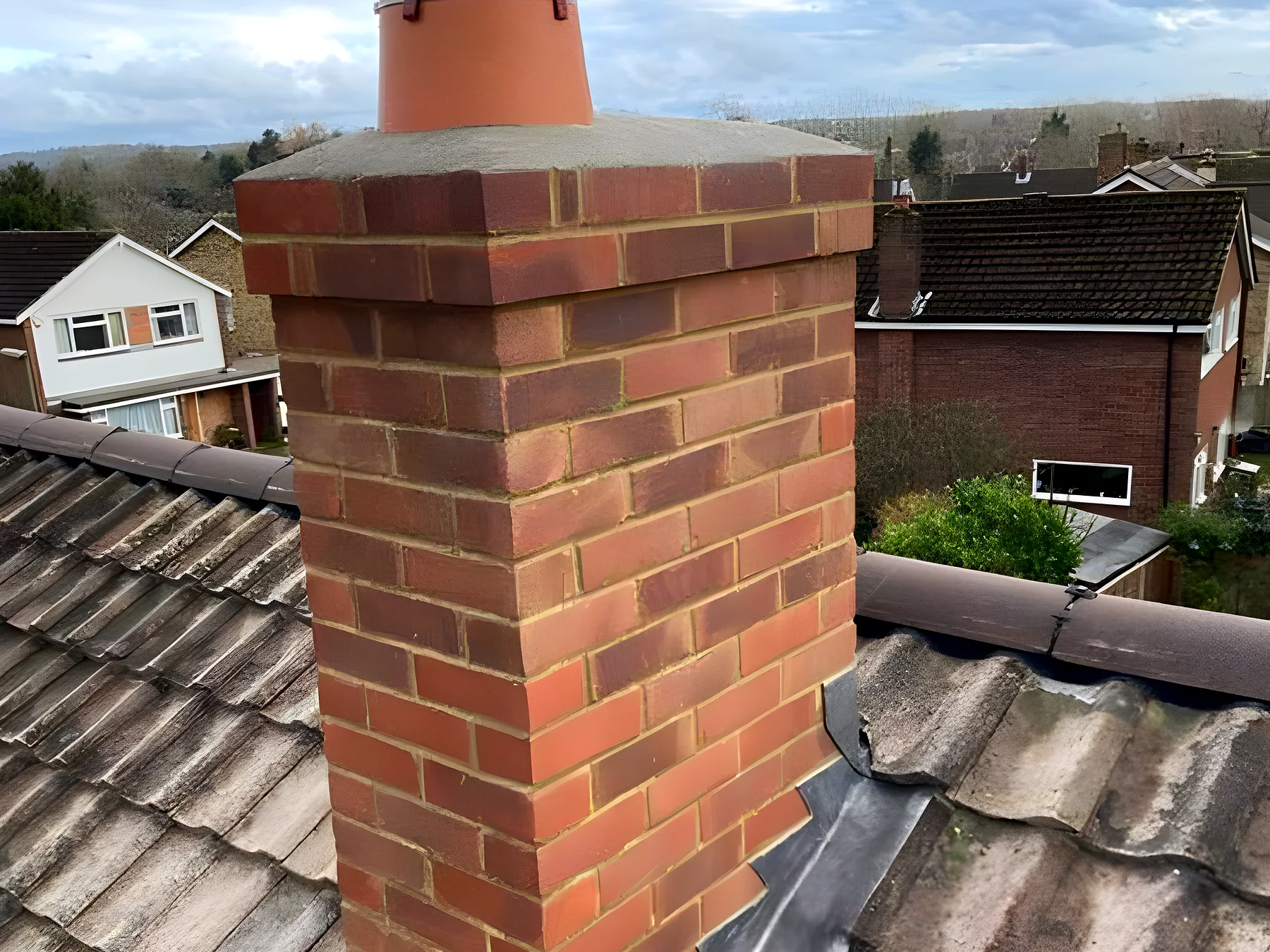
Repointing a stack takes a day or two from the scaffold, raking the joints out to at least twice their width, wetting the brick, and pointing in a lime or a sand and cement mix to match the original. The flaunching that holds the pots is usually renewed at the same time.
Rebuilding
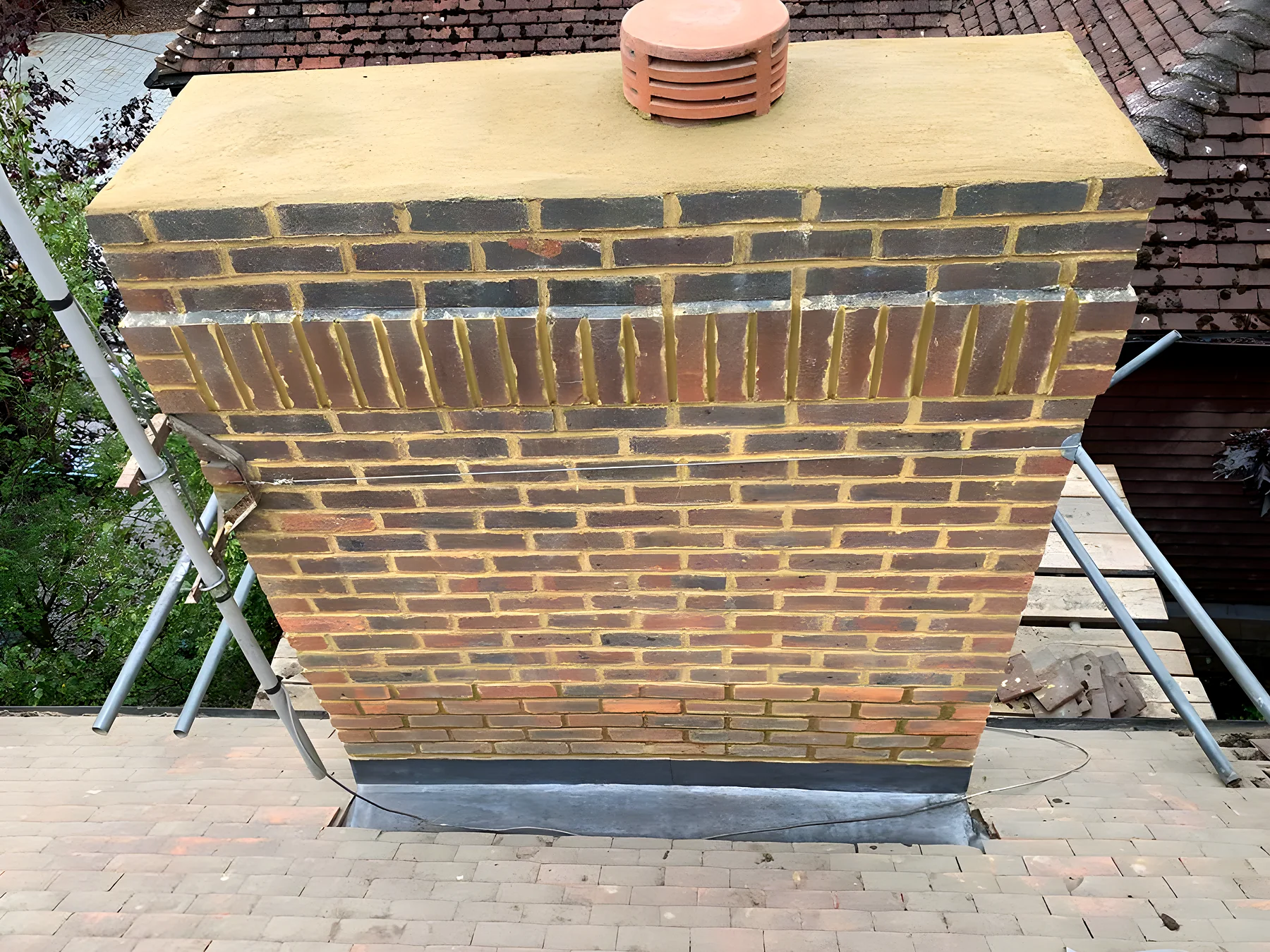
When the brickwork has gone, the stack is rebuilt from sound brick down, with a new lead tray and flashings, new pots and cowls, and a proper flaunching on top to shed the water.
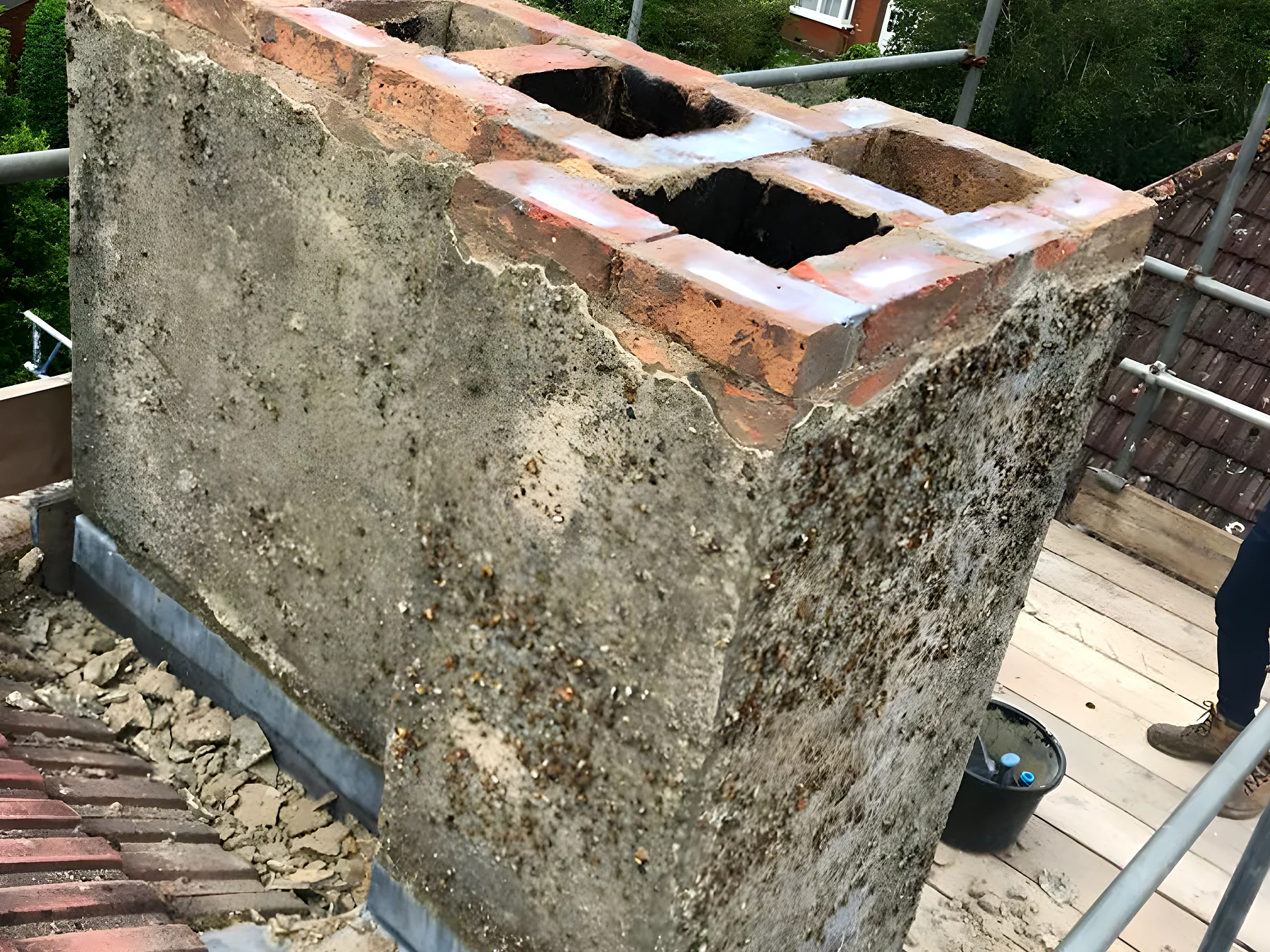
When the brickwork has spalled or the stack is leaning, repointing is not enough. We take the stack down to sound brick, rebuild it to the original profile, fit a lead damp proof tray through it at roof level, new flashings around it, new pots and cowls, and a flaunching that sheds the water.
A rebuild uses reclaimed brick to match the house where the stack is seen from the street, a lead damp proof tray at roof level with weep holes, new pots bedded in a fresh flaunching, and new flashings around the base. A typical stack is rebuilt in two to three days.
Pots, Cowls and Capping
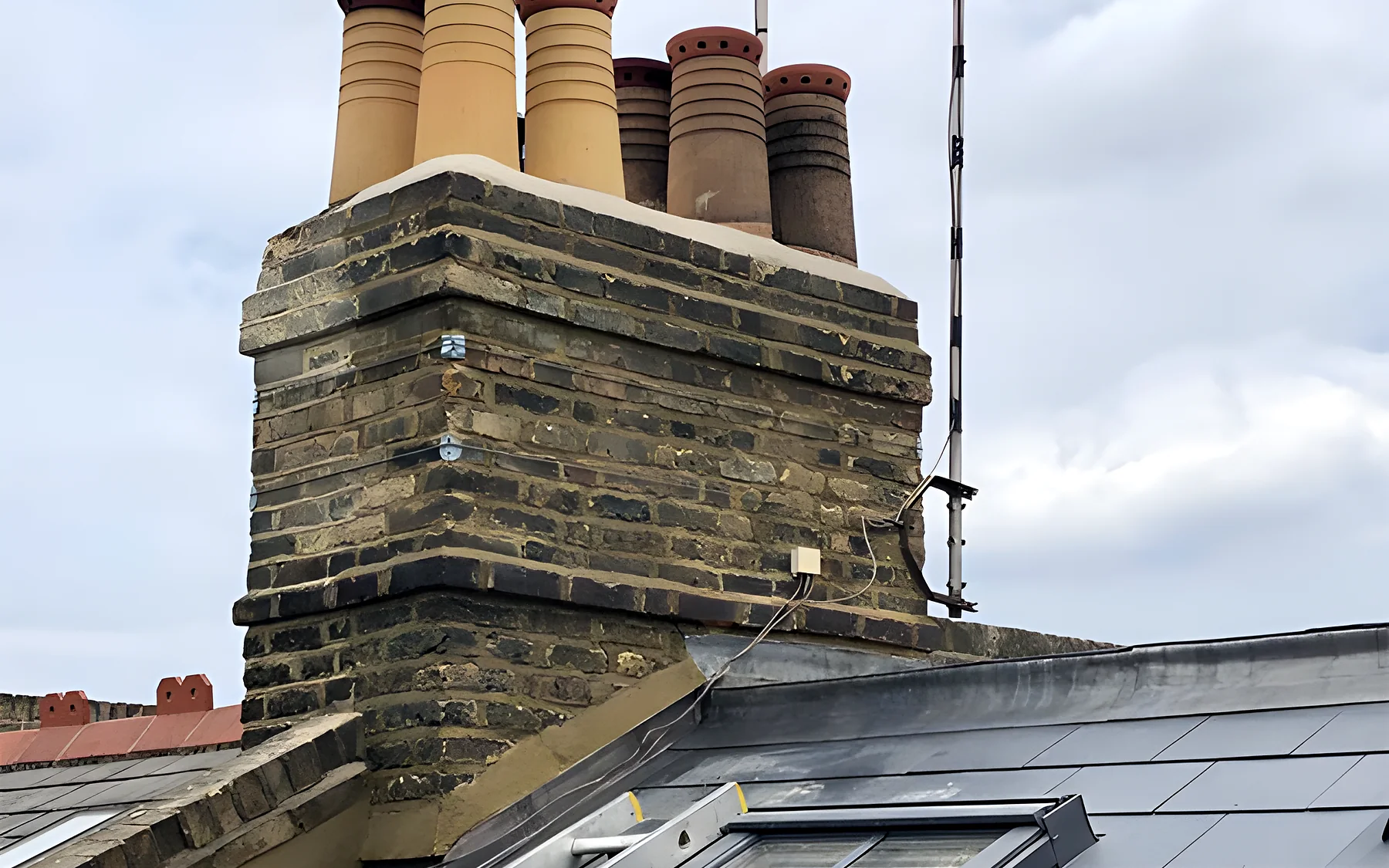
Cracked pots replaced. Cowls fitted to stop rain and birds. Unused flues capped and vented so they stay dry without trapping damp in the stack.
A cracked pot lets water into the flue and eventually into the room below. A missing cowl lets rain and birds in. An unused flue that is capped without a vent traps damp and shows as a stain on the chimney breast. Each is a small job done from the roof while the scaffold or ladder is there.
A flue that serves a gas appliance needs the right terminal for the appliance, and a Gas Safe registered engineer signs off anything that affects it; we work with them where a chimney serves a boiler. A redundant flue is capped with a vented cap so the stack stays dry inside.
Flashings and Lead Trays
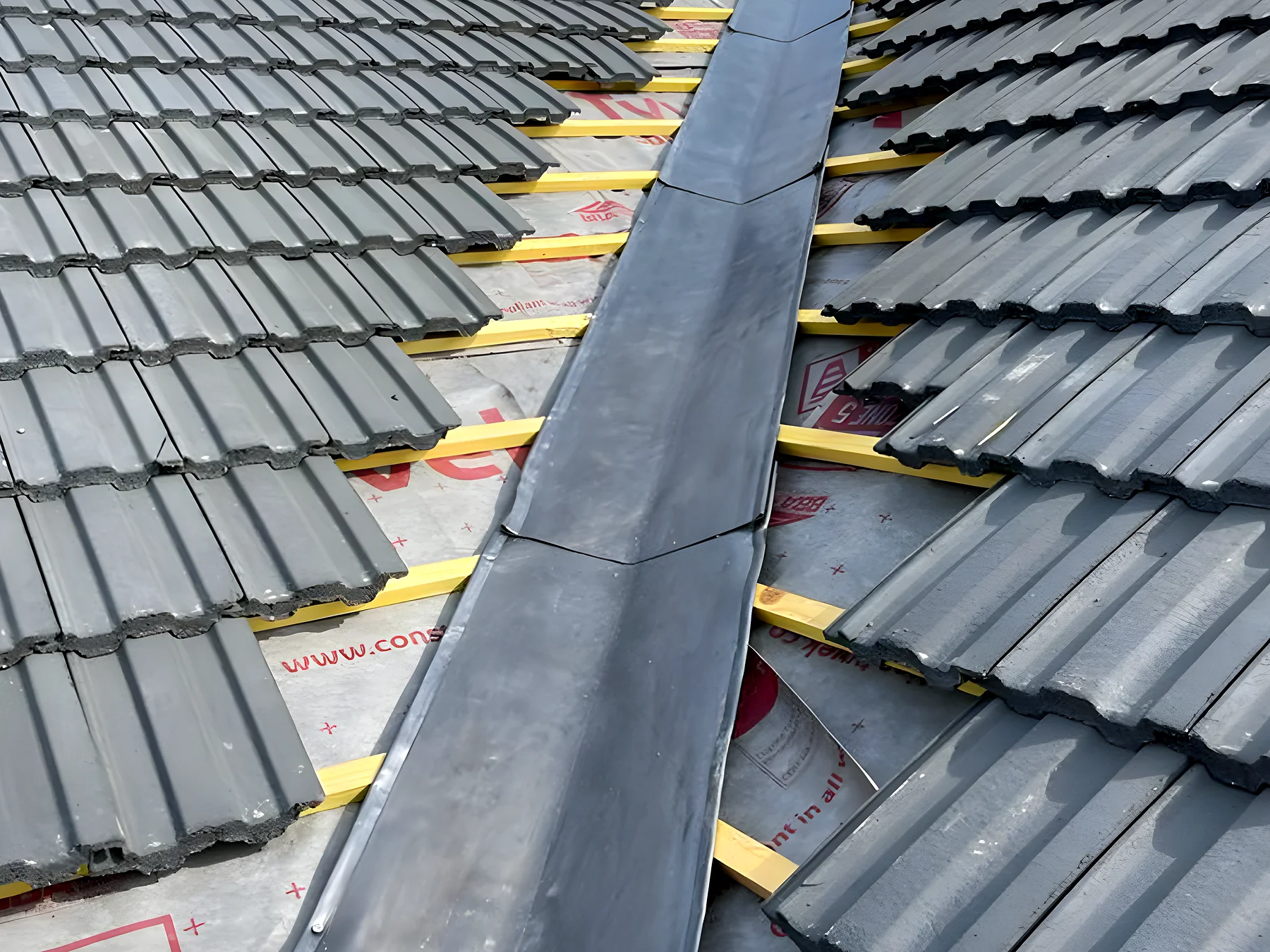
The lead where the stack meets the roof is the commonest leak on a house. We form new step flashings, back gutters and aprons, and fit a lead tray through the stack where there is not one.
Most damp on a chimney breast is the lead rather than the brick. New step flashings, a back gutter and an apron formed on site stop the water at the roofline. Where the stack has no lead tray we fit one through the brickwork so water that gets into the stack above the roof cannot come down inside.
A lead tray through the stack is fitted at the level of the roof, stepped to the pitch, with the brickwork rebuilt above it. It stops water that soaks into the exposed brick above the roof from tracking down inside the chimney breast, which is the cause of the damp on many older houses.
Taking a Chimney Down
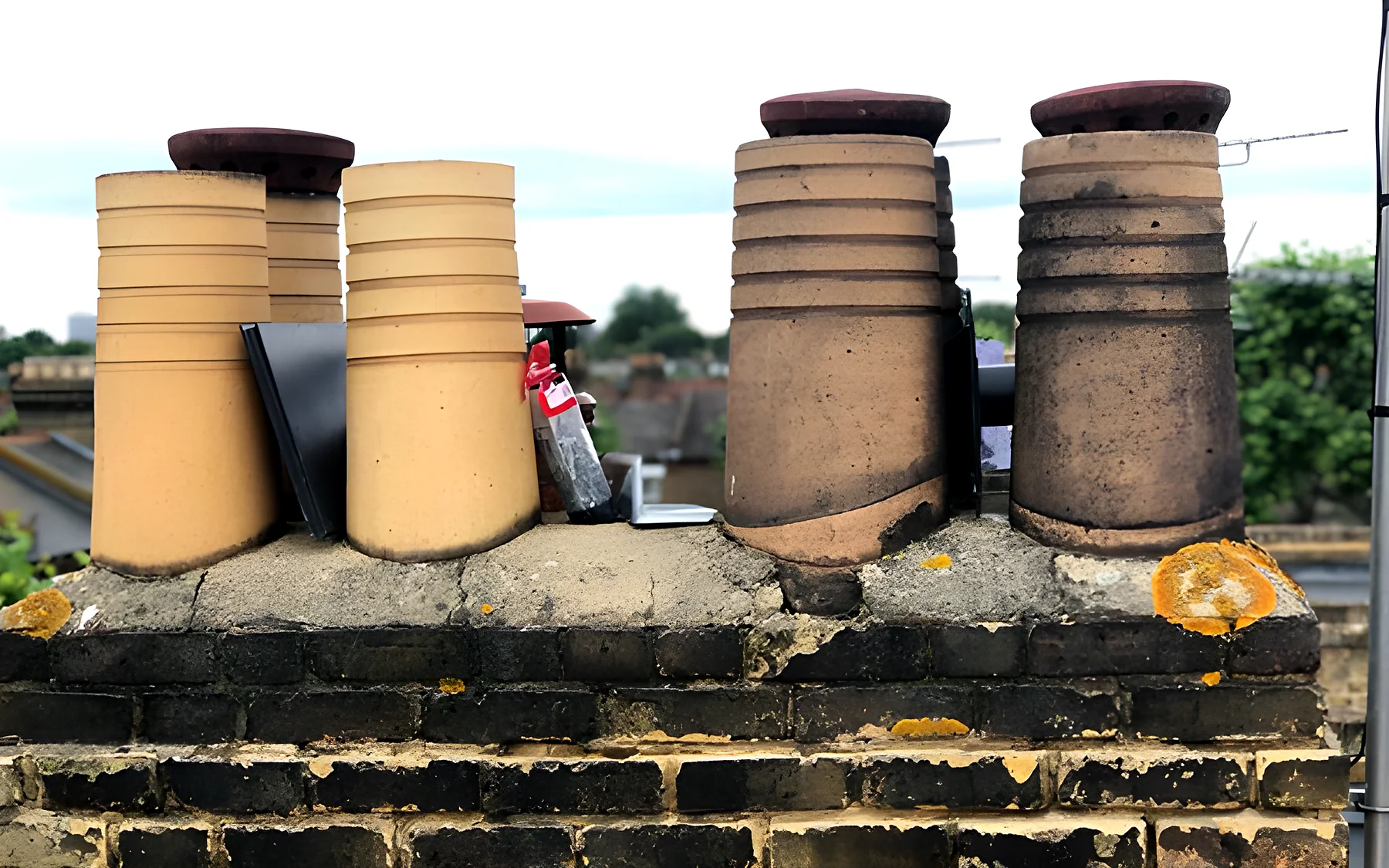
A stack that is leaning, unused and past repair is safer off the roof. We take it down to below the roofline, make good the roof, and leave nothing to worry about in the next storm.
A redundant stack that is leaning or crumbling is a risk in every storm and costs money to keep. Taking it down to below the roofline, capping the flue and roofing over the opening removes the problem for good, and it often costs less than rebuilding.
Removing a stack to below the roofline is usually a two day job: the brick comes down, the flue is capped, the roof is timbered, felted and tiled across the opening, and the finished slope is photographed. Where the stack is shared with a neighbour, the party wall side stays as it is.
Sounds like your roof?
The Signs We AreUsually Called For.
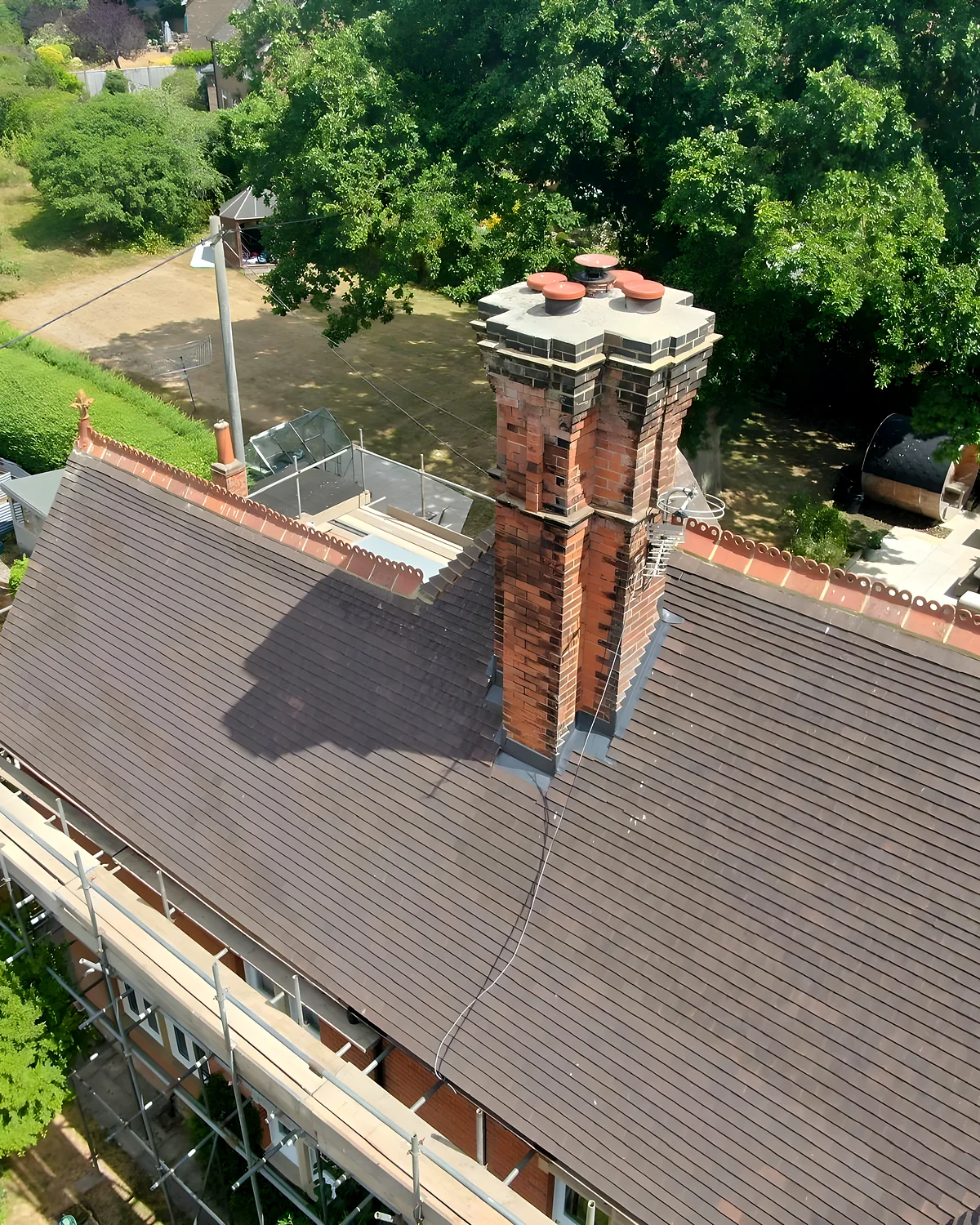
- A damp patch on the chimney breast, upstairs or down
- Mortar missing from the joints, or lying in the gutter
- A stack that leans, or a pot that has moved
- Staining down the outside of the stack
- Bits of brick or pot on the roof or in the garden
How it works
Chimney Repairs:How It Works.
What happens between getting in touch and the finished job.
- 01
Get in Touch
Call or send a photograph of the stack from the ground, and of any damp on the chimney breast inside.
- 02
Survey From the Roof
We inspect the stack, the pots, the flaunching and the lead from the roof, and tell you whether it needs repointing, rebuilding or taking down.
- 03
A Written Quote
One itemised price for the chimney work and the lead, with the scaffold included.
- 04
The Work, Photographed
Repointing, rebuilding or removal, the roof made good, and photographs of the finished stack.
Get in touch
01 / 04
Chimney repairs questions
The QuestionsPeople Ask First.
Anything not covered here, call 01372 540 258 and ask. You will get a roofer, not a call centre.
Is my chimney causing the damp?
If the damp is on the chimney breast, almost certainly. Rain gets into the stack through failed joints and open pots, and through the flashing at the base, and shows up inside as a patch on the wall below.
Should I cap an unused chimney?
Yes, but vented. A sealed stack traps moisture and the damp comes through anyway. A vented cap keeps the rain out and lets the flue breathe.
Can you repoint without scaffolding?
Rarely. A chimney is the highest point on the house and the work takes time. Scaffold is safer and it is included in the quote.
Free survey and quote
Call Us, or Senda Photograph.
A picture from the ground is usually enough for us to tell you what we are looking at. The survey and the written quote are free, and there is no obligation on either.
- London
- 0203 507 1501
- Leatherhead
- 01372 540 258
- Reigate
- 01737 749202
- Mobile, 24 hours
- 07513 397 799