
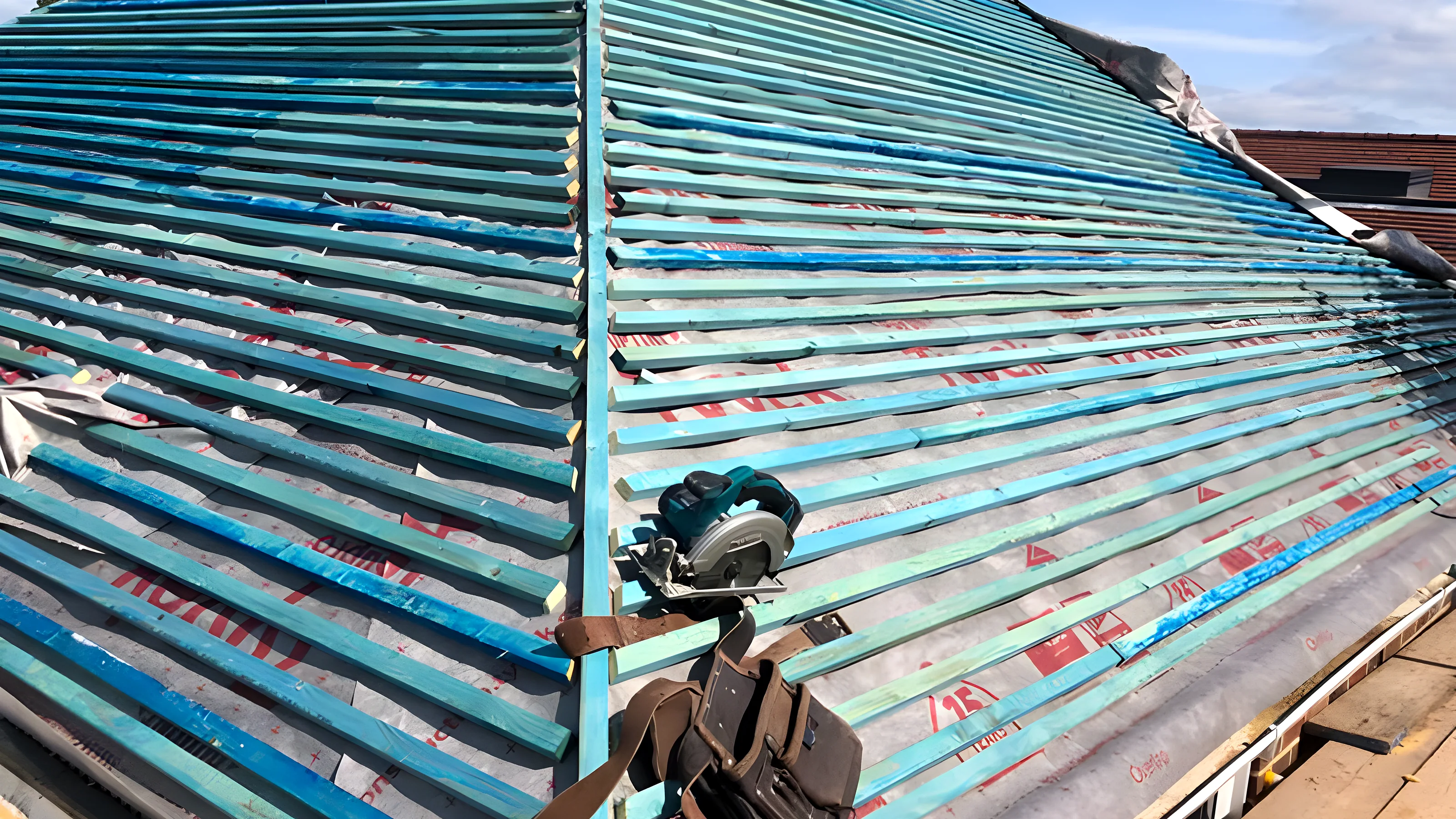
Roofers and roof repairs in Ashtead, KT21Ashtead Roofs,Three Miles From Our Yard.
Ashtead is next door to us. Most of it went up between the wars and just after, which means a lot of clay plain tiles reaching the age where ridges, valleys and chimneys need attention.
Over 25 years on local roofs
Free survey and written quote
24 hour emergency call out
CORC member 8125
Ashtead’s roofs
Clay Tiles, Gablesand Village Slate.
The Craddocks and the 1930s
Craddocks Avenue, The Street and the long roads leading off them were built up in the 1920s and 30s with semis and detached houses roofed in steep clay plain tiles. Hipped ends, bay windows with their own small roofs and a single chimney between each pair are the pattern. After ninety years the tiles have usually lasted; the timber and mortar beneath them have not.
Mock Tudor Fronts
Plenty of Ashtead houses wear half timbered gables over the front bay. Behind each one a valley carries rain off two slopes, often lined with thin lead or cut tiles. When a 1930s Ashtead roof leaks at the front, that valley is where we start looking.
The Old Village
Around the church and the old village centre there are Victorian houses under Welsh slate and a few older cottages under handmade clay. Slate of that age suffers from nail sickness: the slates are sound but the nails have rusted. Handmade clay is irregular and has to be matched from reclaimed stock so a repair does not stand out.
Ashtead Park and the Larger Houses
Towards Ashtead Park the plots and the roofs get bigger: detached houses with several hips and valleys, more than one stack, and dormers added over the years. These are survey first jobs, because what you see from the drive is a small part of the roof, and the valleys and flashings you cannot see are where water gets in.
Post War Estates
The estates that filled in after the war, many towards the common, were roofed in concrete interlocking tiles. They are the simplest roofs in Ashtead to match. The usual fault is underneath: the original felt has perished between the battens, so wind driven rain gets past tiles that look perfectly sound from the road.
Working Close to Home
Ashtead is three miles from our base in Fetcham, which makes it the patch we know best. Most roads have drives and wide verges that take scaffold easily. The village is in Mole Valley, and around the old village core we confirm listed or conservation status before proposing a change of covering.
Lower Ashtead and the Station
Down by the railway, Lower Ashtead has the village's Victorian and Edwardian cottages and small terraces, mostly slate with brick stacks, mixed in with later infill houses under concrete tiles. Plots are tighter here than up the hill, gardens are narrower and the roofs closer together, so a scaffold often needs agreeing with the neighbours before it goes up.
What we are called to in Ashtead
- Ridge and hip mortar cracking on 1930s clay roofs
- Valleys behind mock Tudor gables
- Tall inter war stacks with failed flashings
- Nail sickness on Victorian slate near the church
- Perished felt under post war concrete tiles
- Bay roofs and porch canopies letting in water
What we do in Ashtead
Roofing and Roof Repairs,Across Ashtead.
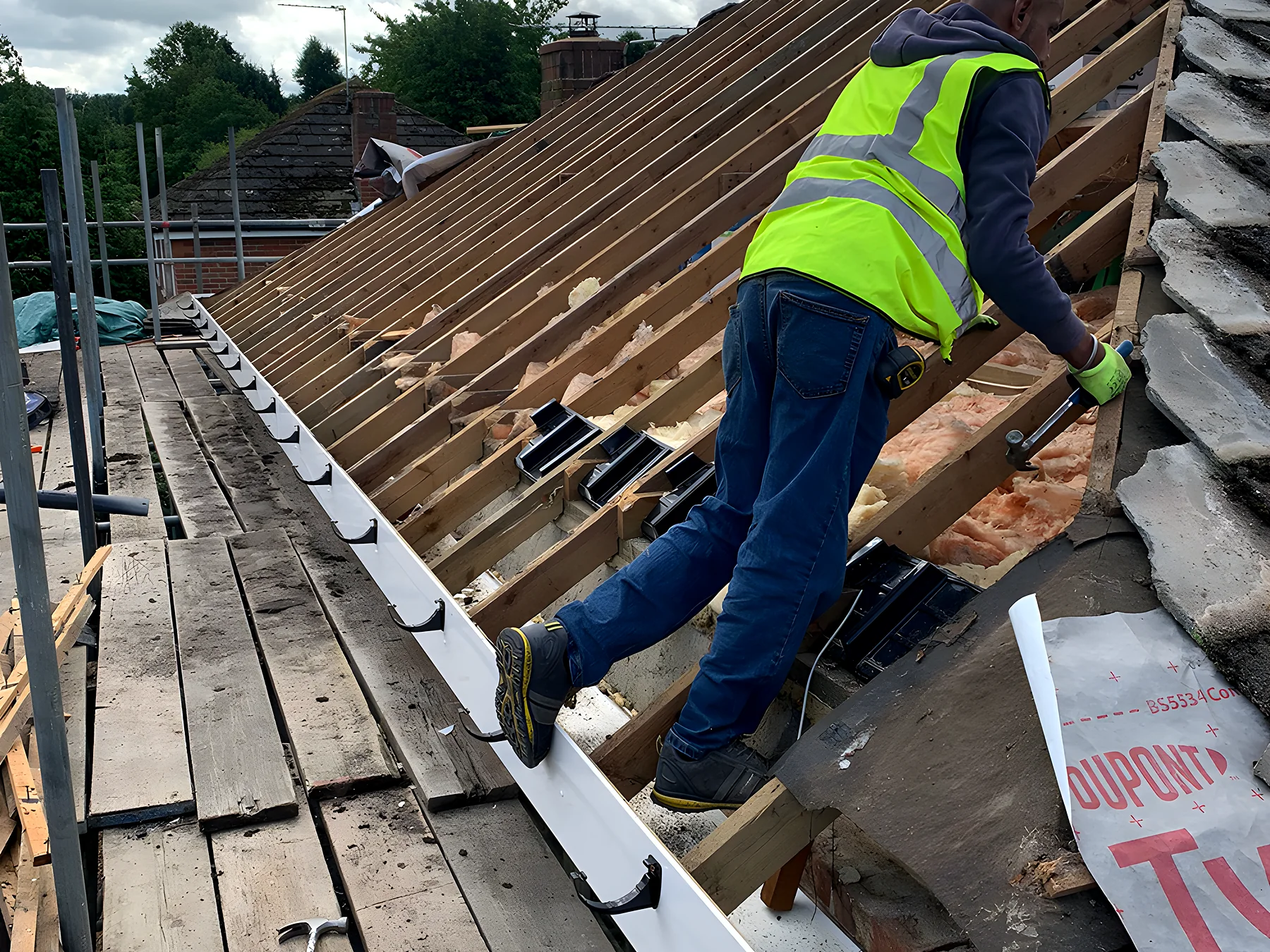
Roof Repairs in Ashtead
Most Ashtead roofs are inter war and sound in the main. What fails is a ridge, a valley or a flashing, and that is what we repair, rather than selling a whole new roof.
Read more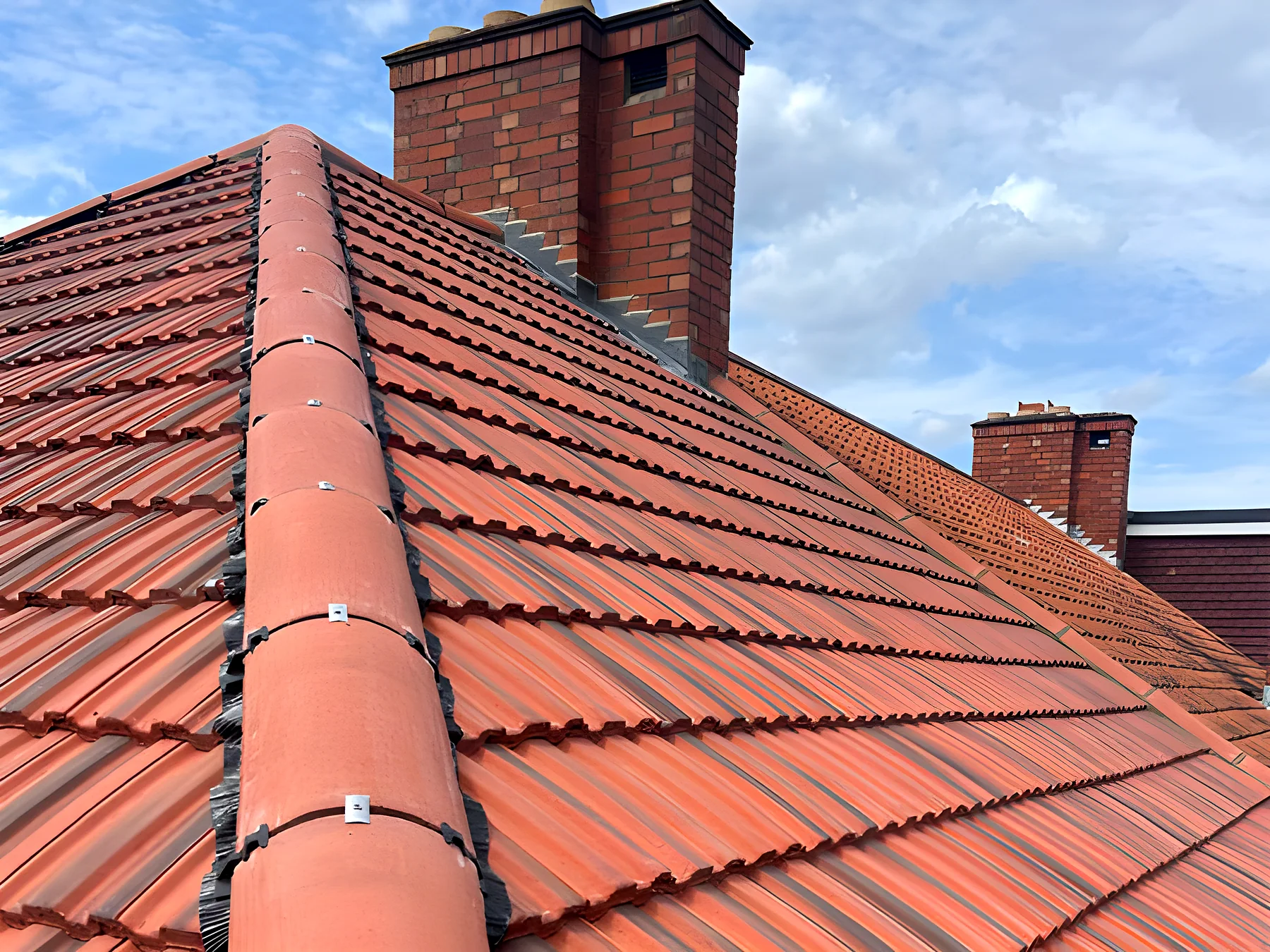
Tiled Roofing in Ashtead
Clay plain tiles cover most of Ashtead. We match them from current stock or reclaimed tiles, and when the battens have gone we strip and re-tile in the same tile.
Read more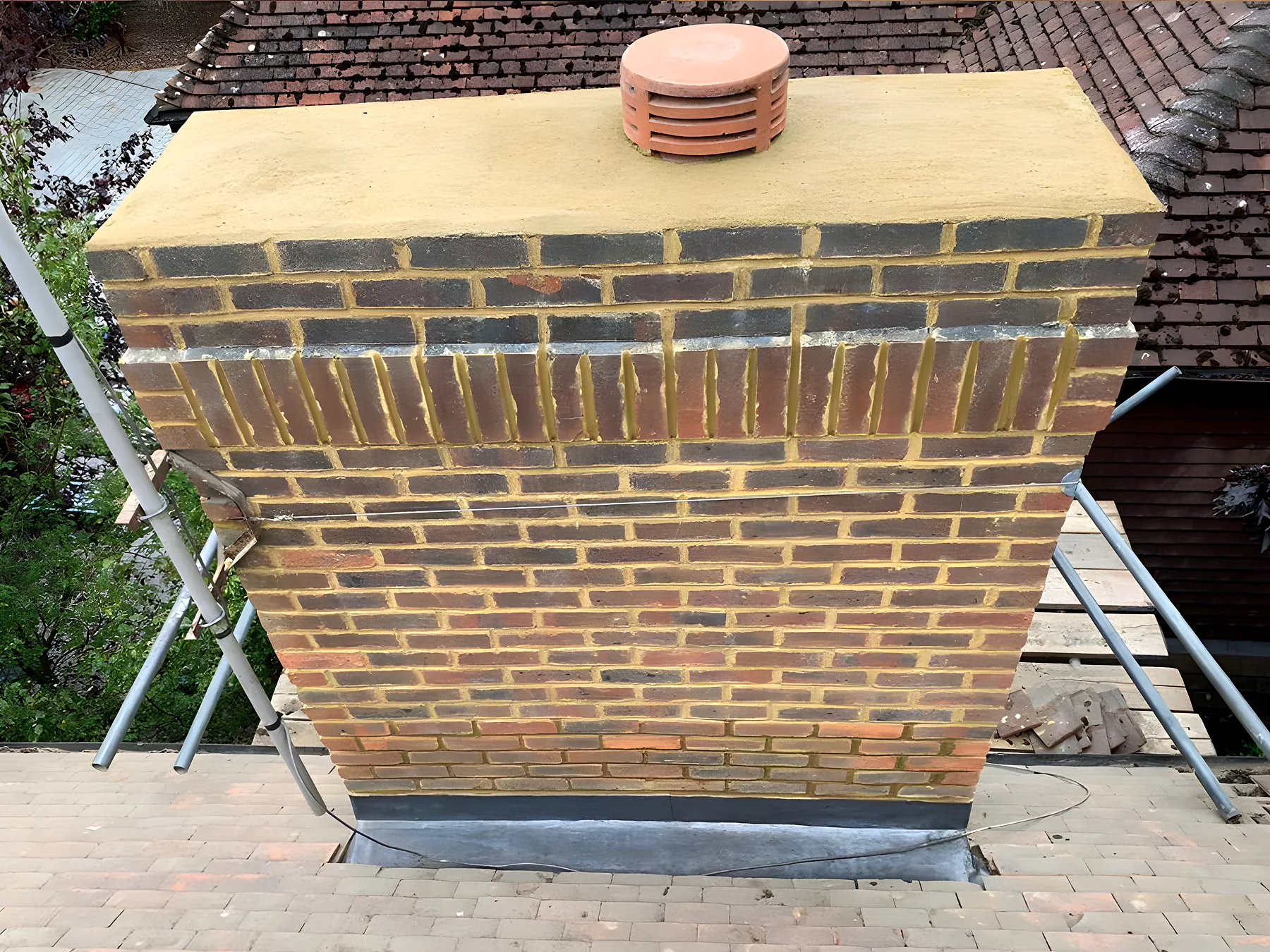
Chimney Repairs in Ashtead
Ashtead's 1930s chimneys stand tall and catch every storm blowing in off the Downs. Repointing, new flaunching, new lead and full rebuilds where the brick has gone are all part of the work.
Read moreAlso in AshteadRoofing Slate Roofing Flat Roofing Leadwork New Roofs Fascias, Soffits & Guttering
Roof repairs in Ashtead
Something Wrongon Your Ashtead Roof?
Ashtead calls tend to fall into these six. Tap whichever looks most like your roof.
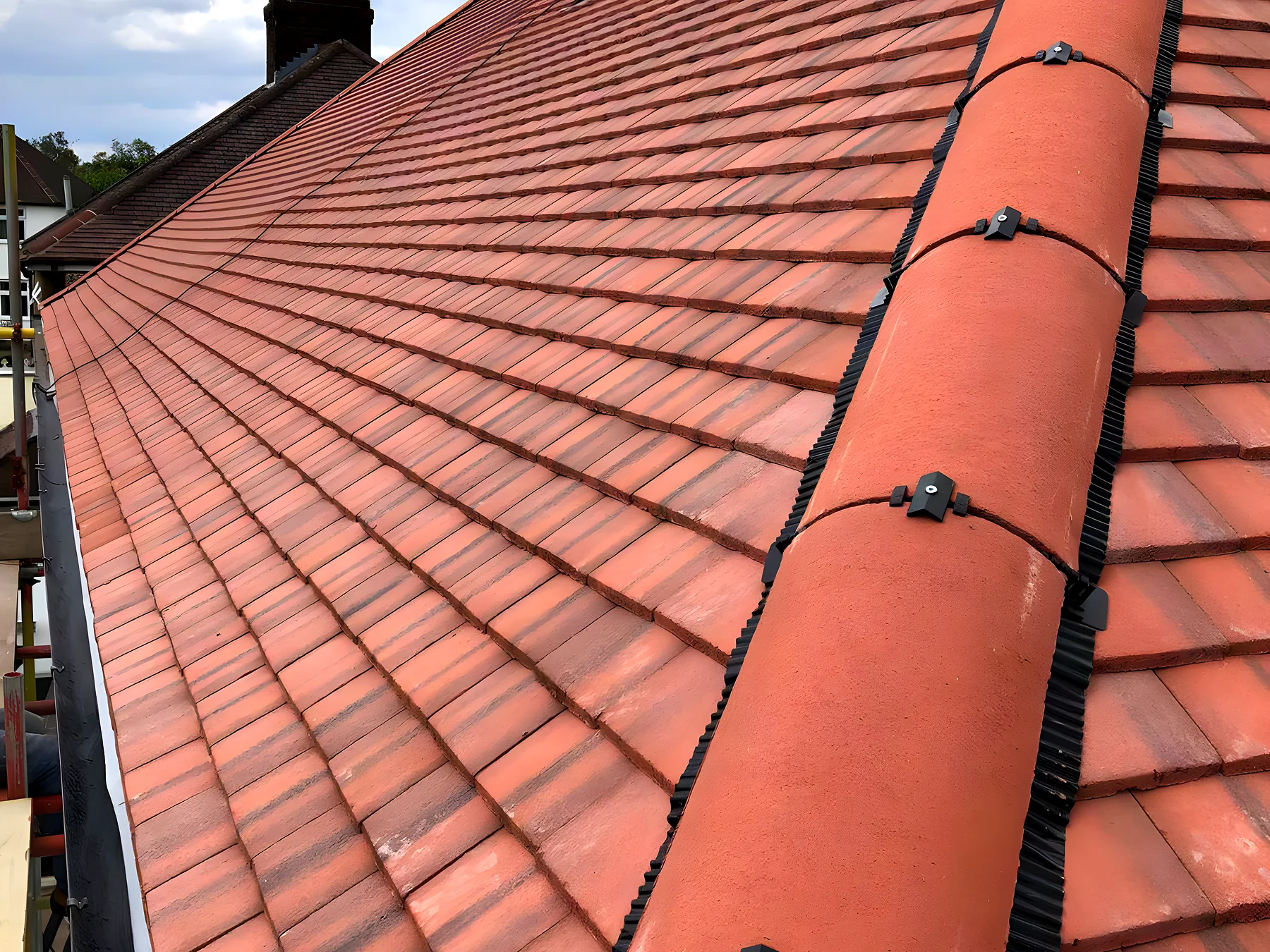
Likely cause
Ninety Surrey winters crumble the mortar under ridge and hip tiles, and then the tiles rock in the wind and let rain in beneath. We lift them, clean them and fix them back, bedded or mechanically fixed, with clips holding each one.
Usually the job is
Tiled Roofing in Ashtead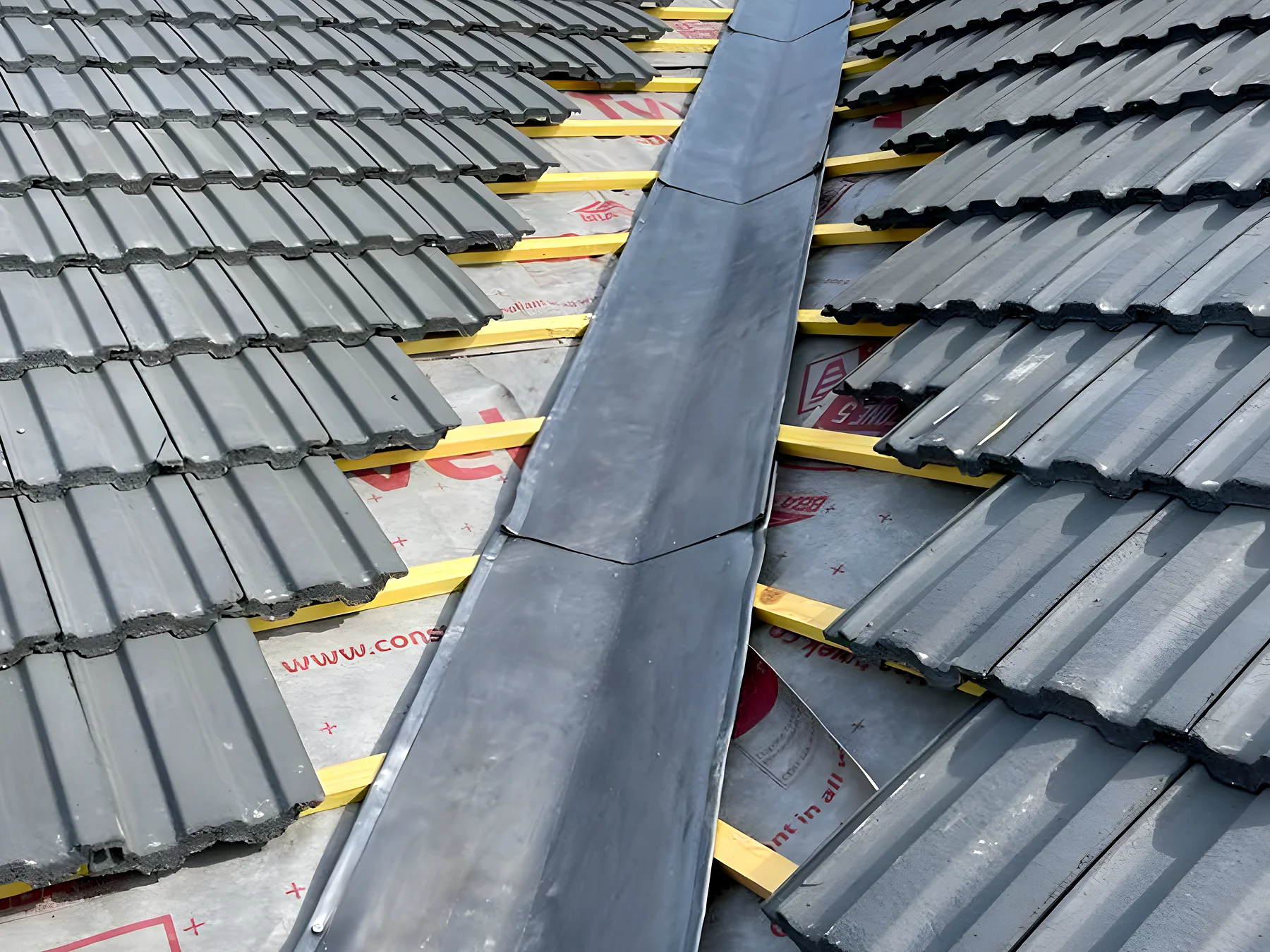
Likely cause
Behind a mock Tudor gable is a valley that takes the water from two slopes. The lead in it is often thin and split, or the tiles were cut short at the edges. New lead, laid in proper lengths, usually ends the leak.
Usually the job is
Leadwork in Ashtead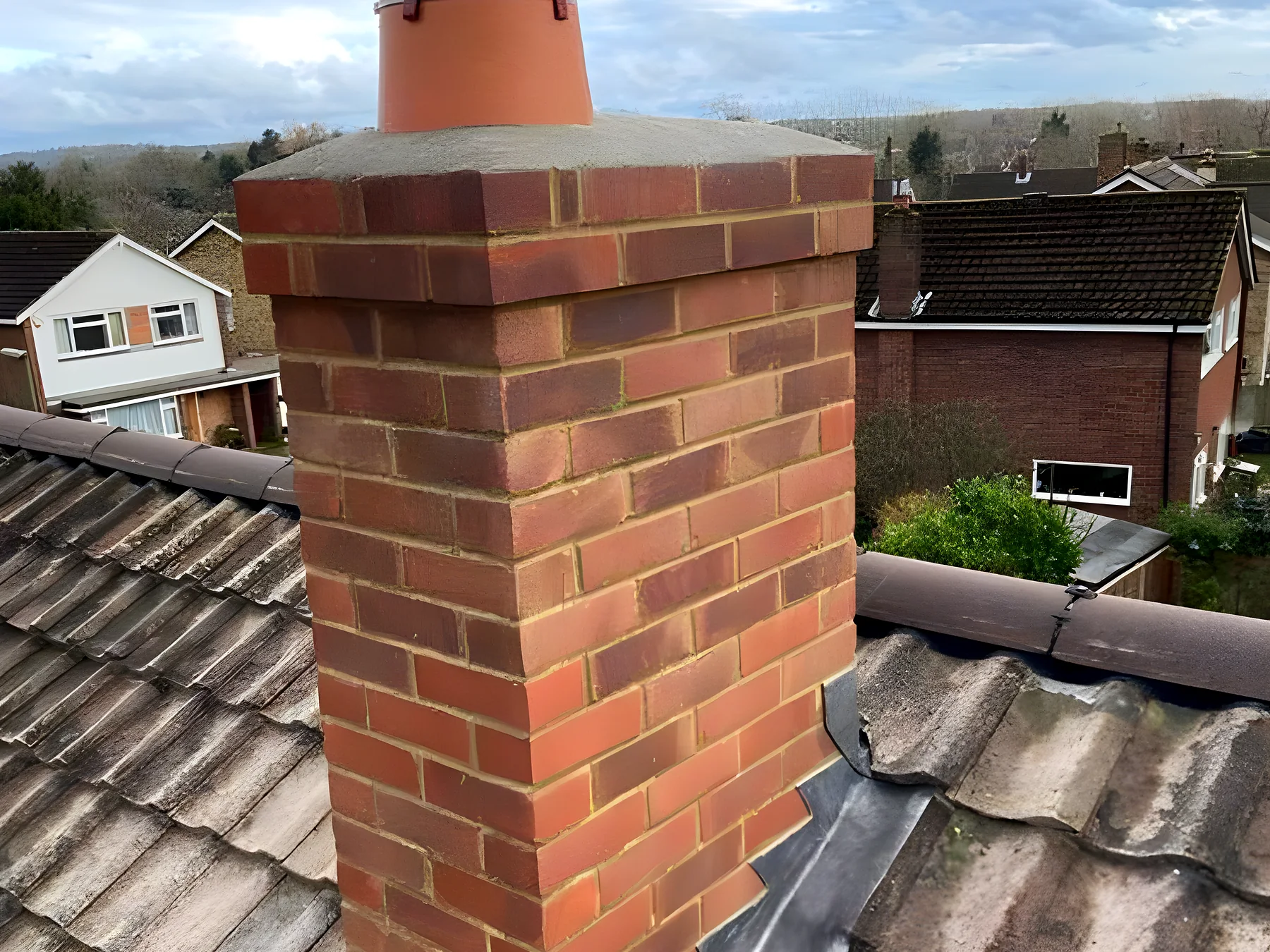
Likely cause
Ashtead's inter war stacks are tall and exposed. Water gets in through open joints, cracked flaunching on top, or the stepped lead where the stack meets the tiles. We work out which and fix that part, from repointing to a rebuild.
Usually the job is
Chimney Repairs in Ashtead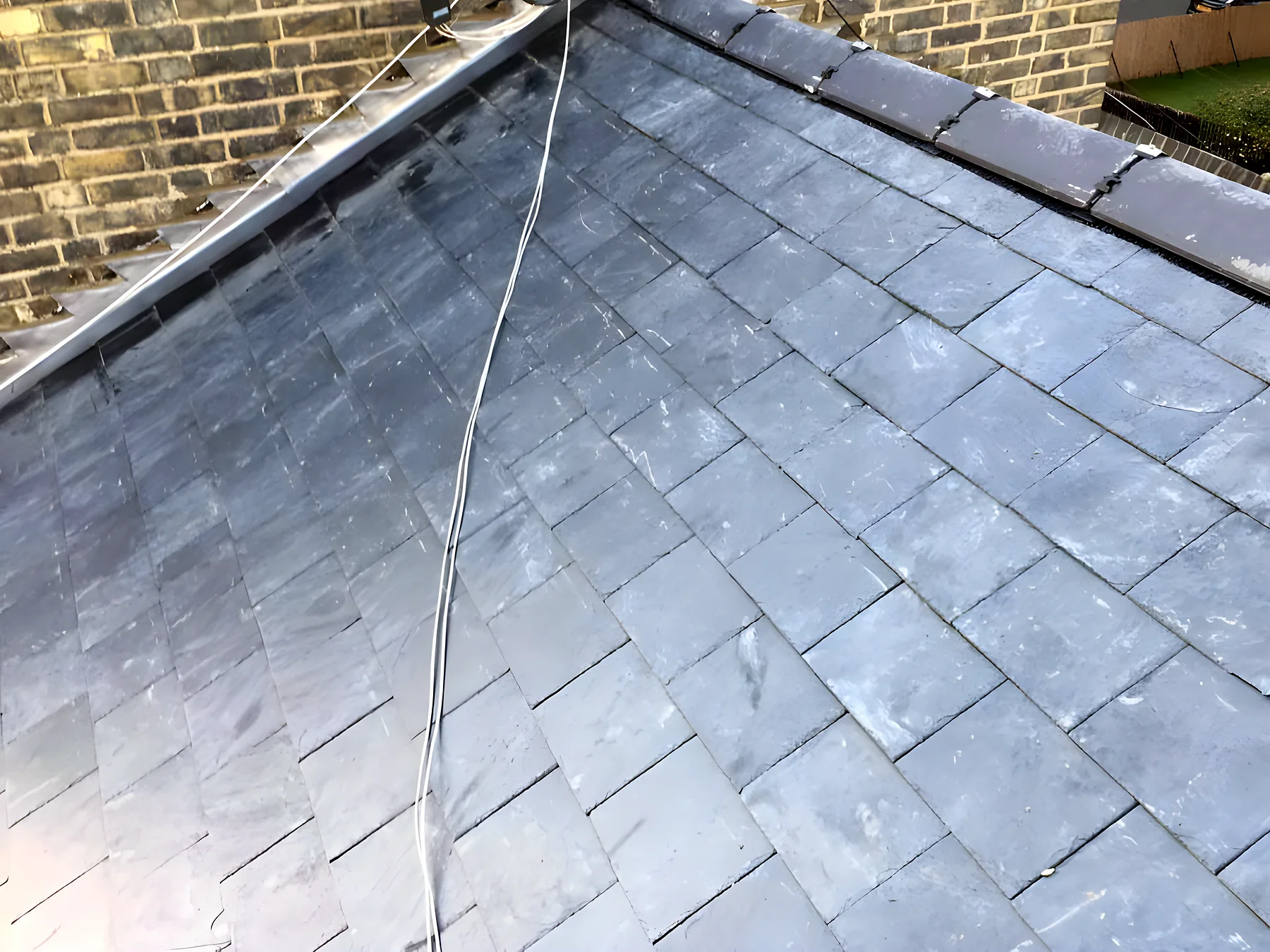
Likely cause
Near the church, Victorian houses keep their original slate, but the nails underneath have corroded and slates slide down one by one. A handful can be hooked back in place. When slates are moving across the slope, stripping and relaying on new battens is the way to stop it for good.
Usually the job is
Slate Roofing in Ashtead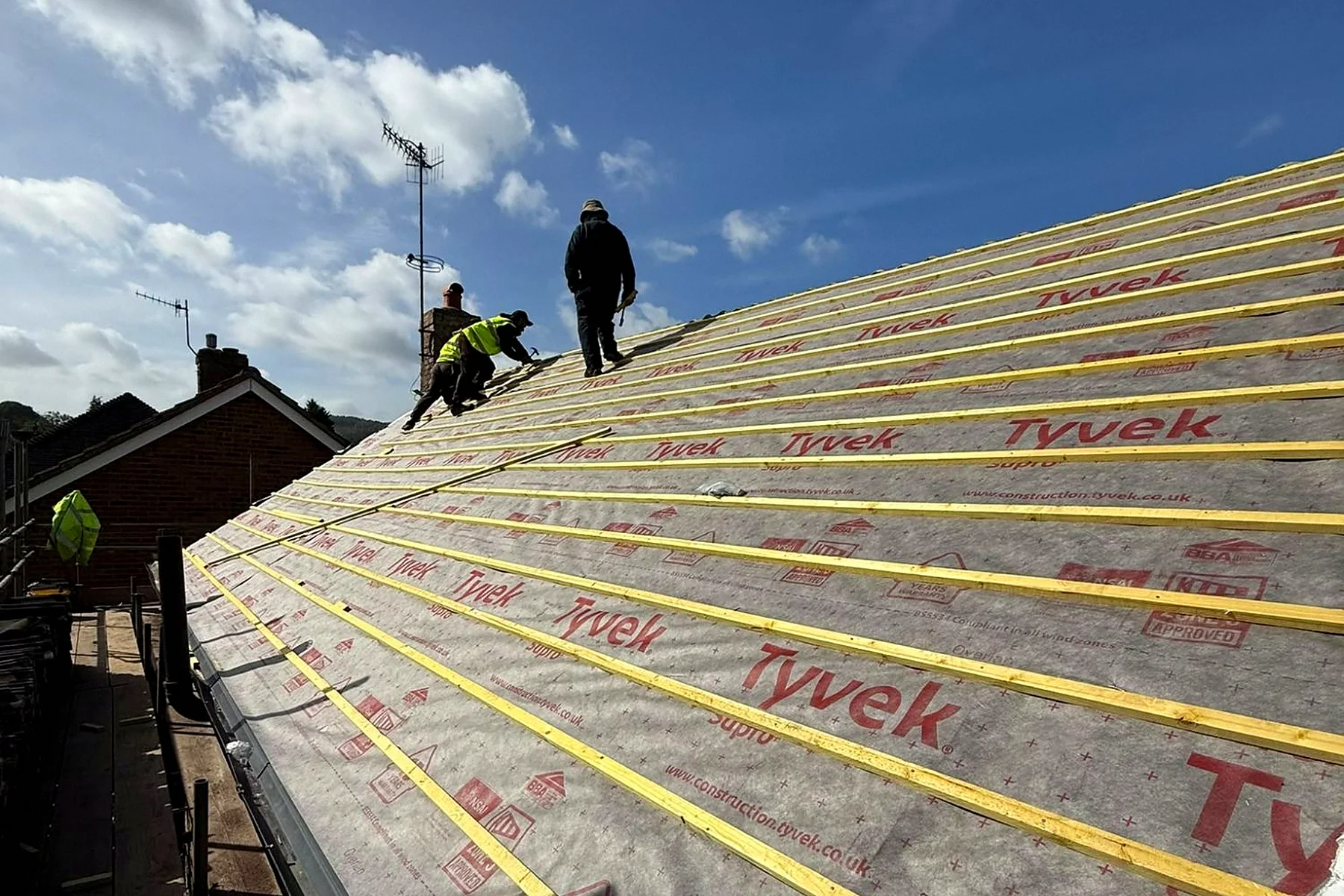
Likely cause
On post war concrete tile roofs the felt underneath has often perished into strips, so wind blows rain past the laps of the tiles. The tiles can usually be lifted and reused once new membrane and battens are in.
Usually the job is
Roof Repairs in Ashtead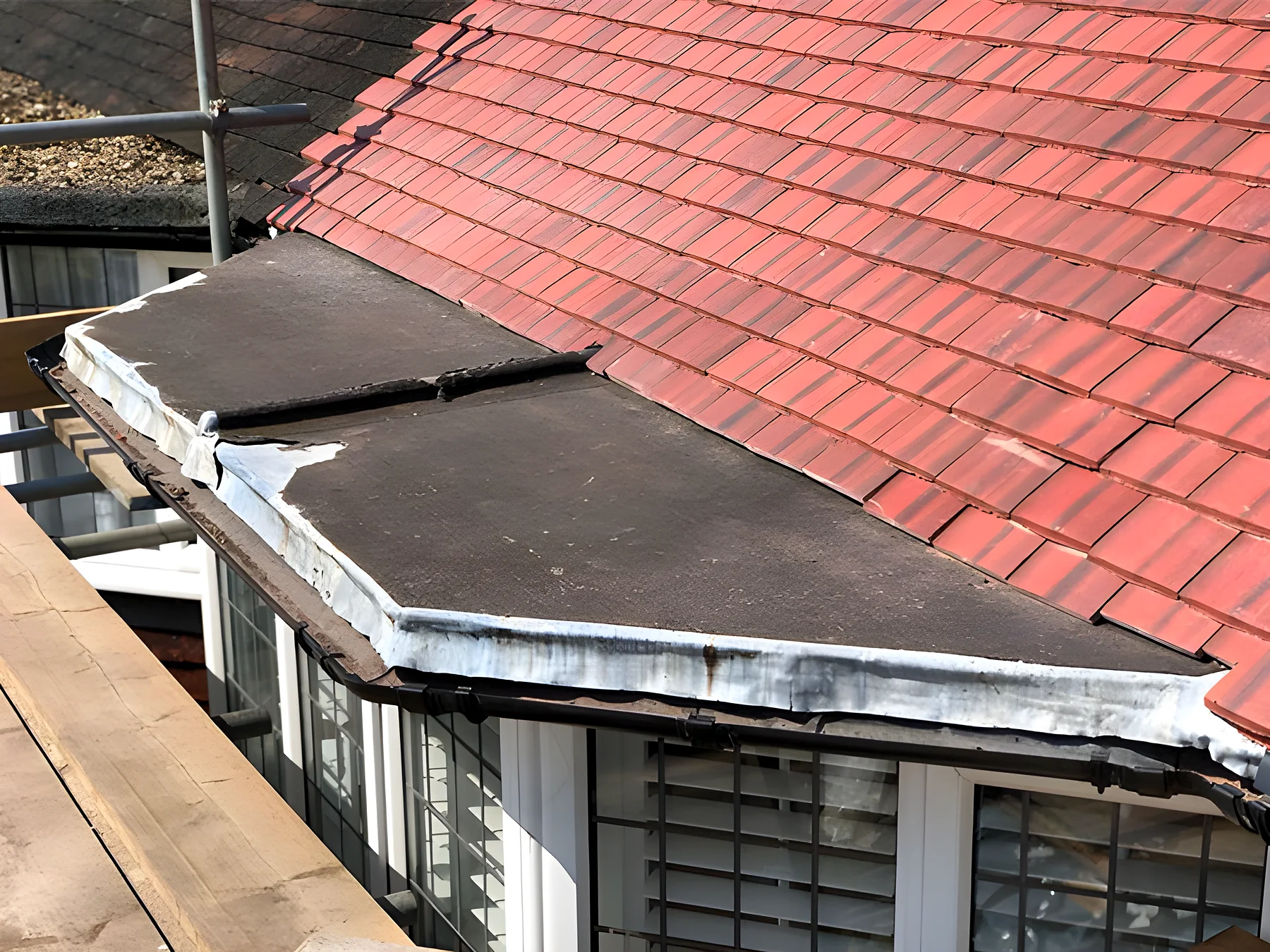
Likely cause
Porch canopies and bay tops in Ashtead are low, small and easily forgotten, and the flashing where each meets the house is what lets go. We renew the small roof covering and set new lead into the wall above it.
Usually the job is
Roof Repairs in Ashtead
How it works
From Our Yardto Your Roof.
Call or Send a Photo
Ring the Leatherhead office, 01372 540 258, or email a photo taken in the garden. Being three miles away, we can usually call round soon after.
We Come and Look
We look at the roof from inside the loft and from outside, including the valleys and flashings hidden from the road, and photograph anything that needs work.
A Price in Writing
One itemised quote follows. Where a repair is enough, the repair is what gets priced, and if the roof is genuinely near its end we tell you straight.
Tidy, Careful Work
Scaffold where it is needed, the drive and garden protected, photo updates as we go, and everything cleared away at the end.
“So happy i have found a local roofer very happy with the work that was carried out and kept me updated as work was being done would definitely be using the team at marley roofing specialists again would highly recommend”
Recent work
Work on RoofsLike Yours.
Mock Tudor house
Red tiled roof
Hipped clay roof
Half round hips
Chimney flashing
Clay tiled roof
Natural slate
Lead valleys
Ashtead questions
QuestionsFrom Ashtead.
Anything else about an Ashtead roof? Call 01372 540 258. You will get a roofer on the line.
Can you match the clay tiles on a 1930s Ashtead house?
Yes, nearly always. Most are standard plain tiles still in production, and we keep reclaimed tiles for the older makes so a repair matches the weathered roof around it.
How far is Ashtead from your base?
About three miles. We are based in Fetcham, next to Leatherhead, so Ashtead is one of the closest towns we cover.
Why does my mock Tudor gable leak?
The decorative timbers hide a valley lined with lead that was never generous. After ninety years it splits or the tiles beside it slip. We form new lead on site and re-lay the tiles at the edges.
Do I need planning permission for roof work in Ashtead?
For a repair or a re roof in the same material, normally not. Listed buildings need consent for most roof work, and parts of the old village are protected, so we check the status of your house before we quote.
Can a perished felt be fixed without new tiles?
Often, yes. On concrete tile roofs we can strip the tiles, fit new breathable membrane and battens, and lay the same tiles back if they are sound. It costs less than new tiles and keeps the look.
Do you cover Lower Ashtead and the Woodfield side?
Yes, all of KT21: Lower Ashtead, Woodfield, Ashtead Park and the roads towards the common, as well as Leatherhead, Epsom and the villages around.
Can moss be cleared from an Ashtead roof without damaging it?
Yes. We take it off by hand rather than pressure washing, which can force water under tiles and strip the surface. The roof is then treated to slow regrowth and the gutters are cleared of what has washed down.
Do you replace fascias and soffits as well?
Yes. On many Ashtead semis the original timber boards have rotted behind decades of paint. We replace them in uPVC, fit new soffits and refit the guttering so it falls properly to the downpipes.
Do you work on the larger houses towards Ashtead Park?
Yes. Those roofs have more hips, valleys and stacks than the semis in the centre, so we start with a full survey and photographs before pricing anything.
Do you cover Woodfield and the roads by the station?
Yes. Lower Ashtead and Woodfield, with their tighter Victorian streets and later infill houses, are a few minutes from our yard.
Nearby
Around Ashtead,We Also Cover.
Ashtead is our neighbour, with Leatherhead, Epsom and Headley minutes away. Each town on the diagram shows its postcodes.
A diagram of where we work, not a map. Positions are approximate.
Roofers in
Ashtead
- Postcodes
- KT21
- Borough
- Mole Valley
- From our base
- 3 miles
Most asked for in Ashtead
NearestRoofers in Leatherhead Roofers in Epsom Fetcham · Headley · Ewell
Somewhere nearby that is not listed? Call 01372 540 258 and ask.
Free survey and quote
A Roof in Ashtead?Ring Leatherhead.
A photo from the garden gives us a first look. We are only three miles away, and surveying the roof and putting a price in writing costs you nothing.
- London
- 0203 507 1501
- Leatherhead
- 01372 540 258
- Reigate
- 01737 749202
- Mobile, 24 hours
- 07513 397 799