
22 July 2026
A chimney stands above the roof in every wind and every frost. It is the most exposed masonry on the house. Water gets into a stack in three places, and a damp patch on the chimney breast inside is the sign that one of them has failed.
One: The Flashing
The lead where the stack meets the roof: step flashing up the sides, a back gutter behind, an apron in front. This is the commonest leak on a house. The lead pulls away from the mortar joint it was dressed into, or it was never generous enough, and water runs down the outside of the stack and into the roof. The fix is new lead, dressed properly into the brickwork.
Two: The Joints
Mortar weathers out of the brick joints long before the bricks go. Open joints let rain straight into the stack, and it soaks down through the brickwork and shows inside. The fix is repointing, in a lime based mortar on an older stack rather than hard cement that cracks the brick.
Three: The Top
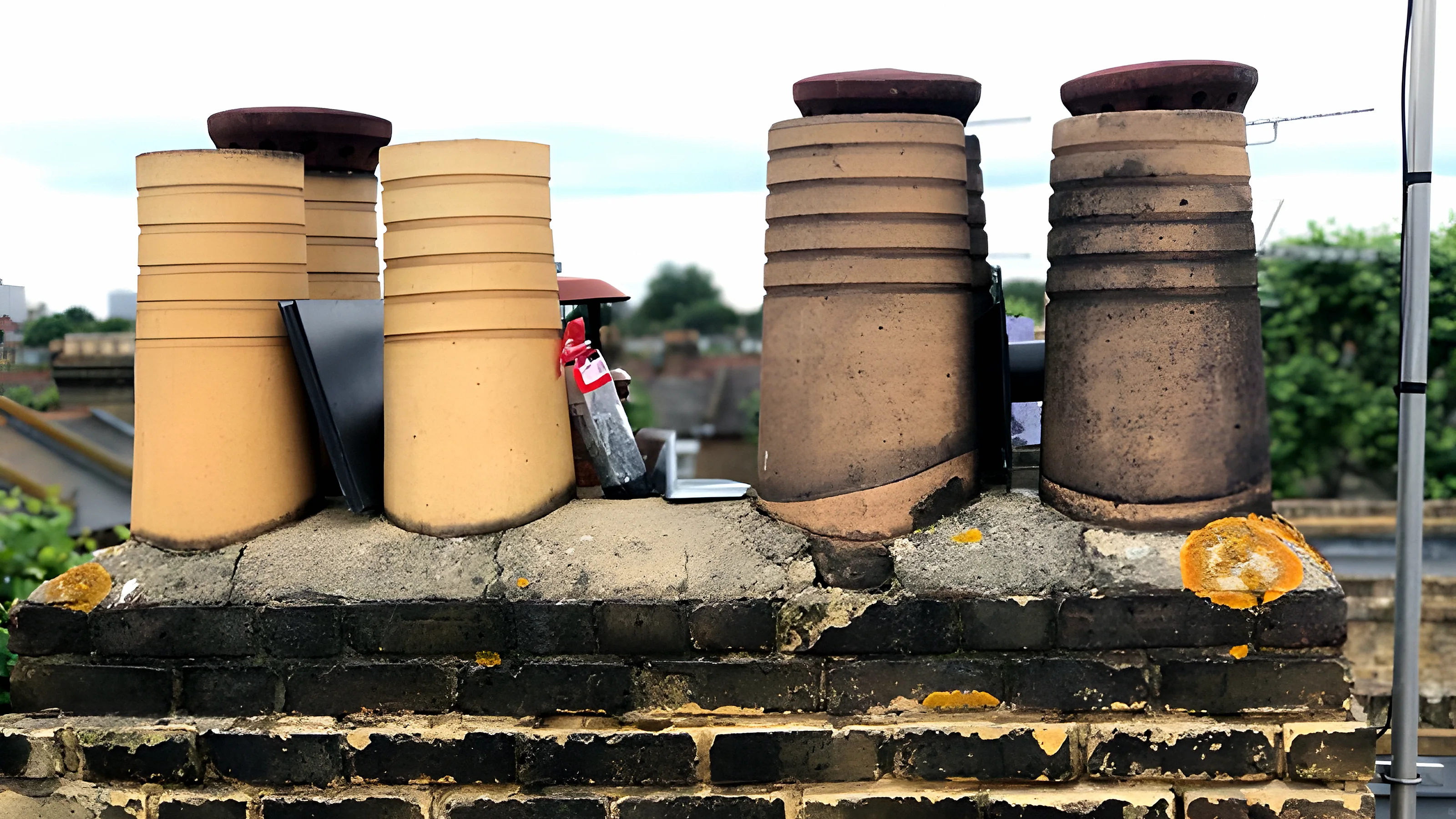
The flaunching, which is the mortar cap the pots sit in, cracks and lets water into the top of the stack. Open pots on an unused flue let rain straight down it. The fix is new flaunching and, on an unused flue, a vented cap that keeps rain out and lets the flue breathe.
What We Do
Survey the stack from the roof, because none of this is visible from the ground. Photograph the joints, the flaunching, the pots and the lead. Then repoint, re flash, cap or, if the brickwork has gone, rebuild from sound brick down. The survey is free.